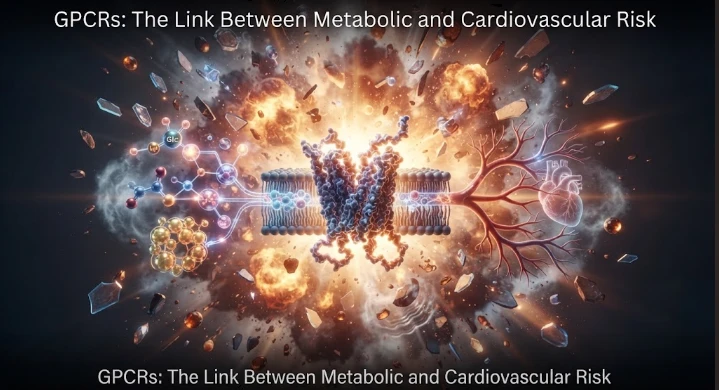
The article links GPCR biology with cardiometabolic risk by asking when receptor signaling mechanisms explain variation in blood pressure, glycemia, obesity, arrhythmia, and treatment response. Receptor effects depend on cell type, density, coupling proteins, phosphorylation, trafficking, and disease stage, so expression alone is insufficient. Incretin-receptor and angiotensin-receptor examples illustrate how pathway bias can alter metabolic and cardiovascular physiology. Human genetics can identify receptor or signaling variants, but engineered-cell and tissue studies are needed to determine their functional consequences. The article emphasizes stage-specific compensation, organ crosstalk, medication history, ancestry, and treatment exposure as major modifiers. Mechanistic intervention studies should connect signaling features to clinically meaningful outcomes and distinguish prognostic markers from predictors of therapeutic benefit. Safety and decision analysis are also essential because GPCR pathways operate across multiple organs. The proposed precision model therefore combines population risk, receptor mechanism, functional validation, treatment context, and prospective outcome testing.
An overview of cardiometabolic risk can be given by blood pressure, glucose, lipid, body composition, and family history; blood pressure, glucose, lipids, body composition and family history describe outcomes of the risk rather than its causes. The regulation of those outcomes relies on the activity of a variety of processes that are regulated by G protein coupled receptors, such as vascular tone, sympathetic activity, insulin secretion, appetite, renal sodium handling and inflammatory communication. A link between receptor biology and disease risk should exist between the molecular mechanism and the population variability. If it is not there, the receptor signaling is not pharmacologically interesting and hard to utilize for risk stratification.
The first one is context. The receptor can generate different responses in response to the same ligand, depending on a variety of factors such as cell type, receptor density, coupling proteins, receptor phosphorylation, receptor trafficking, and disease state. Cardiovascular receptors are present in different tissues such as smooth muscle, endothelium, myocardium, kidney and immune cells in distinct molecular environments. There is a similar contextual dependence in metabolic receptors in islets of the pancreas, gut, brain and fat. Functional exposure relies on the ability of receptors to signal and the preference of signaling pathways, and cannot be reliably inferred from receptor expression.
Studies of incretin receptors show the profound influence signaling architecture can have on metabolism. Tirzepatide was demonstrated experimentally to be pro-cyclic AMP and anti- beta arrestin recruiter effect on glucagon like peptide one receptor, and to generate a different signaling balance on the glucose dependent insulinotropic polypeptide receptor. Primary islet experiments were correlated that profile to insulin secretion. Further studies with G protein biased glucagon like peptide one receptor agonists (GLP1RAs) confirmed that significant beta arrestin recruitment inhibition was required to obtain complete metabolic effect in experimental models. So, the choice of receptor pathway will modulate physiology, even if the 'set point' target remains the same.
Cardiovascular signaling provides a parallel lesson. Neurohormonal and mechanical stress are converted to vascular and cardiac responses through angiotensin receptors, and adrenergic receptors and related pathways. Experimental biased ligands at the angiotensin receptor have differentiated G protein mediated vasoconstrictive signaling from beta arrestin associated effects and structural studies have helped to identify receptor conformations associated with these different pathways. This evidence does not evidence a universal protective signaling branch, but it does reveal why exposure pathway balance, tissue setting, and chronic exposure all play a role in disease risk.
Human genetics can be used to detect causal leverage points. Mutations in the receptor sequence and/or its expression, regulatory regions and downstream signalling proteins can be investigated for relationships with BP, glycaemia, obesity, arrhythmia, and/or treatment outcomes. In functional studies, an association doesn't indicate if the variant alters ligand affinity, coupling, internalization, internal dynamics of second messengers, or compensatory feedback. A combination of population genetics, engineered cells and tissue models can take a signal from statistical correlation into a biological explanation.
That explanation should contain information on disease stage. Insulin resistance in early life can trigger hyperinsulinaemia, the maintenance of the resting blood pressure through reserve mechanisms or early vascular dysfunction can mask the impairment of the heart function through neurohormonal compensation. Chronic stimulation leads to desensitization, redistribution of receptors, fibrosis or cellular exhaustion, which may in turn exacerbate the severity of the disease, thereby changing the meaning of the same pathway. A risk model without stage may combine compensation and failure in a single average risk, diminishing the clinical interpretability.
Mechanistic intervention studies are more direct tests. Pathway specific perturbations can be compared among organoids, primary tissues, engineered receptor systems and animal models, while maintaining other factors constant. A signalling pathway that changes a specified phenotype like insulin secretion, contractility of blood vessels, cardiomyocyte stress, lipid handling, or inflammatory output should be used as a candidate mechanism. Additional rescue experiments support the inference. If a pathway is disrupted and then the phenotype follows, then the causal confidence is greater than what can be provided from observational profiling.
When translation is done, it must have clinically meaningful endpoints. Signalling markers can be associated, prospectively, with blood pressure trajectories, glycaemic deterioration, heart failure events, arrhythmia, renal decline, vascular complications, and treatment response. Calibration is as important as discrimination. Even if it is a molecular model that ranks the risk in the correct order, but systematically overestimates the risk in one particular subgroup, it can mislead treatment. The pathway of receptor signaling is complex and is embedded in the biological and social heterogeneity and thus, external validation across ancestry, sex, age, medication exposure, and disease stage should be performed.
It is particularly important to review the patient's medication history. Other agents either directly or indirectly modulate receptor signaling, including beta blockers, renin angiotensin system drugs, incretin based drugs, diuretics and others. After chronic treatment, receptor densities, feedback loops, ligand levels and sensitivity downstream can be changed. The apparent risk from a marker of a treatment could then be a reflection of adaptation to treatment rather than of the untreated disease biology. In longitudinal designs, investigators should document changes in medication as well as adherence to the treatment and dosage of the medication, rather than simply using a yes-or-no covariate.
An additional area of hidden risk is organ crosstalk. A receptor pathway that enhances insulin secretion from the pancreas can affect the appetite, gastric emptying, heart rate, kidney function and vascular physiology directly or indirectly. Cardiovascular signaling may alter renal perfusion which, in turn, affects volume and hormonal feedback. Therefore, integrated phenotyping, that is, phenotyping of the entire system and not only the local receptor site, is necessary to exclude the local receptor effect and to identify a system response. Causal mediation may focus on plausible pathways and experimental perturbation is required for directionality.
The apparent association between signaling variants and disease can change due to ancestry and population structure. The frequencies of alleles vary in the populations, linkage may vary and environmental exposures may influence penetrance. Therefore, it is important for a receptor variant associated with cardiometabolic risk in one cohort to be replicated before the mechanistic interpretation can be generalized. Fine mapping, expression QTN (eQTN) and functional assays may be useful to identify the causal variant instead of a nearby marker. Diverse recruitment also helps to reduce the risk of there being miscalibration between the risk model and a different ancestry if the model is only being deployed in a different ancestry to one it was trained in.
Effectiveness of treatment may be better than natural association. Mechanistic confidence increases if a signaling feature indicates that there is a benefit after treatment with a receptor targeted drug, and the changes in the signaling pathway are predicted after treatment. Prespecifications of interactions between biomarker and therapy, appropriate sample size within each treatment group, and adherence control in such studies are key. Negative results can be as insightful. A receptor signature that reflects disease severity but is not associated with treatment effect may be a good prognostic and not a predictive signature, what is directly relevant for precision medicine.
The safety endpoints should be "woven in" from the beginning. Different target organs are often involved in GPCR pathways, meaning that a signaling event that has a metabolic effect can affect heart rate, vascular tone, gastrointestinal function, renal handling, or neuroendocrine control. Tissue selectivity and pathway bias can decrease unwanted effects in principle but experimentally selective does not necessarily mean clinically select. A credible program of cardiometabolic risk will therefore have both benefits and harms measured. Precision is not achieved through an improvement of any one laboratory endpoint; it's achieved through a mechanistic subgroup that benefits.
Decision analysis is the last of the translation steps. Risk information is relevant to a change in a clinical decision, for example, intensity of therapy, monitoring frequency or choice of receptor targeted therapy. Use of decision curve methods allows assessment of a signaling model to established clinical predictors and quantify the value added by molecular information at clinically relevant decision thresholds. Even if the mechanism is quite complex, a high cost assay with marginal improvement in the fit of the statistics has limited precision value and will not alter the management.
The value of risk prediction is enhanced if it tells you about a modifiable mechanism, not another correlated marker. A GPCR based signature should provide information about the abnormal pathway in a given tissue context at a specific stage of a disease and whether it can be modified by intervention. That level of precision is biologically plausible because it was pioneered by Robert J. Lefkowitz in his groundbreaking field-defining research on receptor regulation. The best cardiometabolic framework is when the data from a population is tied to the receptor mechanism, functional validation, context of the treatment and prespecified clinical outcomes, making signaling biology a map of disease risk instead of a list of targets.
CITE THIS ARTICLE
Tasmeem, S. (2026). Metabolic Disease Risk through GPCR Signaling and Cardiovascular Signaling in Cardiometabolic Disease. https://www.sadiaresearchhub.com/article/4d466907-9395-58ad-bd10-ca9496c8c46d
S. Tasmeem, “Metabolic Disease Risk through GPCR Signaling and Cardiovascular Signaling in Cardiometabolic Disease,” 2026. [Online]. Available: https://www.sadiaresearchhub.com/article/4d466907-9395-58ad-bd10-ca9496c8c46d
Tasmeem, S. (2026) ‘Metabolic Disease Risk through GPCR Signaling and Cardiovascular Signaling in Cardiometabolic Disease’. Available at: https://www.sadiaresearchhub.com/article/4d466907-9395-58ad-bd10-ca9496c8c46d
Tasmeem, Sadia. “Metabolic Disease Risk through GPCR Signaling and Cardiovascular Signaling in Cardiometabolic Disease.” 2026, https://www.sadiaresearchhub.com/article/4d466907-9395-58ad-bd10-ca9496c8c46d.
Sadia Tasmeem. “Metabolic Disease Risk through GPCR Signaling and Cardiovascular Signaling in Cardiometabolic Disease.” (2026). https://www.sadiaresearchhub.com/article/4d466907-9395-58ad-bd10-ca9496c8c46d.
Tasmeem S. Metabolic Disease Risk through GPCR Signaling and Cardiovascular Signaling in Cardiometabolic Disease. 2026. https://www.sadiaresearchhub.com/article/4d466907-9395-58ad-bd10-ca9496c8c46d
@misc{article_4d466907939558adbd10ca9496c8c46d,
  title = {Metabolic Disease Risk through GPCR Signaling and Cardiovascular Signaling in Cardiometabolic Disease},
  author = {Sadia Tasmeem},
  year = {2026},
  url = {https://www.sadiaresearchhub.com/article/4d466907-9395-58ad-bd10-ca9496c8c46d},
}
TY  - GEN
AU  - Sadia Tasmeem
TI  - Metabolic Disease Risk through GPCR Signaling and Cardiovascular Signaling in Cardiometabolic Disease
PY  - 2026-02-15
UR  - https://www.sadiaresearchhub.com/article/4d466907-9395-58ad-bd10-ca9496c8c46d
ER  -
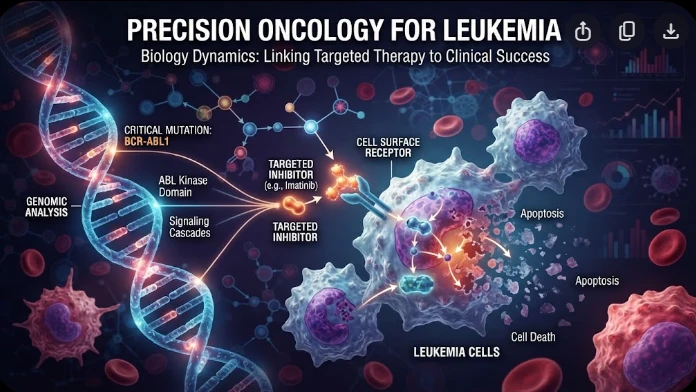
The article examines leukemia as an evolving population under targeted therapy, using chronic myeloid leukemia as the main example. BCR–ABL1 inhibition can produce deep responses, but every treatment changes the competitive environment among malignant clones. Quantitative transcript monitoring provides a continuous measure of disease burden, while deep sequencing can identify emerging resistance mechanisms before hematologic progression. A detected mutation is clinically meaningful only when its
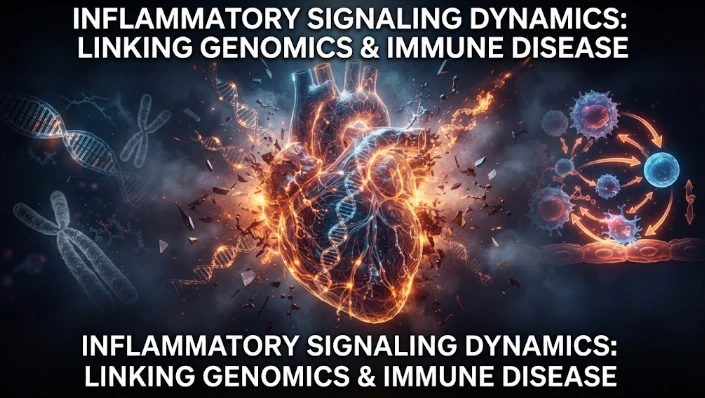
The article examines how cardiovascular genetic risk becomes biologically active through cell-specific inflammatory signaling. Because many vascular-risk variants lie in regulatory DNA rather than coding regions, their effects may appear only in particular endothelial, macrophage, smooth-muscle, or lymphocyte states. Single-cell studies of human atherosclerotic lesions and multiomic endothelial experiments are used to illustrate this context dependence. The article also discusses IL6-related sig
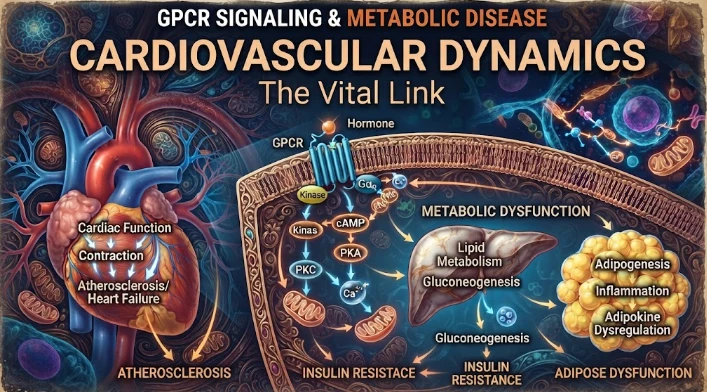
The article examines cardiovascular GPCR signaling as a dynamic response system whose abnormalities can remain hidden in resting measurements. Mechanical stretch, hormones, nutrients, sympathetic activity, and fluid balance can change the amplitude, duration, localization, and recovery of receptor signaling. Examples include mechanically activated angiotensin-receptor signaling, endosomal signaling, beta-arrestin-dependent trafficking, and biased glucagon-like peptide-one receptor responses. The