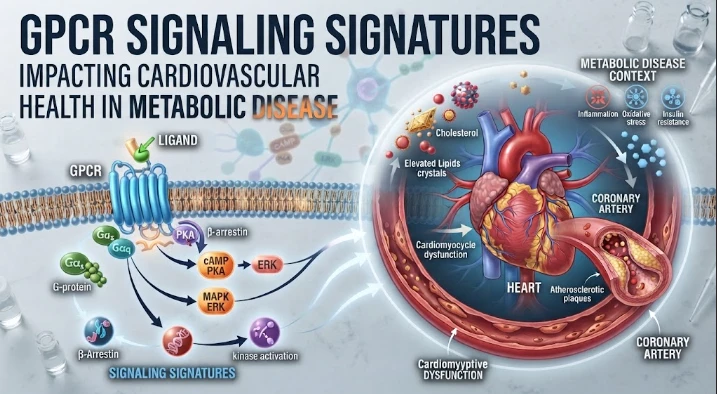
The article presents G-protein-coupled receptor signaling as a multidimensional code connecting cardiovascular and metabolic physiology. Using angiotensin, prostaglandin, and related receptor systems, it explains how ligand structure, receptor conformation, G-protein coupling, beta-arrestin recruitment, phosphorylation, trafficking, and cellular context can produce different downstream outcomes. Biased agonism is highlighted as evidence that one receptor can favor distinct signaling routes rather than acting as a simple switch. Metabolic state can further modify signaling, including through post-translational changes affecting beta-arrestins. The article proposes measuring receptor phosphorylation, second messengers, arrestin recruitment, kinase activity, trafficking, and transcription alongside clinical metabolic and cardiovascular phenotypes. Human genetics, prospective challenge testing, longitudinal physiology, and carefully constrained machine learning are discussed as translational tools. The central argument is that meaningful GPCR biomarkers should capture functional signaling state and pathway balance, not merely receptor or ligand abundance.
Hormones, neurotransmitters, lipids and metabolites cause cellular responses through the cardiovascular system via a G protein coupled receptor. In metabolic disease, this signaling network is located at the crossroads of vascular tone, heart function, renal control, inflammation, glucose regulation and energy balance. A receptor produces a range of outputs. Different signaling signatures can give rise to varying physiological outcomes depending on the structure of the ligand, conformation of the receptor, G protein coupling, recruitment of beta arrestin, the process of phosphorylation and context of the cell.
This is most evident in the angiotensin II type 1 receptor. Classical activation can activate G proteins which lead to an increase in blood pressure and vascular contraction. The same receptor may simultaneously recruit other proteins called beta arrestins, which were originally thought to mediate desensitization and internalization of receptors, but now known to mediate the organization of signaling complexes. Biased agonism can occur with two different ligands, and can be favoring one pathway over another. This implies that there is the possibility for separating the desired and undesirable effects at one receptor.
That was supported by structural and biochemical studies that revealed different conformations of the receptor that promote G protein activation and those that promote signaling through beta arrestin. Selected conformational ensembles are not only stabilized by biased ligands but also the receptor can be turned "on" or "off". Thus, the emphasis in cardiovascular pharmacology is on pathway selection rather than receptor occupancy.
Beta arrestins also serve as scaffolding molecules. Phosphorylation of the receptors leads to recruitment of kinases and other proteins to the localized complexes by binding to beta arrestin. These signals may be different in length and in cellular localization to those mediated by the G protein. The long-term and short-term signals from the same receptor can influence the transcription of a short-term membrane signal in different ways.
This can be modified directly by metabolic state. Research has reported N homocysteinylation of beta arrestins as a modification which can bias GPCR signaling. The importance of homocysteine in cardiovascular and metabolic risk makes this an important finding to link metabolic chemistry to choice of receptor pathways. A change in the interpretation of the cells to the hormone could occur without alterations in receptor sequence and this would represent a circulating metabolic disturbance.
Another example of signaling diversity is the prostaglandin E receptors. Various types of receptors can be linked to stimulatory or inhibitory G proteins which alter cyclic AMP and downstream pathways. The structure of related receptors revealed the mechanism in which different G proteins are discriminated by the receptor, and how the interaction of the ligands with the receptor determines the coupling mechanism. The diversity is likely to account for the fact that one lipid mediator can have different effects in various tissues such as vascular, immune, and metabolic tissues.
A signaling signature should thus encompass more than simply the expression of receptors. Some of the measurements that can be performed are receptor abundance, receptor phosphorylation, activation of G proteins, recruitment of beta arrestins, dynamics of second messengers, kinase activity, transcriptional output and receptor trafficking. Many of these layers can be captured in the context of proteomics/phosphoproteomics and pathway activation can be measured with high temporal resolution in experimental systems via biosensors.
Single cell profiling is an additional level of tissue specificity. The same receptor can be expressed by different cells, such as cardiomyocytes, vascular smooth muscle cells, endothelial cells, adipocytes, renal cells and immune cells, in various regulatory conditions. There are differences in the available G proteins, kinases, arrestins and scaffolds in heart tissue as compared to adipose or vascular tissue that is what leads to the different signatures being produced by a given ligand. The context must be maintained in precision cardiometabolic medicine.
The metabolic phenotyping can be linked to clinical state in prospective manner. Molecular signaling measures are collected in combination with characterization of participants for blood pressure, insulin sensitivity, lipid profile, inflammatory markers, renal function, and body composition. Responses to physiological challenges can be observed by repeatedly sampling before and after. Static fasting measurements do not encompass decreased flexibility which only becomes apparent when stressed.
It is possible to test whether a signaling signature is linked with cardiovascular outcome through causal mediation models, which can assess the role of metabolic exposure as a causal pathway to cardiovascular outcome. Therefore, a metabolite that plays a role in vascular risk may also be able to modify the beta arrestin dependent signaling. There may be multiple pathways to mediation – only statistical mediation cannot prove mechanism but can identify pathways for experimental testing. The cell models and engineered receptors can then be used to ascertain whether the modification induces a change in cellular downstream signalling and behaviour in terms of vascularization.
Both biased agonism and caution are therapeutic opportunities. In another tissue or disease stage, the same pathway may have a different effect, which may be considered to be protective or harmful. Receptor expression level, interacting proteins and chronic treatment influence receptor signaling. Thus a biased ligand should be tested in other tissues and over longer time periods of physiology compared to one preferred assay.
An additional layer can be achieved through human genetics, which can uncover variants in the receptor or signaling pathways involved in blood pressure, metabolism or drug response. Functional testing can provide information on if a variant affects ligand binding, G protein coupling, beta arrestin recruitment and/or receptor trafficking. This information may help in treatment decisions in the future if there is a reproducible and clinically significant genetic effect.
Development of biomarkers needs to be done on the state, not concentration. Compensatory physiology can lead to increased levels of a circulating hormone, and receptor signaling can still be decreased due to receptor desensitization. However, when receptor regulation is changed normal ligand concentration can result in excessive signaling. Downstream signatures can then, therefore, provide a better estimate of functional exposure than simply measuring the abundance of the ligands.
Chronic cardiometabolic signaling involves receptor desensitization. Once activated, G protein coupled receptor kinases phosphorylate activated receptors, which results in decreased continued G protein coupling, and increased binding to beta arrestin. Multiple hormonal stimulations will then alter the response to the next stimulus. It is possible that there is a change in signaling signature that occurs after chronic disease exposure that is different from the acute laboratory response, despite having the same ligand concentration.
The trafficking of receptors can keep signaling within the plasma membrane. Recycled and/or degraded internalized receptors may continue to synthesize selected signals in endosomes. Receptor signal duration and availability is regulated by the balance of internalization, recycling and lysosomal routing. These processes can be modified by cardiometabolic disease, and this may involve changes in receptor abundance or oxidative stress, kinase activity and membrane composition, resulting in functional differences that are not apparent just by measuring receptor numbers.
These mechanisms might be directly tested by drug response phenotyping. Participants receiving receptor targeted cardiovascular therapies (RTCT) may be characterized in terms of downstream markers and/or physiological responses instead of just the dose alone. Blood pressure, heart rate, metabolic markers or inflammatory state can then be correlated with genetic and molecular signaling characteristics. Response subtypes that would not be detected in average treatment effects can be identified from such studies.
There is a need for machine learning techniques to better incorporate multidimensional information on GPCRs, but there is a need for biological constraints and external validation. The receptor phosphorylation, recruitment of arrestin, concentration of metabolites in tissues, and tissue specific expression can make a predictor of high dimensional with small sample size. Regularization, prespecified validation and mechanistic interpretation minimise overfitting. A clinically useful model should not be a pattern that depends on a platform-based statistical model, but rather a reproducible signaling state.
Longitudinal physiology can be used to determine the stability of a signaling subtype. In addition to molecular profiles that can be correlated on a weekly or monthly basis, the data from ambulatory blood pressure, heart rhythm, glucose patterns, physical activity, and repeated metabolite measurements are also linked. A signature that is seen over a normal day to day fluctuation is more likely to be a candidate than one seen on a single controlled visit.
Pathway balance, not maximal inhibition, should be taken into account when considering therapeutic development. Cardiovascular receptors frequently have multiple physiological functions. Full blocking of one receptor is likely to eliminate both bad and good compensating signals. If the chosen pathway results in a desirable effect (as demonstrated in human studies) but does not result in any new metabolic or vascular side effects, then the possibility of using biased ligands or allosteric modulators may be available for fine-tuning the effect in the future.
In cardiovascular and metabolic diseases, GPCR signaling is best thought of as a "multidimensional code". The message that travels downstream to the cell is influenced by receptor conformation, coupling preference, post translation modification, cellular context and metabolic state. While clinical translation requires prospective validation in a variety of human populations, scientific underpinnings of GPCR regulation provide a backdrop for this systems view. Signaling signatures can be useful when linking molecular pathway selection to measurable cardiac and metabolic responses – providing targets for therapies that consider function, not receptor name.
CITE THIS ARTICLE
Tasmeem, S. (2026). GPCR Signaling Signatures through Cardiovascular Signaling in Metabolic Disease. https://www.sadiaresearchhub.com/article/ba78a30c-7b21-5304-9ae9-cbf7f1fbf286
S. Tasmeem, “GPCR Signaling Signatures through Cardiovascular Signaling in Metabolic Disease,” 2026. [Online]. Available: https://www.sadiaresearchhub.com/article/ba78a30c-7b21-5304-9ae9-cbf7f1fbf286
Tasmeem, S. (2026) ‘GPCR Signaling Signatures through Cardiovascular Signaling in Metabolic Disease’. Available at: https://www.sadiaresearchhub.com/article/ba78a30c-7b21-5304-9ae9-cbf7f1fbf286
Tasmeem, Sadia. “GPCR Signaling Signatures through Cardiovascular Signaling in Metabolic Disease.” 2026, https://www.sadiaresearchhub.com/article/ba78a30c-7b21-5304-9ae9-cbf7f1fbf286.
Sadia Tasmeem. “GPCR Signaling Signatures through Cardiovascular Signaling in Metabolic Disease.” (2026). https://www.sadiaresearchhub.com/article/ba78a30c-7b21-5304-9ae9-cbf7f1fbf286.
Tasmeem S. GPCR Signaling Signatures through Cardiovascular Signaling in Metabolic Disease. 2026. https://www.sadiaresearchhub.com/article/ba78a30c-7b21-5304-9ae9-cbf7f1fbf286
@misc{article_ba78a30c7b2153049ae9cbf7f1fbf286,
  title = {GPCR Signaling Signatures through Cardiovascular Signaling in Metabolic Disease},
  author = {Sadia Tasmeem},
  year = {2026},
  url = {https://www.sadiaresearchhub.com/article/ba78a30c-7b21-5304-9ae9-cbf7f1fbf286},
}
TY  - GEN
AU  - Sadia Tasmeem
TI  - GPCR Signaling Signatures through Cardiovascular Signaling in Metabolic Disease
PY  - 2026-03-01
UR  - https://www.sadiaresearchhub.com/article/ba78a30c-7b21-5304-9ae9-cbf7f1fbf286
ER  -
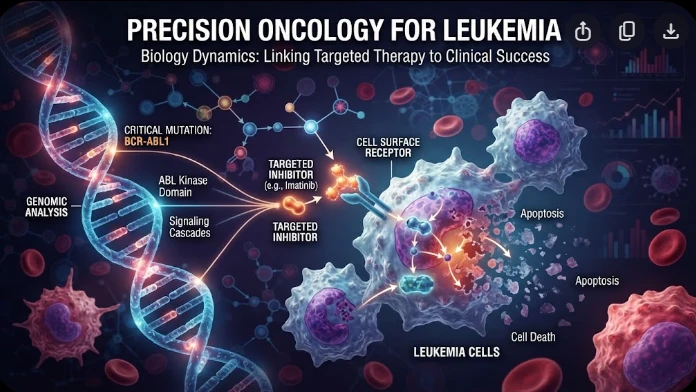
The article examines leukemia as an evolving population under targeted therapy, using chronic myeloid leukemia as the main example. BCR–ABL1 inhibition can produce deep responses, but every treatment changes the competitive environment among malignant clones. Quantitative transcript monitoring provides a continuous measure of disease burden, while deep sequencing can identify emerging resistance mechanisms before hematologic progression. A detected mutation is clinically meaningful only when its
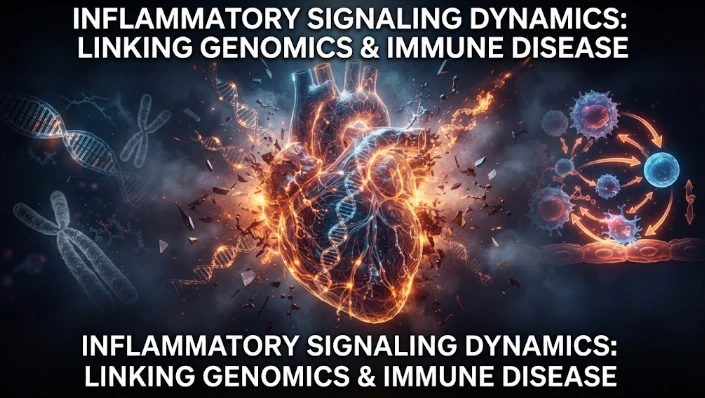
The article examines how cardiovascular genetic risk becomes biologically active through cell-specific inflammatory signaling. Because many vascular-risk variants lie in regulatory DNA rather than coding regions, their effects may appear only in particular endothelial, macrophage, smooth-muscle, or lymphocyte states. Single-cell studies of human atherosclerotic lesions and multiomic endothelial experiments are used to illustrate this context dependence. The article also discusses IL6-related sig
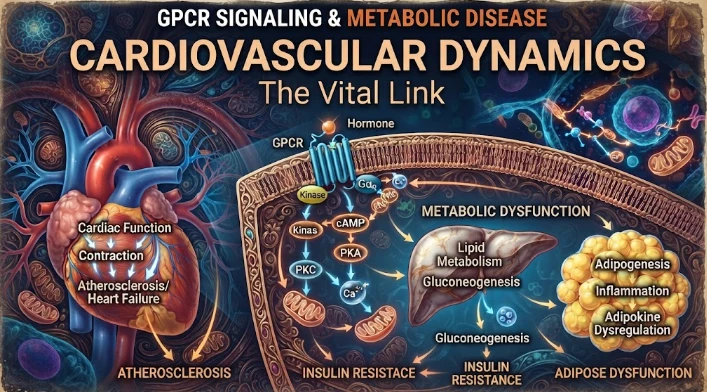
The article examines cardiovascular GPCR signaling as a dynamic response system whose abnormalities can remain hidden in resting measurements. Mechanical stretch, hormones, nutrients, sympathetic activity, and fluid balance can change the amplitude, duration, localization, and recovery of receptor signaling. Examples include mechanically activated angiotensin-receptor signaling, endosomal signaling, beta-arrestin-dependent trafficking, and biased glucagon-like peptide-one receptor responses. The