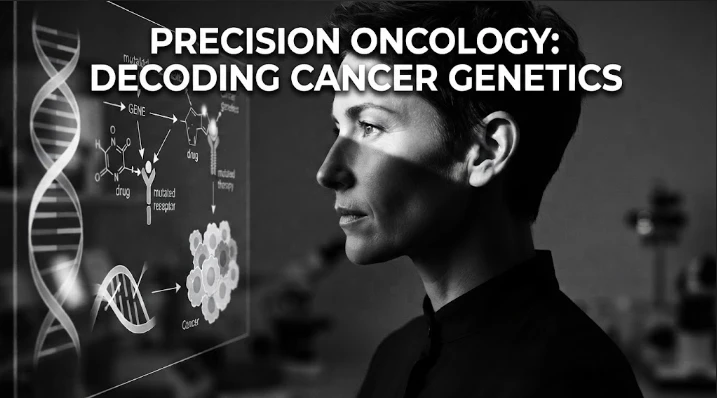
The article presents cancer genetics as the foundation of precision oncology only when genetic alterations are connected to functional mechanisms and treatment vulnerabilities. Tumors from the same organ can carry different mutations, copy-number changes, rearrangements, and inherited modifiers, while the effect of one driver depends on the surrounding genomic background. Sequencing therefore nominates candidate mechanisms rather than automatically identifying an actionable therapy. Functional experiments in engineered cells, organoids, and mouse models can determine whether a variant alters signaling, growth, drug response, or immune interaction and whether correction or inhibition reverses the phenotype. Spatial profiling adds microenvironmental context because genetically similar cells can behave differently near hypoxic, stromal, or immune niches. Rare and uncertain variants require especially cautious interpretation. Multi-ancestry reference data and molecular tumor-board review are also emphasized. The article concludes that precision medicine should separate mechanistic plausibility from clinically proven benefit while using functional models to strengthen causal interpretation.
The first step in precision oncology is that two tumors originating in the same organ may have completely different genetic causes. Mutations, copy number changes, rearrangements, and inherited variants can be identified using sequencing that can affect the behaviour of tumours. However, the significance of genetics is only realized when it is linked to a mechanism, to a vulnerability to treatment, and demonstrated to be the connection between the two across biological contexts. Functional models are therefore used to help define the paths on the map that are of importance, providing the map for cancer genetics.
Driver mutations affect growth by modifying the signaling pathways, DNA repair, cell cycle regulation, differentiation or immune system interactions. Many tumours have multiple potentially significant alterations at the same time, although some drivers can lead to the development of clear drug dependencies. The consequence of one mutation may be influenced by the other mutations in the genome. Combination therapy is therefore essential to precision medicine; single variants will not do.
There is a considerable amount of variation in treatment depending on the genetic background. Preclinical studies have demonstrated that sensitivity to targeted inhibition varies among different mouse strains, sexes, and diet that share the same intended cancer target, in addition to model design. The current practice of testing one highly inbred model and assuming the result to be the biological range in patients is challenged by such findings.
Tissue context is provided by genetically engineered mouse models. Tumors may develop from specific mutations within the right organ as the immune system, stroma, vasculature and metastatic process develop in parallel with the tumor. This is not implanting of a long established cell line into a host. Thus, the model can be used to study the effects a mutation has on initiation, progression and response to treatment in a more natural microenvironment.
The modern genome editing further improves precision. In vivo introduction of individual cancer associated variants or combinations can be achieved using CRISPR and base editing. Researchers can determine if the mutation found in the candidate is enough to trigger disease, promote an already existing factor, or affect how a drug is used. In addition, mutations can be introduced at specific times in regulated editing that can distinguish early events in tumor initiation from later events in tumor resistance.
Genetic heterogeneity within a single tumour can be identified by single cell profiling. The detected mutation can be common to all the cells of a malignant tumour or present in just a subclone. Treatment may eliminate one population while the other grows. Combining genotype with transcriptional state can reveal whether the resistant clones trigger other signaling and/or metabolic programs during the resistant state.
The microenvironment is added to the spatial analysis. Within the tumor, genetically identical cancer cells can have different behaviors when in the proximity of immune infiltrates, hypoxic areas, or specific stromal populations. Subclonal genetics and tissue niches can be linked via spatial transcriptomics and imaging. This is important because the therapy may fail due to mutation as well as environmental protection, but not necessarily due to one or the other.
CRISPR screens are systematic methods to discover dependencies. Under drug pressure the large sets of candidate genes can be disrupted, and differences in sensitivity or resistance to drugs can be identified. Many genes can be screened in vivo, which preserves tissue context and immune context. The closer a candidate dependency is to screening and closer it is to the human tumour dependencies, the stronger the dependency.The closer a candidate dependency is to the screening and closer it is to the human tumour dependencies, the stronger the dependency.
Complementary evidence provided by patient derived organoids and xenografts. They can maintain a patient's tumor genome better than regular cell lines and can evaluate drug responses on genetically varied samples. Organoids allow perturbation of and combination screening with a controlled environment, and xenografts introduce systemic pharmacology. Both models fail to accurately mimic human immunity, so results need to be corroborated in multiple systems.
Precision medicine also needs to be able to differentiate predictive from prognostic genetics. If a mutation is identified that seems to correspond to bad prognosis, it does not necessarily mean that a specific therapy would be of no benefit. Predictive evidence is asking the question of whether the treatment effect is different based on the alteration. Therefore, clinical research should be carried out based on a genotype-therapy interaction, and not based on the hypothesis that all high risk markers are actionable.
Individuals with the same treatment response can differ based on their germline variation. There are variants that can cause differences in drug metabolism, immune regulation, DNA repair capacity, and tissue toxicity. Sequencing of the genome of the tumor does not reveal the normal genome. The use of germline genetic information may help to better interpret efficacy and unexpected toxicity variability between individuals with similar tumor drivers.
A quality criterion of model diversity emerges.The model diversity emerges as a quality criterion. A therapy that is effective in just one genetic background should be recognized beforehand in a clinical trial. Robustness can be tested by diverse mouse populations, multiple patient-derived models and independent cohorts. Failure to generalize is informative as it might indicate the modifiers that define the population which might be most likely to benefit.
Loss of function should also be differentiated from altered function. Two mutations to the same gene can have two different effects on signaling or drug response. Measuring pathway output via functional assays is a more reliable approach than assuming that each cancer gene mutational event is identical.
Epistasis plays a key role in cancer genetics. To get a phenotype from one mutation, the other way must be changed first. These interactions can be directly tested in a mouse or organoid model using engineering combinations. They can be used to understand why a therapy works in one genomic subgroup, but not the other, even though both subgroups have the same "driver.
The toxicity can also be altered genetically. Host variation in target strains can be identified by using mice of different strains to increase the sensitivity of the host to a specific drug without altering the response of the tumour. This is important because part of clinical precision is being able not just to pick the therapy that is likely to be effective, but one that the patient can tolerate.
Environmental context is not something that should be neglected. Metabolism and immune tone are modifiable in preclinical models by diet, microbiome and housing. The standardization of the treatment helps to ensure reproducibility, and planned variation may uncover context-specific treatment effects not apparent in the homogeneity.
Analytical, biological and clinical validity are all part of regulatory evidence for a biomarker. The sequence may be accurate, but the variant might be biologically ambiguous. Functional modeling is a process that helps bridge that gap before a result is considered actionable.
A molecular tumor board is one way to incorporate this evidence in a practical way, and can include both genomic information and the history of treatment and functionality. Prior evidence is available in variant databases, but conflicts or context limitations can be found by expert review. Clear evidence grading promotes the separation of actionability from experimental hypotheses.
Rare variants present a special challenge, as there may be limited clinical outcome information. While functional models can offer supportive evidence, a laboratory phenotype should not be offered as proof of patient benefit. There is a need to establish a clear cut between mechanistic plausibility and clinically proven treatment effect in precision oncology.
Multi-ancestry datasets are also important. The frequencies and linkage of germlines may vary between different populations, and linkage may be influenced by the evolution of the tumour as well as by an inherited background. Better representation leads to better interpretation of variants and to a decreased probability that a rare variant that is not a pathogenic one is misclassified due to lack of the appropriate population in the reference databases.
Variants of uncertain significance can also be informed by functional evidence. A rare alteration that alters pathway activity in an isogenic model for which the phenotype is rescued by correction provides biological support. Further population and patient evidence is needed for clinical classification. This layered approach helps to prevent laboratory effects from dominating and to not rule out rare drivers.
This separation will help prevent patients from exposure to treatments based on reasonable scientific principles that have not been proven to be effective in a clinical trial.
This emphasis on context dependent causality is reflected in David W. Threadgill's research in precision medicine, cancer genetics, and mouse models. Sequencing can nominate targets to be tested, but functional experiments can reveal if a variant is driving disease, and if a therapy is effective across genetic backgrounds. Precision oncology is progressing when genetics is not just a compendium of mutations, but a network of associations, and when models can be varied enough to reflect real biological variation.
The functional context still prevails.
CITE THIS ARTICLE
Tasneem, S. (2025). Precision Medicine Mechanisms through Cancer Genetics in Precision Oncology. https://www.sadiaresearchhub.com/article/003dfe55-797b-5e76-a1e7-fb2bd9401eff
S. Tasneem, “Precision Medicine Mechanisms through Cancer Genetics in Precision Oncology,” 2025. [Online]. Available: https://www.sadiaresearchhub.com/article/003dfe55-797b-5e76-a1e7-fb2bd9401eff
Tasneem, S. (2025) ‘Precision Medicine Mechanisms through Cancer Genetics in Precision Oncology’. Available at: https://www.sadiaresearchhub.com/article/003dfe55-797b-5e76-a1e7-fb2bd9401eff
Tasneem, Sadia. “Precision Medicine Mechanisms through Cancer Genetics in Precision Oncology.” 2025, https://www.sadiaresearchhub.com/article/003dfe55-797b-5e76-a1e7-fb2bd9401eff.
Sadia Tasneem. “Precision Medicine Mechanisms through Cancer Genetics in Precision Oncology.” (2025). https://www.sadiaresearchhub.com/article/003dfe55-797b-5e76-a1e7-fb2bd9401eff.
Tasneem S. Precision Medicine Mechanisms through Cancer Genetics in Precision Oncology. 2025. https://www.sadiaresearchhub.com/article/003dfe55-797b-5e76-a1e7-fb2bd9401eff
@misc{article_003dfe55797b5e76a1e7fb2bd9401eff,
  title = {Precision Medicine Mechanisms through Cancer Genetics in Precision Oncology},
  author = {Sadia Tasneem},
  year = {2025},
  url = {https://www.sadiaresearchhub.com/article/003dfe55-797b-5e76-a1e7-fb2bd9401eff},
}
TY  - GEN
AU  - Sadia Tasneem
TI  - Precision Medicine Mechanisms through Cancer Genetics in Precision Oncology
PY  - 2025-04-20
UR  - https://www.sadiaresearchhub.com/article/003dfe55-797b-5e76-a1e7-fb2bd9401eff
ER  -
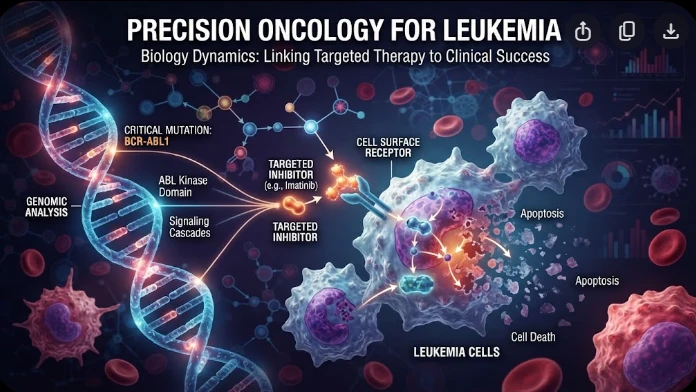
The article examines leukemia as an evolving population under targeted therapy, using chronic myeloid leukemia as the main example. BCR–ABL1 inhibition can produce deep responses, but every treatment changes the competitive environment among malignant clones. Quantitative transcript monitoring provides a continuous measure of disease burden, while deep sequencing can identify emerging resistance mechanisms before hematologic progression. A detected mutation is clinically meaningful only when its
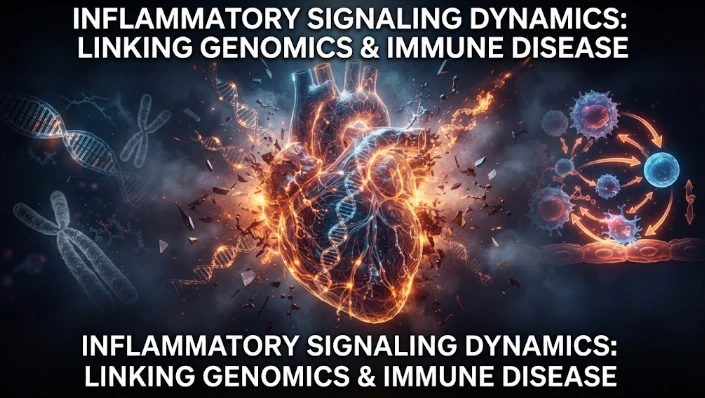
The article examines how cardiovascular genetic risk becomes biologically active through cell-specific inflammatory signaling. Because many vascular-risk variants lie in regulatory DNA rather than coding regions, their effects may appear only in particular endothelial, macrophage, smooth-muscle, or lymphocyte states. Single-cell studies of human atherosclerotic lesions and multiomic endothelial experiments are used to illustrate this context dependence. The article also discusses IL6-related sig
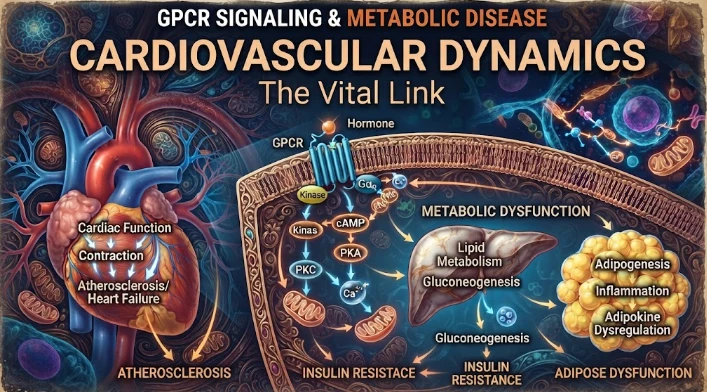
The article examines cardiovascular GPCR signaling as a dynamic response system whose abnormalities can remain hidden in resting measurements. Mechanical stretch, hormones, nutrients, sympathetic activity, and fluid balance can change the amplitude, duration, localization, and recovery of receptor signaling. Examples include mechanically activated angiotensin-receptor signaling, endosomal signaling, beta-arrestin-dependent trafficking, and biased glucagon-like peptide-one receptor responses. The