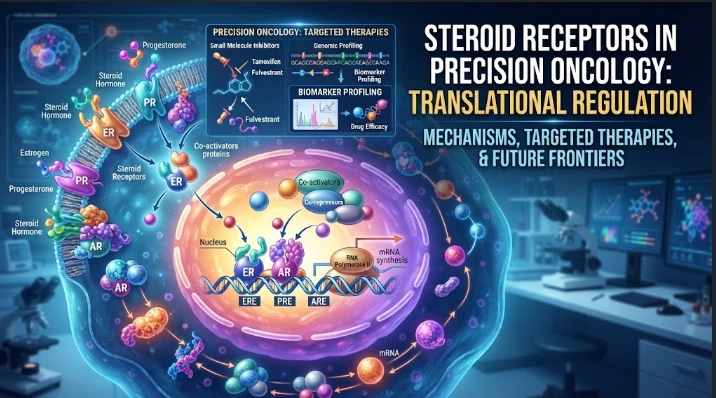
The article explains how hormone-dependent cancers can remain biologically tied to steroid-receptor pathways even after becoming resistant to endocrine therapy. Breast and prostate cancers illustrate multiple escape routes, including receptor mutation, coactivator amplification, altered protein degradation, growth-factor crosstalk, metabolic rewiring, enhancer reprogramming, and lineage plasticity. SRC-family coactivators and related regulatory pathways are discussed as examples of how transcriptional output can persist despite hormonal suppression. The article argues that receptor status alone is insufficient for precision oncology; genomic, transcriptomic, proteomic, phosphoproteomic, chromatin, and single-cell measurements are needed to identify the dominant resistance mechanism. Patient-derived organoids, xenografts, and CRISPR perturbation can test whether candidate dependencies are causal and therapeutically reversible. The discussion also distinguishes prognostic from predictive biomarkers and emphasizes longitudinal sampling of metastatic disease. Overall, the proposed framework classifies resistance by mechanism so therapy can target the remaining functional dependency.
signaling to grow, but the same tumors can survive for years to therapy designed to block these receptors. Breast and prostate cancers demonstrate how a pathway can have a continuing central role despite the change in pathway regulation, in response to therapy. The identification of the remaining component of the hormone signaling system that remains active in each tumor is crucial for precision oncology, since the presence of the receptor does not indicate what the active resistance mechanism is.
One of the biggest success stories in pathway directed therapy is in treating breast cancer with estrogens receptors. Therapies can inhibit the activity of the estrogen receptors or degrade them, or they can inhibit estrogen production. While there is durable control, mutations in the receptor, changes in coregulators, growth factor signaling, cell cycle activation, or epigenetic change can cause relapse. Hormone signal to transcription remains fairly linear for the biological category, whereas the route becomes more varied.
This is a similar pattern in androgen receptor driven prostate cancer. Androgen deprivation puts a lot of pressure on the tumour, but resistant cells can upregulate the receptor, make androgen locally, modify the receptor structure, or activate alternative transcriptional programmes. The output of receptors can be altered by coregulators and protein degradation pathways without affecting the circulating hormone. This adaptation demonstrates the need for precision treatment for solutions to the regulatory circuit, which does not rely exclusively on organ and receptor expression.
The circuit is crucial and involves steroid receptor coactivators. SRC family proteins bind to nuclear receptors and bring enzymes that restructure chromatin and facilitate transcription. SRC three is amplified or over-expressed in subsets of breast cancer and is associated experimentally to tumor growth and metastasis. Loss of SRC alone in mouse models decreased metastatic behavior, thereby suggesting that coactivators can contribute to progression beyond mere receptor levels.
This can be amplified by metabolic signaling. PFKFB4 was identified to be a kinase that can modify the structure of SRC and enhance breast cancer associated activity via research. That link is a connection between glucose metabolism and hormone regulated transcription. Under metabolic stress, a tumor can thus act on a receptor coactivator via a pathway not previously considered as an endocrine one. In order to leverage precision oncology, it is increasingly important to identify such cross pathway dependencies.
There are other examples, such as the degradation of proteins. Prostate cancer mutations in SPOP may affect the levels of regulatory proteins related to AR activity. If the degradation does not occur, a coactivator or transcriptional regulator may accumulate and maintain signaling. The mutation can be identified by genomic sequencing but the therapeutic implication of the mutation depends on the nature of the proteins whose stability is increased and whether the resulting transcriptional programme will produce a druggable dependency.
A receptor also contains structural information. Ligands result in different receptor conformations and alter recruitment of coactivators / corepressors. Selective receptor modulators work on this bases by being an antagonist in one tissue and partial agonist in the other. Mutations in the genes can affect the binding to the ligands or prefer the active conformation, leading to a change in sensitivity to normal endocrine agents. In these situations, structural biology can help provide guidance in the selection of a therapy.
Precision profiling should be done at the genomic and functional level. Sequencing of DNA can detect mutations in the receptor, changes in path, or copy number changes. The transcriptional consequences can be deciphered by RNA profiling, and the state of active signaling and coregulators can be determined through proteomics and phosphoproteomics. Accessibility of chromatin may highlight a chromatin enhancer reprogramming. Nowhere are all the details captured in a single layer, since the resistance can emerge due to the regulation of the gene without a mutation.
Single cell analysis yields information about minority states that bulk profiling cannot. The cells of a tumor may include receptor high, receptor low, cycling, quiescent, and various enhancer use cells. Endocrine therapy alters the ratios of those states. Longitudinal single cell sampling may be able to differentiate between clonal selection and reversible adaptation, which is important when determining the need for eradication or the possibility for a redirected resistance program.
Functional evidence is provided by patient derived models. Together with the inhibitors of candidate escape pathways, organoids, xenografts, and ex vivo cultures can be exposed to endocrine agents. CRISPR perturbation can be used to determine if a coactivator, kinase, or enhancer is necessary for resistant growth. It is in this context that such experiments assist in differentiating passengers from drivers from the numerous molecular changes found after progression. Further, precision oncology can become more reliable as long as treatment hypotheses can be tested directly, and they are found to persist.
But this is only the beginning: the potential of small molecule inhibition of SRC three. Compounds that disrupt this coactivator have been found to exhibit antitumour activity in experimental models, and it has been shown that transcriptional coregulators can be targeted by pharmacologically active compounds. There is still a lot of clinical translation to be done regarding safety, selectivity, and patient selection, but the idea goes beyond the receptor in endocrine therapy. A resistant tumor may still have a sensitive dependency in the pathway that carries out receptor signalling.
Temporal awareness is necessary for clinical deployment as well. A biomarker that is predictive of response prior to treatment may become insignificant after a few lines of treatment. The lesions that develop in metastasis may differ in appearance and resistance mechanisms at various locations. Validated monitoring tools, such as serial biopsy, circulating tumour DNA, can provide an evolving molecular picture. When clinically appropriate, treatment decisions should be based upon the regulatory state at the time of treatment, not upon an archived diagnosis.
The most useful precision model is to group hormone dependent cancer into categories based on the mechanisms, such as receptor alteration, coactivator amplification, signaling crosstalk, altered degradation, enhancer reprogramming, or lineage transition. Different experiments and perhaps different therapies are predicted by each mechanism. Such classification also accepts that there may be multiple mechanisms that are valid and can be combined together, or treated sequentially depending on the dominant dependencies.
There are also restrictions on resistance pathways that are determined by the type of tumor. A breast cancer with maintained luminal identity can persist on estrogen receptor associated programs while lineage plasticity can diminish reliance on these programs and alternatively trigger alternative transcription factors. Related transitions with intense suppression of the androgen pathway may occur with prostate cancer. Lineage change markers may thus be useful to distinguish deeper reprogramming from a normal receptor pathway adaptation.
Mechanistic prioritization is necessary for combination therapy due to increased toxicity from broad pathway inhibition. Once the phosphoproteomics data prove that in resistant cells a receptor coactivator is consistently activated by one kinase, targeting the kinase might be more rational than providing multiple, non-specific agents. Experiments to rescue function can be performed to establish the release of endocrine sensitivity. This evidence forms a more robust benefit risk case for clinical testing.
Outcome studies must also separate the prognostic and predictive biomarkers. A high SRC three related signature might co-become with aggressive disease but without determining which therapy is more effective. Predictive evidence needs to be combined with treatment – preferably in a randomized environment or in a thoughtful, prospective trial. This distinction is the basis of precision oncology as a biological marker won't automatically mean treatment change.
Clinical annotation must be at least as detailed. Receptor biology can be influenced by prior endocrine treatment, length of response, metastatic location, meopausal status, co-existing alterations or co-existing medications. Molecular datasets that are not linked to treatment history have a potential to overestimate the similarity of mechanically different resistance. The closer the regulatory profile is interpreted to the exact selective pressures that produced it, the more precise the classification will be.
The same applies to metastatic heterogeneity. Two lesions growing in the same organism may have different responses to the same systemic hormones, due to the establishment of different stromal signals, genomic changes, and transcription states in each lesion. Multi site sampling of selected cases can determine if there is a single dominant mechanism or if the therapy should consider parallel evolutionary paths within the same patient.
This added context is important.
Steroid receptors are essential anchors as their involvement in the maintenance of hormone-dependent tumors is universal, even when the hormonal connections are altered. The combination of receptor status with structural biology, coregulator function, chromatin state, metabolic signaling and longitudinal evolution makes precision oncology more powerful. The resulting framework is not one of resistance where the endocrine dependence is dropped after resistance. It cuts down into that dependency until the last therapeutic vulnerability is revealed.
CITE THIS ARTICLE
Tasmeem, S. (2026). Hormone Dependent Cancer Roles in Precision Oncology through Steroid Receptors and Transcriptional Regulation. https://www.sadiaresearchhub.com/article/87a02353-f1c3-5590-8688-b89e94cd27e0
S. Tasmeem, “Hormone Dependent Cancer Roles in Precision Oncology through Steroid Receptors and Transcriptional Regulation,” 2026. [Online]. Available: https://www.sadiaresearchhub.com/article/87a02353-f1c3-5590-8688-b89e94cd27e0
Tasmeem, S. (2026) ‘Hormone Dependent Cancer Roles in Precision Oncology through Steroid Receptors and Transcriptional Regulation’. Available at: https://www.sadiaresearchhub.com/article/87a02353-f1c3-5590-8688-b89e94cd27e0
Tasmeem, Sadia. “Hormone Dependent Cancer Roles in Precision Oncology through Steroid Receptors and Transcriptional Regulation.” 2026, https://www.sadiaresearchhub.com/article/87a02353-f1c3-5590-8688-b89e94cd27e0.
Sadia Tasmeem. “Hormone Dependent Cancer Roles in Precision Oncology through Steroid Receptors and Transcriptional Regulation.” (2026). https://www.sadiaresearchhub.com/article/87a02353-f1c3-5590-8688-b89e94cd27e0.
Tasmeem S. Hormone Dependent Cancer Roles in Precision Oncology through Steroid Receptors and Transcriptional Regulation. 2026. https://www.sadiaresearchhub.com/article/87a02353-f1c3-5590-8688-b89e94cd27e0
@misc{article_87a02353f1c355908688b89e94cd27e0,
  title = {Hormone Dependent Cancer Roles in Precision Oncology through Steroid Receptors and Transcriptional Regulation},
  author = {Sadia Tasmeem},
  year = {2026},
  url = {https://www.sadiaresearchhub.com/article/87a02353-f1c3-5590-8688-b89e94cd27e0},
}
TY  - GEN
AU  - Sadia Tasmeem
TI  - Hormone Dependent Cancer Roles in Precision Oncology through Steroid Receptors and Transcriptional Regulation
PY  - 2026-06-21
UR  - https://www.sadiaresearchhub.com/article/87a02353-f1c3-5590-8688-b89e94cd27e0
ER  -
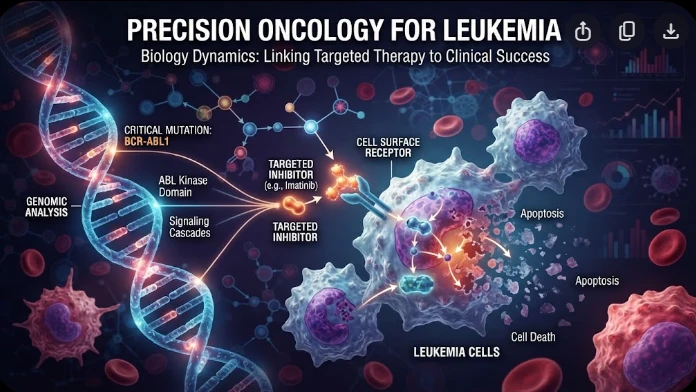
The article examines leukemia as an evolving population under targeted therapy, using chronic myeloid leukemia as the main example. BCR–ABL1 inhibition can produce deep responses, but every treatment changes the competitive environment among malignant clones. Quantitative transcript monitoring provides a continuous measure of disease burden, while deep sequencing can identify emerging resistance mechanisms before hematologic progression. A detected mutation is clinically meaningful only when its
The article examines how cardiovascular genetic risk becomes biologically active through cell-specific inflammatory signaling. Because many vascular-risk variants lie in regulatory DNA rather than coding regions, their effects may appear only in particular endothelial, macrophage, smooth-muscle, or lymphocyte states. Single-cell studies of human atherosclerotic lesions and multiomic endothelial experiments are used to illustrate this context dependence. The article also discusses IL6-related sig
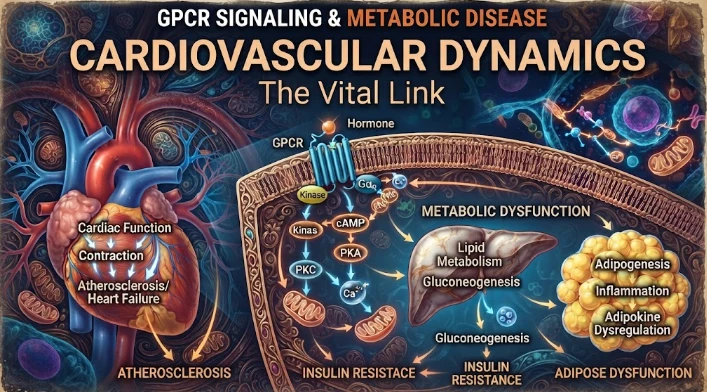
The article examines cardiovascular GPCR signaling as a dynamic response system whose abnormalities can remain hidden in resting measurements. Mechanical stretch, hormones, nutrients, sympathetic activity, and fluid balance can change the amplitude, duration, localization, and recovery of receptor signaling. Examples include mechanically activated angiotensin-receptor signaling, endosomal signaling, beta-arrestin-dependent trafficking, and biased glucagon-like peptide-one receptor responses. The