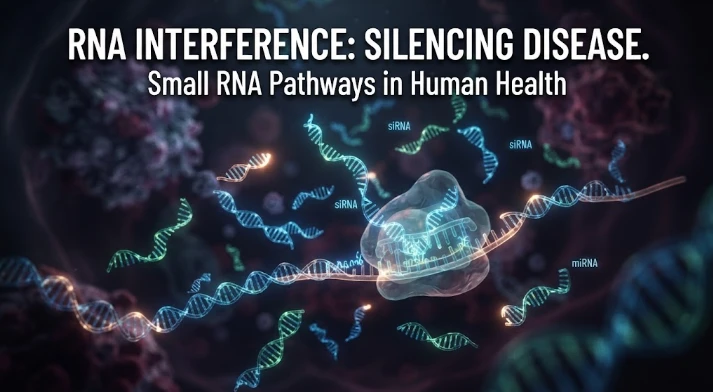
The article presents RNA interference as a regulatory network rather than a simple sequence-matching mechanism. Small RNAs must be generated, loaded into Argonaute proteins, recognize accessible targets, and then promote messenger-RNA cleavage, decay, or translational repression. Argonaute identity, RNA structure, transcript isoforms, subcellular localization, and target abundance influence the final effect. The article also links small-RNA pathways to genome defense through mechanisms that suppress transposable elements and protect genomic stability. Disease can result from loss or gain of microRNA regulation, altered target availability, or disruption of broader feedback circuits. Therapeutic RNA interference therefore requires careful off-target analysis, delivery, stoichiometric modeling, and monitoring of downstream network consequences. Longitudinal measurements can distinguish direct silencing from later compensatory transcriptional changes. The central message is that sequence specificity alone is insufficient: clinically useful RNA interference must be understood in the context of cell state, network feedback, target competition, and genome-wide functional effects.
RNA interference is frequently explained as a straightforward sequence matching process: a small RNA leads the protein machine to a complementary RNA, and gene expression decreases. In the real system it is a network. The final effect is determined by the biogenesis of small RNA, Argonaute loading, target recognition, decay of mRNAs, translational repression, subcellular localization, and feedback with transcription. Disruption of any of these regulatory components or deliberate manipulation of the pathway for therapeutic purposes can lead to human disease.
The core of the silencing machinery are the Argonaute proteins. Small interfering RNAs and microRNAs deliver their base pairing information into Argonaute complexes for target recognition. Endonuclease activity of human Argonaute 2 that can be directly used to cleave highly complementary target RNA. Noncleaving repression and cooperative interactions are the main contribution of other Argonaute proteins.
Small interfering RNAs are generally generated from double stranded RNA or can be experimentally introduced. Dicer processing generates short duplexes which can be loaded into Argonaute. One of them is left as the guide, and the other is thrown away. The choice of strand is important as the incorrect strand can cause off target silencing.
The endogenous transcripts give rise to microRNAs, which typically do not form a perfect match with numerous messenger RNAs. A short seed region is very important for target selection and one microRNA can influence a network of genes. Changes in microRNA expression, mutations of microRNA, or mutations of the target site that affect its regulation can lead to disease.
This means that target recognition is probabilistic, rather than binary. Repression is affected by number of target sites, local RNA structure, competing proteins, and binding strength. Some transcripts can be acted upon by multiple Argonaute complexes. To predict biological effect, the entire regulatory context (and not just sequence complementarity) must be measured.
Another mechanism of interaction between RNA interference and transcriptional control is possible. It has been reported that small RNAs directed to promoter regions recruit Argonaute associated silencing mechanisms and chromatin regulators in human cells. Although the context-dependent nature of the extent and physiological relevance of nuclear RNA interference is more pronounced than cytoplasmic silencing, the observations presented here indicate that small RNA pathways can link RNA sequence to chromatin state.
Single cell analysis will allow us to determine the location of these networks. A given microRNA might be present in one cell type and not another, and the same target mRNA might be spliced in different ways to have different accessible sites. Such relationships may be masked in bulk tissue averages. Regulatory circuits can be identified in a given population of cells using cell resolved transcriptomics and small RNA sequencing.
The ability to test network components by CRISPR perturbation. These can be deleted to determine if the predicted interaction alters the phenotype of the knockout. Restored or synthetic guide sequence enhances causal inference. Many false positives are generated when using computational target prediction and a functional validation is necessary.
Evolutionary context: Genome defense. Transposable elements are tightly suppressed in many organisms, including germ cells via small RNA systems such as those acting by piRNAs. Humans have a few small RNA mechanisms to help maintain genome integrity, but the details of these pathways vary from tissue to tissue. Disruption can lead to genomic instability or changes in fertility and/or development.
The pathway can be engineered clinically as demonstrated by therapeutic RNA interference. Small interfering RNAs can be chemically modified for delivery to specific tissues, which can result in a decrease in the expression of disease-causing genes. The silencing approaches that utilize sequence-specific targeting to the genes expressed in the liver have already been proven to generate long-term clinical changes. The problem with delivery is critical for tissues other than the liver.
Sideways activity is no longer a safety risk. Mild complementarity can silence unwanted transcripts and double stranded RNA can trigger innate immune sensors when chemistry and delivery are not carefully considered. These effects are minimized in modern designs, as a result of sequence optimization, chemical modification and controlled dosing. Transcriptome changes should be monitored alongside target knockdown in mechanistic monitoring.
Silencing is reversible so it is important to measure longitudinally. Finally, the guide RNA is destroyed, Argonaute complexes are replaced, and the expression of the target can be restored. Treatment intervals should be the same as the pharmacodynamics. Repeated sampling is useful to differentiate temporary repression from downstream remodelling in disease research.
Guide target contacts can be mapped directly with Argonaute crosslinking methods. The sequencing of the physically associated RNA molecules offers an improved proof than solely the computational prediction of neighbor sets. Kang et al. used these maps in conjunction with the changes in transcripts following perturbation to identify targets whose binding leads to functional repression.
Competition between small RNAs can affect network behaviour. Plenty of the argonaute proteins and processing enzymes are limited, so when there's a lot of one guide expressed, there are less endogenous microRNAs. The therapeutic designs should not over saturate the pathway. Activity of the introduced construct can be compared with endogenous microRNA to determine if there is any disruption of normal regulation.
The importance of subcellular localization is that Argonaute complexes, processing bodies, membranes, and messenger RNAs are found in stress granules. The silencing machinery can be physically removed from the cell but still in the cell. Imaging and fractionation can detect specific regulation within the compartment that is not detected by whole cell sequencing.
Recognition and stability may be modified by changes in the structure of RNA. The methylation of target RNAs and other chemical modifications may change the structure or protein interactions, which indirectly affects the access to small RNA complexes. Predicted sites can therefore be understood to behave differently in disease states, by the integrated epitranscriptomic analysis.
Network safety is particularly important for therapeutic silencing of regulatory genes. A single transcription factor can affect hundreds of other genes. Treatment-specific monitoring of the cell phenotype can distinguish desired pathway correction from a more general loss of cell identity.
Feedback loops exist in small RNA networks, too. A microRNA may be able to inhibit a corresponding transcription factor for the same microRNA gene locus, leading to a stable or oscillatory state. Simple target lists, then, cannot necessarily predict after-effects due to the perturbation of one component.
Stoichiometry is important in competitive situations. If the message is abundant, a small portion of the complexes can sequester it, but if the target is low abundance, it can be sensitive to small changes in the concentration of the guide. In addition to the binding sequence, quantitative models must also require the abundance of the molecules.
Variants associated with disease can modify this stoichiometry through modification of copy number of targets or of abundance of transcripts. An amplified oncogene with microRNA sites may change the regulatory competition in other targets. One explanation for this is the presence of such network effects.
Transcriptome wide off target analysis and functional endpoints should be performed as therapeutic validation. The desired reduction in the intended transcript is essential but not enough. There should be no generalised stress response to improve cell physiology in the desired direction.
A long-term study can be used to determine if the target pathway is restored through compensatory transcription. Sustained knockdown of biological networks can be tolerated. Compensation needs to be limited or not to achieve durable clinical benefit.
Network analysis will also help identify direct targets from secondary consequences. Argonaute binding of genes is a much better direct candidate than genes that change later, as a result of transcription cascades, after guide perturbation. Time series data can hence aid in the target attribution modeling and uncover propagation of local RNA silencing into broader cell state change.
This systems perspective enables a direct silencing event to be demixed from the secondary network adaptations that will ultimately drive disease phenotype.
This network perspective is related to the research of Phillip D. Zamore in RNA interference, small RNAs and genome defense. Small RNA pathways link sequence recognition to protein complexes, RNA decay, translation, chromatin and genome stability. Single microRNAs or small interfering RNAs are added to this larger regulatory network to enrich human disease research. RNA interference is most useful in science and therapy when it is sequence specific and is measured with great care in the context of the cells, off target effects and network consequences of silencing one node.
CITE THIS ARTICLE
Tasneem, S. (2025). RNA Interference Networks through Small RNA Pathways in Human Disease. https://www.sadiaresearchhub.com/article/0a9fb45f-1408-5c8f-80ee-b9b1bc560522
S. Tasneem, “RNA Interference Networks through Small RNA Pathways in Human Disease,” 2025. [Online]. Available: https://www.sadiaresearchhub.com/article/0a9fb45f-1408-5c8f-80ee-b9b1bc560522
Tasneem, S. (2025) ‘RNA Interference Networks through Small RNA Pathways in Human Disease’. Available at: https://www.sadiaresearchhub.com/article/0a9fb45f-1408-5c8f-80ee-b9b1bc560522
Tasneem, Sadia. “RNA Interference Networks through Small RNA Pathways in Human Disease.” 2025, https://www.sadiaresearchhub.com/article/0a9fb45f-1408-5c8f-80ee-b9b1bc560522.
Sadia Tasneem. “RNA Interference Networks through Small RNA Pathways in Human Disease.” (2025). https://www.sadiaresearchhub.com/article/0a9fb45f-1408-5c8f-80ee-b9b1bc560522.
Tasneem S. RNA Interference Networks through Small RNA Pathways in Human Disease. 2025. https://www.sadiaresearchhub.com/article/0a9fb45f-1408-5c8f-80ee-b9b1bc560522
@misc{article_0a9fb45f14085c8f80eeb9b1bc560522,
  title = {RNA Interference Networks through Small RNA Pathways in Human Disease},
  author = {Sadia Tasneem},
  year = {2025},
  url = {https://www.sadiaresearchhub.com/article/0a9fb45f-1408-5c8f-80ee-b9b1bc560522},
}
TY  - GEN
AU  - Sadia Tasneem
TI  - RNA Interference Networks through Small RNA Pathways in Human Disease
PY  - 2025-02-16
UR  - https://www.sadiaresearchhub.com/article/0a9fb45f-1408-5c8f-80ee-b9b1bc560522
ER  -
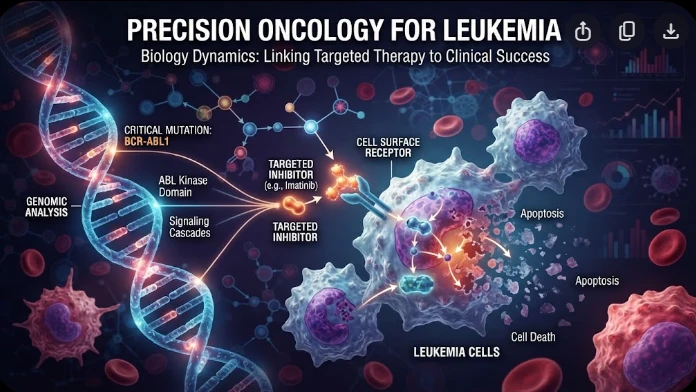
The article examines leukemia as an evolving population under targeted therapy, using chronic myeloid leukemia as the main example. BCR–ABL1 inhibition can produce deep responses, but every treatment changes the competitive environment among malignant clones. Quantitative transcript monitoring provides a continuous measure of disease burden, while deep sequencing can identify emerging resistance mechanisms before hematologic progression. A detected mutation is clinically meaningful only when its
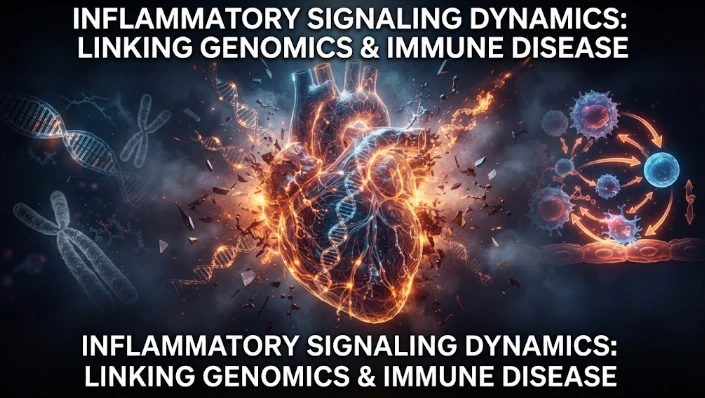
The article examines how cardiovascular genetic risk becomes biologically active through cell-specific inflammatory signaling. Because many vascular-risk variants lie in regulatory DNA rather than coding regions, their effects may appear only in particular endothelial, macrophage, smooth-muscle, or lymphocyte states. Single-cell studies of human atherosclerotic lesions and multiomic endothelial experiments are used to illustrate this context dependence. The article also discusses IL6-related sig
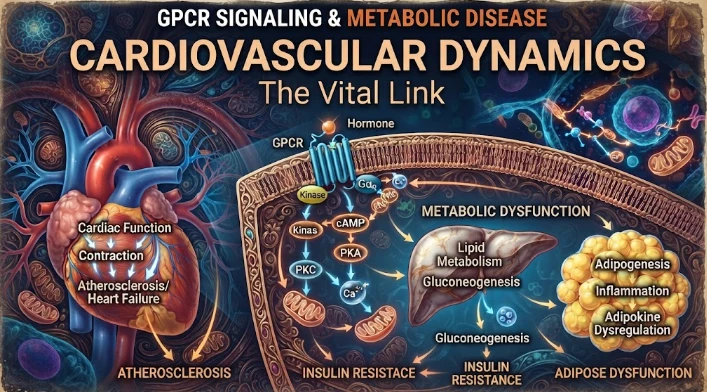
The article examines cardiovascular GPCR signaling as a dynamic response system whose abnormalities can remain hidden in resting measurements. Mechanical stretch, hormones, nutrients, sympathetic activity, and fluid balance can change the amplitude, duration, localization, and recovery of receptor signaling. Examples include mechanically activated angiotensin-receptor signaling, endosomal signaling, beta-arrestin-dependent trafficking, and biased glucagon-like peptide-one receptor responses. The