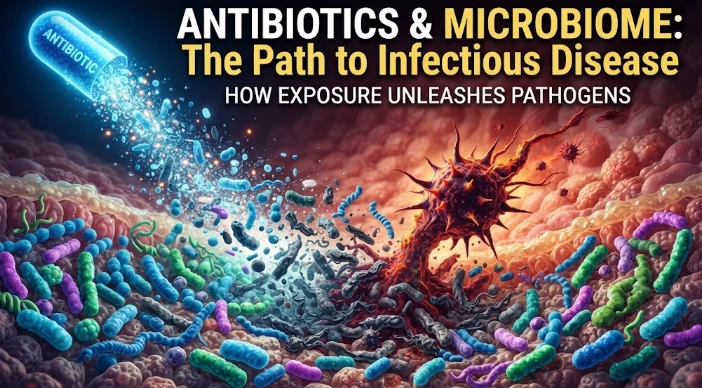
The article treats antibiotic exposure as a time-dependent ecological process involving drug concentration, loss of susceptible organisms, expansion of resistant populations, metabolic change, and gradual recovery. Dense longitudinal studies of the gut microbiome show that diversity can rebound while particular strains, resistance genes, or microbial functions remain altered for months. The article recommends metagenomic and metabolomic sampling before, during, and after treatment to distinguish rapid, delayed, and persistent recovery patterns. Causal exposure models are needed because the infection that prompted antibiotics can itself alter diet, inflammation, and microbial ecology. Healthy-volunteer studies and patient cohorts provide complementary evidence. Potential recovery interventions, including defined consortia, dietary strategies, and microbiota-based therapies, should be judged by ecological function, colonization resistance, and safety rather than diversity alone. Mathematical models can estimate recovery rates and tipping points but require experimental validation. Overall, antibiotics are framed as evolutionary perturbations whose effects can extend beyond the final dose.
From the microbiome point of view, exposure to an antibiotic isn't a single thing. It is a sequence from increasing concentrations of the drug to declining populations of susceptible organisms, increasing populations of resistant organisms, shifting of metabolites, and beginning of ecological recovery following cessation of treatment. Various species and strains have different recovery rates. Some never regain their former plentifulness. The measurement of this time-dependent process provides precision to infectious disease research beyond summarizing into exposed or unexposed.
The richness of healthy adult gut communities has been found to decrease during antibiotic use and can rebound quite significantly during the subsequent weeks, as demonstrated by dense longitudinal sampling. Recovery can create a lasting memory. Species that existed prior to treatment may not be detected for months afterward, resistant genes may be maintained at high levels, and metabolic output may change from a normal level. So ecological resilience is partial and path dependent.
Strain level dynamics play a particularly important role. When the species returns after therapy, it may be the same species or a new “coloniser” species with different genes for resistance and metabolism. This replacement is hard to miss with short taxonomic markers. Shotgun metagenomics is sufficiently resolving to identify strain-specific variants and to detect the regrowth, immigration, or competitive turnover.
Metabolomics assesses the functional impact of these changes. Antibiotics can decrease the organisms that make the short chain fatty acids and affect bile acid metabolism. Changes in these affects epithelial nutrition, pathogen growth and immune signaling. A community that appears to be taxonomically recovered may be functionally different if particular metabolic pathways are missing or elsewhere in the community.
At the same time, resistance evolution is taking place. Resistance is increased with drug exposure and can be transferred between species by horizontal transfer. Sequencing can be used to identify new resistance mutations and mobile elements, however, functional assays are required to confirm the phenotype. Not all genes found in metagenomic data have clinical significance when exposed to all conditions.
Use of causal exposure modeling can distinguish the effects of antibiotics from the infection that led to treatment. Each of the changes in diet, bowel function, inflammation and health care exposure due to illness can alter the microbiome. Ideally, healthy volunteer studies give better estimates of direct drug effects and patient cohorts provide clinical realism. Pharmacologic disturbance can be distinguished from disease associated change by combining both designs.
Sheltering in soil is important, as microbiomes change naturally over time so repeated sampling before treatment is valuable. If a single baseline sample is collected, it is possible to make ordinary variation appear as an antibiotic effect. Several pre-exposure measurements are made to estimate an individual's normal range, thus enhancing identification of deviations from the normal range. This same would occur post treatment where one late sample may not capture an earlier unstable recovery phase.
Body site matters. Oral, gut, skin and vaginal communities are different and so react differently to the same systemic antibiotic due to differing exposure, ecology and local host factors. Some regimens have been found to disrupt the oral microbiome more so than the gut, as demonstrated in studies of saliva vs. feces. Anatomical ecosystem should be connected to the infective disease risk, accordingly.
The impacts of community interactions may be nonlinear. When one species is removed, another may benefit from the nutrients freed up and when a cross feeding partner is reduced other species may not be sensitive to the antibiotic and still thrive. They can be detected by ecological network analysis. This is because resistance is not mutually transmissible; one of the reasons it's impossible to predict the full response of the community from susceptibility testing of isolated organisms.
Recovery is also influenced by host factors. The available niches and recolonized strains depend on diet, age, previous antibiotic use, medication, immunity and exposure to microbes within the household. Patients who have taken repeated courses may have a depleted or resistant microbiome. Exposure history should thus be incorporated into the longitudinal models.
The best translative test is clinical infection outcomes. Can researchers ask if incomplete recovery means there will be a subsequent infection, colonization with resistant organisms or later antibiotic usage? Care needs to be taken in such studies as the high-risk patients are also treated more aggressively with antibiotics. When designing a study ahead of the study, it is possible to minimize reverse causation.
All potential recovery actions should be assessed using ecological metrics and safety. A defined consortium may speed up the recovery of lost functions, and a fiber intervention may help maintain the life of the existing fermenters. The success of FMT in treating RCDI has been supported by strong evidence, however, its broad application to other conditions is premature. Mechanism and indication are important.
This is a dynamic evidence that can be used for antibiotic stewardship without compromising treatment. The purpose is not to resist antibiotics if it is beneficial. The goal is to select spectrum, duration and combinations in a rational manner and be aware of the disruption of microbiomes as a measurable cost. This cost can be compared to other regimens along with clinical cure and resistance data.
Ecological Functions (such as colonization resistance) can also be used to measure recovery. Phenotypically, a potential pathogen can be added to the ex vivo culture community to determine if the community will inhibit the growth of the potential pathogen. It may be possible to achieve functional recovery prior to taxonomic recovery or be suboptimal even when diversity is recovered. This assay correlates community composition with an outcome relevant to infection.
Because of their ability to lyse and/or transfer genes to bacteria, phage populations can affect bacterial recovery. Antibiotic-induced changes in the bacterial host's community may also alter the virome and in turn impact recolonization. Longitudinal virome data, which are less frequent than bacterial data, can provide insight into why two apparently similar communities differ following the same treatment.
Where possible, resistance genes need to be associated with their microbial hosts. If one gene is increasing, it may indicate an increase in the concentration of an existing strain, not horizontal gene transfer. Long reads and linked read methods can be used to associate resistance determinants to nearby genomes, which will enhance estimates of the spread of resistance through the community.
Tailored recovery profiles can be used to guide trial design. Rather than an average, studies can categorize rapid, delayed, and persistent disruption. Subsequent features can then be tested for prediction by using baseline features. This could also help to determine which patients would be appropriate for a recovery intervention, but not every patient that is treated would be exposed to another microbiome therapy.
Estimates of recovery rates and tipping points can be determined mathematically. When models are used to test for observed trajectories matching predicted recolonization, they can assume that taxa are interacting populations competing for nutrients and space. Experimental validation required since models with a high number of parameters can be used to fit data without revealing the real mechanism.
A personal baseline data could be used in the future to detect abnormal microbiomes. A prediction of response to a given antibiotic can be made based on prior diversity loss, low abundance of keystone functions or a large resistance reservoir. This type of prediction needs to be tested prospectively before it can affect treatment, particularly if the severity of infection requires therapy to be administered quickly.
Abundance and occupancy should be distinguished in recovery metrics. A low abundance strain may be maintained undetected for a period of time and only reappear when it has become abundant enough to be detected, or when it is recolonized from another source. Misclassification is minimized by sensitive strain typing and multiple sampling. This difference is important in determining if the exposure to antibiotics is permanent or just short-term suppression of the presence of a lineage.
The endpoint should still be 'ecological function'. Recovery without pathogen exclusion, metabolic output and stability of resistance is more meaningful than merely returning a diversity index. It is possible to determine whether a post-antibiotic ecosystem has recovered in resilience or just in taxonomic richness using multiple functional measures.
In keeping with this time-dependent ecological perspective, Martin J. Blaser's work on antibiotics and the human microbiome is particularly focused on ecological research. The metagenomic and metabolomic density sampling can uncover the disappearance, return and replacement of organisms, genes and functions. Consideration of antibiotic exposure as an evolutionary perturbation with long-term consequences after the last dose not only aids in infectious disease control, but also affects future colonization resistance and the reservoir for emergence of antimicrobial resistance.
This distinction will enhance interpretation of recovery and future risk of infection.
CITE THIS ARTICLE
Tasneem, S. (2025). Antibiotic Exposure Dynamics Linking Human Microbiome to Infectious Disease. https://www.sadiaresearchhub.com/article/0d1940cc-e57e-51da-8714-3ac1f880ef97
S. Tasneem, “Antibiotic Exposure Dynamics Linking Human Microbiome to Infectious Disease,” 2025. [Online]. Available: https://www.sadiaresearchhub.com/article/0d1940cc-e57e-51da-8714-3ac1f880ef97
Tasneem, S. (2025) ‘Antibiotic Exposure Dynamics Linking Human Microbiome to Infectious Disease’. Available at: https://www.sadiaresearchhub.com/article/0d1940cc-e57e-51da-8714-3ac1f880ef97
Tasneem, Sadia. “Antibiotic Exposure Dynamics Linking Human Microbiome to Infectious Disease.” 2025, https://www.sadiaresearchhub.com/article/0d1940cc-e57e-51da-8714-3ac1f880ef97.
Sadia Tasneem. “Antibiotic Exposure Dynamics Linking Human Microbiome to Infectious Disease.” (2025). https://www.sadiaresearchhub.com/article/0d1940cc-e57e-51da-8714-3ac1f880ef97.
Tasneem S. Antibiotic Exposure Dynamics Linking Human Microbiome to Infectious Disease. 2025. https://www.sadiaresearchhub.com/article/0d1940cc-e57e-51da-8714-3ac1f880ef97
@misc{article_0d1940cce57e51da87143ac1f880ef97,
  title = {Antibiotic Exposure Dynamics Linking Human Microbiome to Infectious Disease},
  author = {Sadia Tasneem},
  year = {2025},
  url = {https://www.sadiaresearchhub.com/article/0d1940cc-e57e-51da-8714-3ac1f880ef97},
}
TY  - GEN
AU  - Sadia Tasneem
TI  - Antibiotic Exposure Dynamics Linking Human Microbiome to Infectious Disease
PY  - 2025-06-15
UR  - https://www.sadiaresearchhub.com/article/0d1940cc-e57e-51da-8714-3ac1f880ef97
ER  -
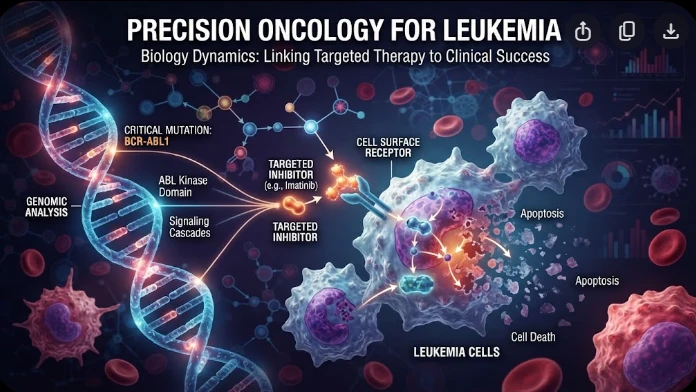
The article examines leukemia as an evolving population under targeted therapy, using chronic myeloid leukemia as the main example. BCR–ABL1 inhibition can produce deep responses, but every treatment changes the competitive environment among malignant clones. Quantitative transcript monitoring provides a continuous measure of disease burden, while deep sequencing can identify emerging resistance mechanisms before hematologic progression. A detected mutation is clinically meaningful only when its
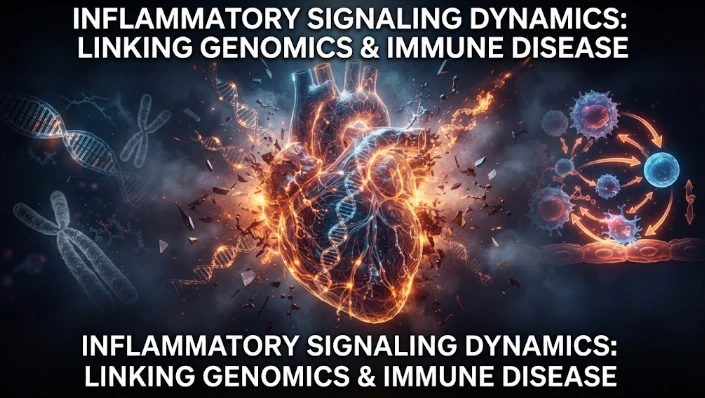
The article examines how cardiovascular genetic risk becomes biologically active through cell-specific inflammatory signaling. Because many vascular-risk variants lie in regulatory DNA rather than coding regions, their effects may appear only in particular endothelial, macrophage, smooth-muscle, or lymphocyte states. Single-cell studies of human atherosclerotic lesions and multiomic endothelial experiments are used to illustrate this context dependence. The article also discusses IL6-related sig
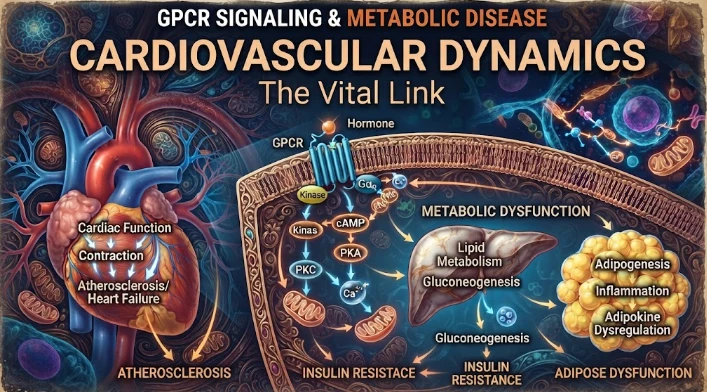
The article examines cardiovascular GPCR signaling as a dynamic response system whose abnormalities can remain hidden in resting measurements. Mechanical stretch, hormones, nutrients, sympathetic activity, and fluid balance can change the amplitude, duration, localization, and recovery of receptor signaling. Examples include mechanically activated angiotensin-receptor signaling, endosomal signaling, beta-arrestin-dependent trafficking, and biased glucagon-like peptide-one receptor responses. The