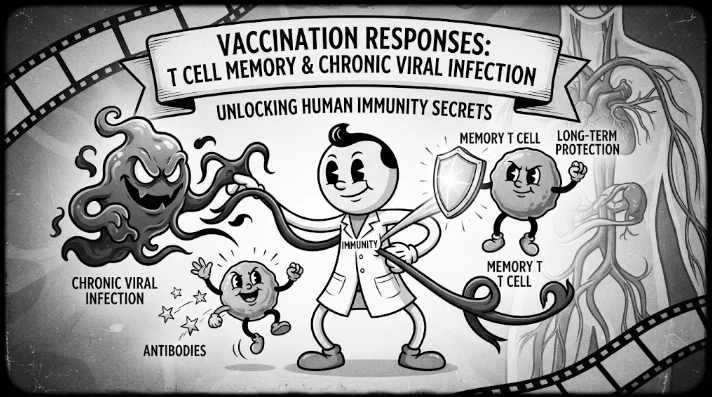
The article considers vaccination during chronic viral infection as a test of the functional reserve of T-cell memory. Persistent infection can remodel antigen-specific and bystander memory populations, affecting proliferation, differentiation, tissue access, and inflammatory balance. The discussion highlights intermediate memory states, variant recognition, and evidence that cellular immunity can remain broad even when antibody neutralization declines. Multicohort systems-immunology studies are proposed to combine antigen-specific CD4 and CD8 assays, single-cell states, receptor sequencing, antibody measurements, viral burden, treatment history, and repeated post-vaccination sampling. Age, chronic infection status, antiviral therapy, and vaccination timing are major modifiers. Vaccine success should be judged by durable, functional, broadly recognizing cells that retain appropriate tissue access and regulation, not only the largest early expansion. Safety and inflammatory injury must be monitored alongside efficacy. Overall, vaccination is presented as a controlled challenge revealing whether chronic exposure has preserved or depleted immune memory capacity.
Vaccination puts memory T cells to work, and asks them to do so in a very particular way: to recognise antigen rapidly, grow efficiently, and to help or to be cytotoxic before its momentum builds to a dangerously high level. This is a challenge given the chronic viral infection as persistent antigen and inflammation can change memory function long before vaccination. Vaccine response is therefore more than just the dose and antigen design. Which memory populations can be deployed for recall depends on the prior infection history, T cell differentiation, tissue distribution, age, treatment exposure, and baseline inflammatory state.
The persistent viruses create memory-like and exhausted populations of various capacities. There is a continuum of cellular proliferation potential and differentiation or functional limitation. Vaccination increases the size of cells that continue to be responsive, but restoration of every chronically remodeled state is not always possible. This is important if vaccine studies are based solely on antibody titers. Although neutralizing antibody levels fall, cellular immunity may also be useful and be influenced by the previous history of antigen exposure.
This is the case for the study of peripheral memory CD8 T cells. Persistent viral infection resulted in identification of a CX3CR1 intermediate population, which was associated with high proliferative and effector function. In both human cytomegalovirus infection and adenovirus vectored vaccination, related cells were seen. Together, these observations indicate that chronic infection and vaccination can act additively on specific differentiation pathways but do not result in the same immune responses. Functional meaning remains determined by origin, tissue distribution and antigen context.
There is a further level of variant recognition. Research investigating SARS-CoV-2 vaccines revealed that vaccine induced T cell memory had strong recognition of various viral variants even though antibody neutralization was more impaired with Omicron. In cellular immunity there is the possibility that many different epitopes may be targeted, therefore the likelihood of a single sequence change removing all the epitopes from the virus is lowered. The breadth alone is not enough; to provide protection against severe disease, the magnitude is also required. Effectiveness is also influenced by proliferating fitness, functional diversity and tissue access.
A chronic infection may alter the threshold. Persistent inflammatory signaling can modify bystander memory cells even when they are specific for unrelated antigens. This remodeling implies that vaccine responsiveness might not only depend on pathogen specific memory but be related to systemic immune history. Chronic infection status, viral control, inflammatory markers and treatment should thus be measured in conjunction with vaccine responses in longitudinal cohorts. If not, then part of the immune variation due to a vaccine may be due to preexisting immune conditioning.
Such separation is more possible with multicohort systems immunology than it is in one cohort. Antigen specific T cell assays can measure the amount of recognition, single cell profiling can characterize cell states, receptor sequencing can monitor the expansion of clones, and cytokine measurements can measure the breadth of function. Kinetics can be identified from repeated samples taken prior to vaccination and following each vaccination. When multiple measurements approach the same value at a later time-point, they may have varying biological implications if they are delayed, fast or slow peaks, or an earlier contraction.
The path through causal mediation can then test the plausibility of the pathways. Serious viral load may affect systemic inflammatory response, which may affect differentiation of memory cells and thus impact vaccine response. Age or treatment can modify each step. While mediation models can't get you to the mechanism, they can help you identify a pathway that is worthy of experimental testing. Rather than looking at cells from individuals with varying immune histories, controlled studies can be performed to determine if there is a predicted increase or decrease in recall capacity of cells obtained from individuals after altering cytokine exposure or checkpoint signaling.
External validation is essential as immune history differs among populations. The prevalence of cytomegalovirus, exposure to SARS-CoV-2, exposure to other common blood-borne infections such as hepatitis and antiviral therapy availability are different across settings, and vaccination schedules are also different. If the predictive value of the T cell signature is associated with an unmeasured exposure pattern, a signature obtained in one population may fail in another population. Replication should preserve the definitions of assays and the prespecified subgroups analysis should not be conducted retroactively for favorable strata.
It is important to give special emphasis to age, due to the fact that the levels of persistent viral burden and the composition of T cells varies throughout life. Elderly individuals have increased numbers of differentiated T cells and depleted reservoirs of naive T cells. That landscape can be affected by chronic infections. Vaccination can still produce significant cellular immunity, with differences in response kinetics and clonal diversity in comparison to younger groups. This should then be considered as a nuisance variable, and age stratification should be incorporated into the analysis.
The other layer is treatment history. Antiviral therapy can inhibit antigen stimulation and change T cell state, and immunosuppressive therapy can inhibit the expansion following vaccination. Baseline state and post vaccine kinetics can be affected by timing. A clinically useful model must be able to differentiate a decreased response due to active viral pressure from a decreased response due to treatment or comorbidity, as each one calls for a different intervention.
Recall can be altered by the timing of infection, viral control and vaccination. The vaccine given during ongoing replication tests an immune environment that is already characterized by inflammation, while the vaccine given after durable suppression tests a less inflammatory environment. Viral load and recent therapies should be noted in studies. Standardized intervals can be compared to determine if there is sustained stimulation which has a limiting effect on expansion, a facilitating effect on contraction, or an effect on differentiation. These time effects may be used to inform the design of a trial but do not presume one schedule is applicable to all chronic infections.
CD4 memory and CD8 memory should be analysed separately and not together. CD4 T cells regulate B cell maturation, cytokine support and recruitment of other immune cells, and CD8 T cells provide direct cytotoxic control. Each compartment can be remodeled in a different way in chronic infection.
One vaccine might lead to retaining a wide spectrum of CD4 recognition with a limited expansion of CD8, or the other way around. The biological meaning can be retained by using separate functional assays, while coordinated responses can be identified by joint modeling. A third layer of antibody measures can offer insights into whether cellular and humoral immunity balance each other out.
Safety and immune activation are also factors to consider. During chronic infection an increase in antigen specific T cell activity could be beneficial for control of the infection, while high levels of inflammation can cause tissue damage. Efficacy measures should be used in conjunction with inflammatory markers, organ function, and clinical adverse events in prospective studies. An intention to recall is desired, not an indiscriminate activation. A systems approach can identify whether vaccine induced expansion is met with appropriate regulation, and help distinguish long-lasting protection from a short-lived reaction that offers no extra control and is encumbered with an unnecessary inflammatory burden.
Duration of immunity should be maintained beyond the first post vaccination peak. Memory populations may shrink very quickly post-expansion, reach stable levels or undergo ongoing changes in response to chronic antigen exposure. Follow-up over multiple months can distinguish transient from permanent remodeling. The ability to clone cells can be used to determine if durable cells are from vaccine expansions or from preexisting memory that came to the fore later. This is a better indicator of vaccine success than any single early time point, especially if chronic infection is still a force.
Boosting response can give a self-scrutineering exercise for memory. There are two types of immune limitation – those who have lots of baseline cells and those who have less but vigorous expansion after a subsequent dose. Immune reserve is better understood through measurements of both the initial state and fold change.
Immunisation in the context of chronic viral infection can be seen as a challenge to immune reserve. The best answer does not always have to be the biggest early expansion, but rather an expansion that creates long-lasting functional, widely recognising cells that can have the right tissue access. Rafi Ahmed's research field is at the intersection of memory biology and chronic infection and vaccine response in just this dynamic setting. Prospective multicohort analysis can provide clues as to whether increasing viral pressure is leading to reduced recall or to reinforcement of resilient memory and can help to determine when vaccination is causing the latter effect.
CITE THIS ARTICLE
Tasmeem, S. (2026). Vaccination Responses through T Cell Memory and Chronic Viral Infection in Human Immunity. https://www.sadiaresearchhub.com/article/168d8b4c-c7ca-5f0c-b1c9-da320bc8d167
S. Tasmeem, “Vaccination Responses through T Cell Memory and Chronic Viral Infection in Human Immunity,” 2026. [Online]. Available: https://www.sadiaresearchhub.com/article/168d8b4c-c7ca-5f0c-b1c9-da320bc8d167
Tasmeem, S. (2026) ‘Vaccination Responses through T Cell Memory and Chronic Viral Infection in Human Immunity’. Available at: https://www.sadiaresearchhub.com/article/168d8b4c-c7ca-5f0c-b1c9-da320bc8d167
Tasmeem, Sadia. “Vaccination Responses through T Cell Memory and Chronic Viral Infection in Human Immunity.” 2026, https://www.sadiaresearchhub.com/article/168d8b4c-c7ca-5f0c-b1c9-da320bc8d167.
Sadia Tasmeem. “Vaccination Responses through T Cell Memory and Chronic Viral Infection in Human Immunity.” (2026). https://www.sadiaresearchhub.com/article/168d8b4c-c7ca-5f0c-b1c9-da320bc8d167.
Tasmeem S. Vaccination Responses through T Cell Memory and Chronic Viral Infection in Human Immunity. 2026. https://www.sadiaresearchhub.com/article/168d8b4c-c7ca-5f0c-b1c9-da320bc8d167
@misc{article_168d8b4cc7ca5f0cb1c9da320bc8d167,
  title = {Vaccination Responses through T Cell Memory and Chronic Viral Infection in Human Immunity},
  author = {Sadia Tasmeem},
  year = {2026},
  url = {https://www.sadiaresearchhub.com/article/168d8b4c-c7ca-5f0c-b1c9-da320bc8d167},
}
TY  - GEN
AU  - Sadia Tasmeem
TI  - Vaccination Responses through T Cell Memory and Chronic Viral Infection in Human Immunity
PY  - 2026-01-25
UR  - https://www.sadiaresearchhub.com/article/168d8b4c-c7ca-5f0c-b1c9-da320bc8d167
ER  -
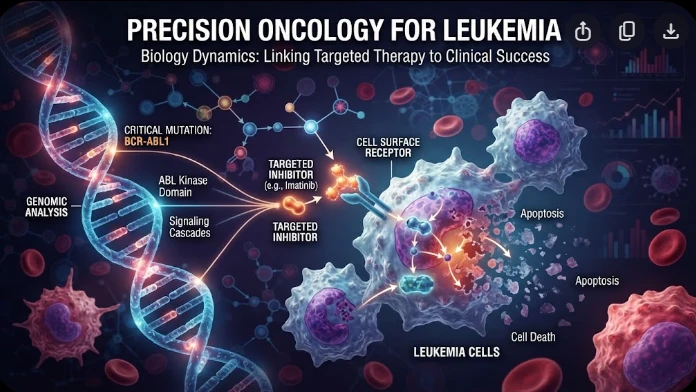
The article examines leukemia as an evolving population under targeted therapy, using chronic myeloid leukemia as the main example. BCR–ABL1 inhibition can produce deep responses, but every treatment changes the competitive environment among malignant clones. Quantitative transcript monitoring provides a continuous measure of disease burden, while deep sequencing can identify emerging resistance mechanisms before hematologic progression. A detected mutation is clinically meaningful only when its
The article examines how cardiovascular genetic risk becomes biologically active through cell-specific inflammatory signaling. Because many vascular-risk variants lie in regulatory DNA rather than coding regions, their effects may appear only in particular endothelial, macrophage, smooth-muscle, or lymphocyte states. Single-cell studies of human atherosclerotic lesions and multiomic endothelial experiments are used to illustrate this context dependence. The article also discusses IL6-related sig
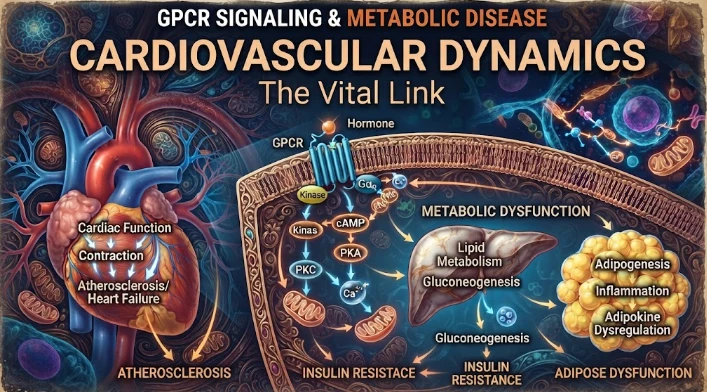
The article examines cardiovascular GPCR signaling as a dynamic response system whose abnormalities can remain hidden in resting measurements. Mechanical stretch, hormones, nutrients, sympathetic activity, and fluid balance can change the amplitude, duration, localization, and recovery of receptor signaling. Examples include mechanically activated angiotensin-receptor signaling, endosomal signaling, beta-arrestin-dependent trafficking, and biased glucagon-like peptide-one receptor responses. The