The article presents pregnancy immunity as a changing trajectory that modifies antiviral and vaccine responses across gestation. Booster-vaccination studies illustrate how maternal antibody breadth, cellular immunity, placental transfer, and variant recognition can differ between pregnant and nonpregnant groups. Gestational age and time since vaccination must be treated separately because immune composition, hormones, placental development, and transfer opportunities change continuously. The article distinguishes maternal immunity from fetal passive protection by integrating maternal blood, cord blood, placental tissue, and postpartum measurements. Antibody subclass, Fc function, T-cell responses, infection history, fetal sex, comorbidities, and variant exposure are all considered important modifiers. Single-cell profiling and placental models can clarify mechanism, while postpartum sampling provides a within-person contrast after pregnancy ends. The overall framework recommends longitudinal maternal and fetal measurements to identify when protection changes, which immune compartment changes, and how vaccination timing influences both maternal defense and neonatal antibody transfer.
There is no single immune state associated with pregnancy. Different endocrine, vascular and immunological conditions exist during first trimester implantation, mid-gestation growth and late gestation preparation for birth. Therefore, antiviral immunity is constantly adapted to a dynamically changing physiological environment. A response at delivery cannot be a valid measure of the entire pregnancy. Longitudinal study would be useful to understand changes in maternal antiviral defenses, vaccine responsiveness, placental function and fetal protection throughout gestation.
A controlled approach to studying this adaptation is now possible with the advent of recent vaccine research. A recent study on pregnant and nonpregnant women following SARS-CoV-2 booster vaccination showed that vaccine immunity may be less against the newer viral variants during pregnancy, suggesting the possibility of gestational effects on serological and cellular immunity following the SARS-CoV-2 booster vaccine. The finding is not necessarily an indication that vaccines are not protective. They demonstrate that the magnitude and breadth of the immune response can vary under standard antigen exposure.
Those differences can be due to gestational timing. There are changes in hormone levels, maternal blood volume, placental development and immune cell frequencies throughout pregnancy. Early vaccination can create memory which will mature for months prior to delivery, late vaccination will create a different interval for antibody transfer. It is important that studies examine time since vaccination and gestational age separately, and not look at these as a crude replacement for both.
Maternal blood only has a part of the story. Placenta may be able to select and transport antibody subclasses via Fc receptor pathways and cord blood is fetal compartment at delivery. High antibody levels in neonates may be sufficient with a moderate maternal response and efficient transfer. However, high maternal antibodies can lead to less fetal antibody when maternal exposure is limited by timing or placental function.
There has been significant transfer of vaccine induced antibodies against SARS-CoV-2, as demonstrated in prospective cohorts studying paired cord, maternal blood samples. Another study showed that booster vaccination in pregnant women can improve binding and neutralizing responses from her and boost transplacental transfer. These observations reveal an important difference—the relationship between maternal immunity and neonatal passive protection are linked yet discrete.
Antibodies need to be used in addition to concentration. Antibody subclass, glycosylation and Fc receptor binding are crucial for antibody functions such as neutralization, complement deposition, phagocytosis by cells, and activation of natural killer cell. Antibody characteristics and placental selection may change during pregnancy. Therefore, measuring total immunoglobulin G alone will not reveal functional differences between the maternal and fetal compartments.
There is still another twist to T cell immunity. Cytokine responses and T cell differentiation can also be altered in pregnancy, but not necessarily in parallel with antibody responses. Virus specific CD4 T cells aid B cell maturation and long-term humoral immunity, whereas CD8 T cells provide cytotoxic control. Overall antiviral protection would be altered if reduced antibody breadth is associated with preserved T cell recognition, as assessed by longitudinal cellular assays.
Single cell profiling can distinguish the main maternal immune populations that change the most throughout gestation. Frequency and activation of monocytes, natural killer cells, memory T cells and B cell subsets can change. The repeated sampling of the same participants eliminates the possibility of confusing between-person differences in response with changes due to gestation. Multiomic methods can also reveal if the states of transcripts, surface proteins and chromatin co-cluster.
The placental tissue at delivery gives spatial information but also offers a restriction—the endpoint. The placenta, which is obtained from a mother after months of pregnancy, can provide information on the state of the immune and vascular systems, but cannot provide details on when a change commenced. A temporal bridge is set up by linking findings from the placenta with serial maternal blood. Association/transfer efficiency of early maternal signals can be tested.
This interface can be altered by fetal sex. Maternal viral infection studies have reported sex dependent placental transfer of interferon and antibody. These effects should be examined separately from the maternal sex comparison since fetal sex is another biological variable within pregnancy. Samples are required to be sufficiently large, and replication necessary before clinical inferences are drawn.
The interpretation of vaccines is complicated by infection history. Previous exposures to SARS-CoV-2 may have a wider or stronger antibody response and infections before or after vaccination may impact immune memory. Cohorts should use serology and history to document infection, and not just on self report. Hybrid immunity should be considered as a unique exposure profile.
There's a moving target as well, of variant evolution. The vaccination response against the ancestral virus can be strong but the response against a newer variant may be weak. The ability of cellular recognition may be more conserved than antibody neutralization amongst variants. Longitudinal pregnancy studies should thus incorporate the concept of antigenic breadth and not use single strain definition of immune success.
Careful scale is important for clinical outcomes. There are various mechanisms that can be reflected in maternal infection, hospitalization, preterm birth, placental pathology, neonatal infection, and infant disease. An immune feature induced by a vaccine that is predictive of the level of antibodies in the neonate does not necessarily predict clinical protection in mothers. Prespecified endpoints maintain those interpretations apart.
To validate candidate pathways identified in cohorts, mechanistic validation can be performed using placental explants, trophoblast models, and immune cell cultures. Under controlled conditions, the expression of the Fc receptor, interferon signaling and pathways involved in hormone responsiveness can be disrupted. Human tissue models cannot recap the entire maternal fetal system but can help to determine if observed associations are biologically plausible and directional.
Immune changes may occur during pregnancy, before there are any apparent changes in the standard blood counts. Within a stable cell population, transcriptomic and epigenetic programs can change which can affect the response of the cells to subsequent stimulation. The response capacity can be determined as a direct measure of ex vivo viral/vaccine antigen challenge at several gestation points. Comparing stimulated and unstimulated states is useful to differentiate abundance from functional readiness.
This is due to the fact that neutralizing antibody breadth should be tracked over time as maturation occurs post vaccination. In germinal centres, affinity maturation can help with better recognition at the same time that the total amount of antibody drops. Quantity vs quality may be different during pregnancy. Neutralization panels can show whether there is an expansion, contraction or stability of breadth throughout gestation and postpartum recovery when compared to serially tested antigenically distinct variants.
Postpartum sampling is a valuable biological contrast. Hormonal levels, vascular physiology and immune composition changes start to shift post delivery, enabling comparisons to be made with late pregnancy in the same participant. The vaccine response may increase following birth, stay level or decrease over time from the vaccine. Postpartum data within person can be used to differentiate the effects of gestational regulation from simple antibody decay.
Comorbidities need not be excluded by default. Obesity, diabetes, hypertension, and autoimmune disease are common enough to impact real pregnancy populations and are likely to affect inflammation and/or vaccine response. Stratified analysis can be utilized to see if pregnancy-related immune dynamics are still present, after controlling for these conditions. Restrained groups may yield pure biology and not necessarily translate into clinical use.
Additionally, a baseline must be explicitly provided for a longitudinal model. The participants who were vaccinated prior to pregnancy enter into pregnancy with memory, and those who were initially vaccinated during pregnancy are primed in the gestational immune environment. Those scenarios represent different biologies. The separation of recall from primary immune induction could distinguish between changes in memory activation and/or initial immune priming during pregnancy.
If possible, continuous time should be used for analyzing the gestational trajectories. The trimester categories are useful, but do not capture rapid transitions around significant developmental milestones. Modelling the weeks of gestation can detect non-linearity in immune changes and enhance the comparison between cohorts that sampled in different schedules. These models require sufficient observations during the entire pregnancy.
Sabra L. Klein's research focus is on the interplay between sex, antiviral immunity, pregnancy and vaccination in a dynamic framework. Pregnancy immunity should not be considered as an isolated immunity, rather as a process of immunity through gestation. Serial maternal sampling, antigen specific assays, placental analysis and fetal measurements can provide information on when antiviral protection is lost, which compartment of the immune system loses protection, and how vaccination timing and interpretation can be optimized to enhance protection for both maternal and neonatal immune systems.
CITE THIS ARTICLE
Tasmeem, S. (2025). Pregnancy Immunity Dynamics Linking Sex Specific Antiviral Immunity to Immune Disease. https://www.sadiaresearchhub.com/article/8903122e-7161-5af8-aef6-777052b3cb81
S. Tasmeem, “Pregnancy Immunity Dynamics Linking Sex Specific Antiviral Immunity to Immune Disease,” 2025. [Online]. Available: https://www.sadiaresearchhub.com/article/8903122e-7161-5af8-aef6-777052b3cb81
Tasmeem, S. (2025) ‘Pregnancy Immunity Dynamics Linking Sex Specific Antiviral Immunity to Immune Disease’. Available at: https://www.sadiaresearchhub.com/article/8903122e-7161-5af8-aef6-777052b3cb81
Tasmeem, Sadia. “Pregnancy Immunity Dynamics Linking Sex Specific Antiviral Immunity to Immune Disease.” 2025, https://www.sadiaresearchhub.com/article/8903122e-7161-5af8-aef6-777052b3cb81.
Sadia Tasmeem. “Pregnancy Immunity Dynamics Linking Sex Specific Antiviral Immunity to Immune Disease.” (2025). https://www.sadiaresearchhub.com/article/8903122e-7161-5af8-aef6-777052b3cb81.
Tasmeem S. Pregnancy Immunity Dynamics Linking Sex Specific Antiviral Immunity to Immune Disease. 2025. https://www.sadiaresearchhub.com/article/8903122e-7161-5af8-aef6-777052b3cb81
@misc{article_8903122e71615af8aef6777052b3cb81,
  title = {Pregnancy Immunity Dynamics Linking Sex Specific Antiviral Immunity to Immune Disease},
  author = {Sadia Tasmeem},
  year = {2025},
  url = {https://www.sadiaresearchhub.com/article/8903122e-7161-5af8-aef6-777052b3cb81},
}
TY  - GEN
AU  - Sadia Tasmeem
TI  - Pregnancy Immunity Dynamics Linking Sex Specific Antiviral Immunity to Immune Disease
PY  - 2025-09-28
UR  - https://www.sadiaresearchhub.com/article/8903122e-7161-5af8-aef6-777052b3cb81
ER  -
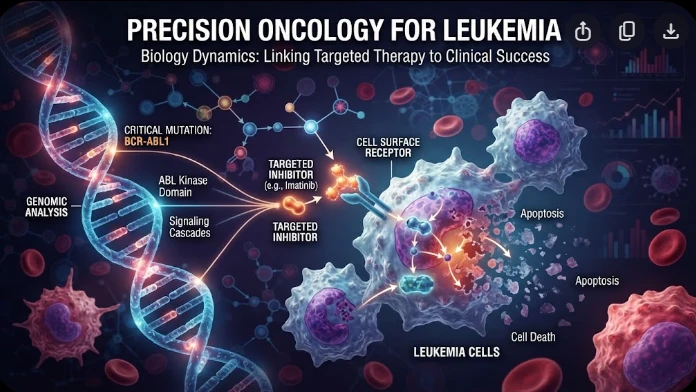
The article examines leukemia as an evolving population under targeted therapy, using chronic myeloid leukemia as the main example. BCR–ABL1 inhibition can produce deep responses, but every treatment changes the competitive environment among malignant clones. Quantitative transcript monitoring provides a continuous measure of disease burden, while deep sequencing can identify emerging resistance mechanisms before hematologic progression. A detected mutation is clinically meaningful only when its
The article examines how cardiovascular genetic risk becomes biologically active through cell-specific inflammatory signaling. Because many vascular-risk variants lie in regulatory DNA rather than coding regions, their effects may appear only in particular endothelial, macrophage, smooth-muscle, or lymphocyte states. Single-cell studies of human atherosclerotic lesions and multiomic endothelial experiments are used to illustrate this context dependence. The article also discusses IL6-related sig
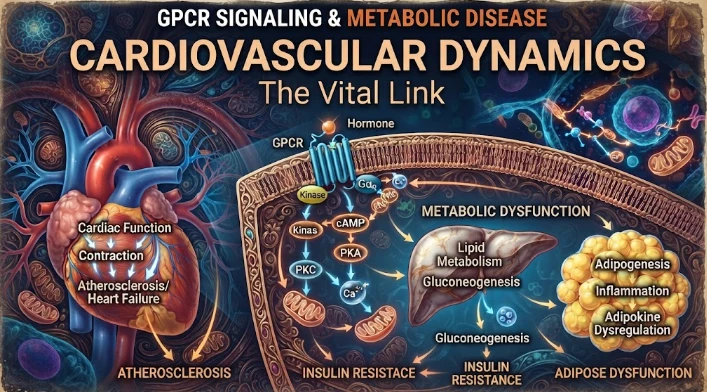
The article examines cardiovascular GPCR signaling as a dynamic response system whose abnormalities can remain hidden in resting measurements. Mechanical stretch, hormones, nutrients, sympathetic activity, and fluid balance can change the amplitude, duration, localization, and recovery of receptor signaling. Examples include mechanically activated angiotensin-receptor signaling, endosomal signaling, beta-arrestin-dependent trafficking, and biased glucagon-like peptide-one receptor responses. The