The article explains the role of preclinical models in testing precision-oncology hypotheses involving cancer immunology and gene-regulatory networks. It compares conventional cell lines, syngeneic tumors, genetically engineered mouse models, xenografts, humanized mice, organoids, and tumor slices, emphasizing that each preserves different elements of tumor genetics, immunity, tissue architecture, and evolution. Gene-network predictions can be tested through CRISPR perturbation, drug treatment, immune assays, and molecular profiling, but no single model is sufficient for translation. The article stresses appropriate endpoints beyond tumor shrinkage, including immune-cell states, cytokines, spatial interactions, and treatment-driven network changes. Reproducibility across laboratories, host diversity, microbiome effects, pharmacokinetic realism, standardized protocols, and transparent negative results are also highlighted. The proposed approach is a validation ladder: computational inference identifies a dependency, complementary models test causality and human relevance, and clinical cohorts determine whether the mechanism is transportable and predictive.
Without preclinical models, precision oncology would never have existed because molecular predictions would have to be proved by clinical testing or else. In cancer immunology, the choice of model is particularly challenging. A useful system should be able to closely model the genetics of the tumour, the regulatory state, the immune context, the tissue architecture and the response to treatment in order to answer a specific mechanistic question. No single model encapsulates all these facets, so convergence across multiple systems, and matching each model to its use, is a source of translational strength.
Conventional cancer cell lines are fast, reproducible and allow for easy genetic manipulation. After modification by CRISPR, drugs or cytokines, gene regulatory networks can be mapped. The main drawback is the loss of native tissue and immune context following long culture. A cell line can have a certain dependency on the transcription pathways that it needs to function, but this dependency may be lost inside a tumor where stromal signals and immune pressure change the regulatory state.
The genetic background of the tumor and host are compatible in syngeneic mouse tumors, which means that the tumors retain a normal immune system. There are various agents available for testing without rejection of the transplant, including checkpoint inhibitors, vaccines, innate immune agonists and costimulatory therapies. These systems can be useful for the measurement of T cell infiltration, myeloid response, memory and systemic toxicity. Even if you have a fast growing tumor in humans and it is very immunogenic, you can still get immune dynamics that aren't the same as these rapidly evolving tumors.
Genetically engineered mouse models help to solve part of that problem. Tumors grow in the right organ and are constantly monitored by the immune system. Inducible systems enable a switch-on and switch-off of oncogene activation/loss, and hence causal experiments. With the use of models of inducible breast cancer, it was shown how the development of the tumor can be coordinated with immune competent hosts. These models do a much better job of accounting for coevolution between the tumor and immunity, but there are species differences too.
Human tumor xenografts have many characteristics of human tumours and are typically generated in immunodeficient hosts. These models can examine tumor intrinsic networks of gene regulation and drug sensitivity, but do not model normal human immune interactions. Humanized mouse models try to reconstitute components of the immune system, but remain challenges are mismatched tissue signals and incomplete immune maturation and engraftment variability.
Organoids are another step up. Patient derived tumor organoids can maintain genomic features and aspects of three dimensional architecture. CRISPR perturbation and drug testing can be done in a human genetic background. Immune coculture can include immune populations such as autologous T cells or other immune populations as a platform to test antigen presentation and immune killing. The vessels are not preserved and the stromal diversity and complete systemic immunity is limited.
Tumor slices are kept for a limited period of time in an ex vivo setting, allowing the maintenance of cell neighborhoods. Native spatial relationship of cancer cells and fibroblasts, immune cells, and extracellular matrix. Treatment response can be assessed in conjunction with cytokines and imaging. These models are particularly suited to the study of whether a predicted regulatory dependency is local tissue-specific or not. The culture has been limited to a short period of time, which makes long term evolution studies impossible.
Experiments can be directed across all these systems by a gene regulatory network. To find a candidate master regulator or immune escape program, a patient tumor profile can be made. An organoid, xenograft or mouse model can be used to check the same network state. The ability to inhibit the regulator can then be evaluated by performing a perturbation to determine if antigen presentation, cytokine production, immune infiltration, or treatment sensitivity changes.
There is also a need for appropriate endpoints in preclinical models of immunotherapy. Mechanism cannot be explained by tumor shrinkage. Changes in immune populations can be detected by flow cytometry, single cell sequencing, spatial imaging, T cell receptor analysis, cytokine measurements and histology. Different therapeutic mechanisms of tumor control can result in very different translation potential.
Do not ignore model heterogeneity. A context-dependency can be identified by a difference if a regulatory target is effective in one cell line and ineffective in patient organoids. A treatment that is effective in highly inflamed mouse tumors can be used to define a human subgroup that is most likely to respond to the treatment or therapy. Using models to compare helps to determine boundary conditions for a mechanism.
The other criterion is longitudinal evolution. Resistant tumors tend to switch regulatory state while receiving treatment. Models allowing serial sampling can show if the immune escape program is observed prior to regrowth. Such studies can be performed with genetically engineered models and serially passaged patient derived systems. They can be complemented by short-term organoid assays, which can be used to test specific adaptive states after they are identified.
The final criteria should be external clinical data. Causality can be shown in a preclinical model, but not necessarily in patients. Human tumor datasets can be used to determine if the same gene network exists and if it is associated with response. If the model predicts treatment outcome, then prospective biospecimen studies can be done to test this prediction. There must be agreement between the experimental mechanism and the clinical observation for strong translation.
The research question should therefore be used to begin with in the process of model selection. It has been shown that cell systems are efficient for studying tumor intrinsic transcription, an intact organism is required for immune trafficking, patient derived material is preferred for studying human specific regulatory biology and tissue preserving models is preferred for studying processes of spatial interaction. It would be better to have these strengths combined than have one platform answer each question.
An important criterion for a model is reproducibility across laboratories. A microbiome- or facility-dependent or substrain-dependent effect may seem strong in a single experiment, but may fail when other groups try to replicate the result using different reagents or substrains. Such dependencies can be identified prior to clinical translation using standardized protocols, shared reference materials, and multicenter preclinical studies. Replication is a critical step in model validation, not something you can skip at the end.
However, sex, age, and host genetics can also affect the effects of immunotherapy in animal models. As biological variation is limited to a very small part below what it would be in a human trial, only young animals of one sex are used. The deliberate introduction of host diversity can be used to see if a gene regulatory mechanism is stable between immune backgrounds. These studies can be used to identify subgroup effects early on, but with increased variation, larger sample sizes are needed to detect the variations.
The same goes for the composition of the microbiome. Gut microbial communities can influence systemic immune tone and response to cancer therapy in experimental systems. The results can then change depending on housing conditions and antibiotics without changing the genome of the tumor. Analysis and, if applicable, control of microbiome differences can enhance interpretation of immune model experiments.
There must be defined criteria for success that are used in model based decisions. Before becoming clinical a candidate mechanism may need to be replicated in a tumour intrinsic system, an immune competent system and a human derived system. This is a kind of ladder that stymies passion fueled by one dramatic outcome. Failure testing is a better way to build up evidence for precision oncology than choosing tests for a positive effect.
This validation ladder can be enhanced by using data sharing. Sharing model metadata, treatment schedules, sequenced protocols and negative results enable other groups to test the same mechanism. The preclinical literature is susceptible to publication bias in that only successful models are published. Failure transparency can help uncover contexts where a target doesn't work, and can be used to avoid futile clinical translation.
There is also a requirement for pharmacokinetic matching. The dose of drug in mice or organoids should be compared to the dose that can be obtained in humans. A model can only depict dramatic activity at levels which would be toxic in a clinical setting. A combined exposure-target engagement-immune response result is more realistic and aids in optimizing dosage for subsequent studies.
This ensures that there is a translational discipline from the beginning.
The best use for preclinical models in precision oncology is using them as a stepping stone. The proposed dependency is tested by computational network inference, controlled models test causality, patient derived systems test human relevance, immune competent systems test organism level response, and clinical cohorts test transportability. No single model can give cancer immunology any level of certainty. Complementary analyzes provide the most convergent evidence from gene regulatory mechanism to a testable treatment hypothesis in patients.
CITE THIS ARTICLE
Tasmeem, S. (2026). Preclinical Model Roles in Precision Oncology through Cancer Immunology and Gene Regulatory Networks. https://www.sadiaresearchhub.com/article/4e1eafb0-ac97-541e-a8ba-c6ec5d42a8ae
S. Tasmeem, “Preclinical Model Roles in Precision Oncology through Cancer Immunology and Gene Regulatory Networks,” 2026. [Online]. Available: https://www.sadiaresearchhub.com/article/4e1eafb0-ac97-541e-a8ba-c6ec5d42a8ae
Tasmeem, S. (2026) ‘Preclinical Model Roles in Precision Oncology through Cancer Immunology and Gene Regulatory Networks’. Available at: https://www.sadiaresearchhub.com/article/4e1eafb0-ac97-541e-a8ba-c6ec5d42a8ae
Tasmeem, Sadia. “Preclinical Model Roles in Precision Oncology through Cancer Immunology and Gene Regulatory Networks.” 2026, https://www.sadiaresearchhub.com/article/4e1eafb0-ac97-541e-a8ba-c6ec5d42a8ae.
Sadia Tasmeem. “Preclinical Model Roles in Precision Oncology through Cancer Immunology and Gene Regulatory Networks.” (2026). https://www.sadiaresearchhub.com/article/4e1eafb0-ac97-541e-a8ba-c6ec5d42a8ae.
Tasmeem S. Preclinical Model Roles in Precision Oncology through Cancer Immunology and Gene Regulatory Networks. 2026. https://www.sadiaresearchhub.com/article/4e1eafb0-ac97-541e-a8ba-c6ec5d42a8ae
@misc{article_4e1eafb0ac97541ea8bac6ec5d42a8ae,
  title = {Preclinical Model Roles in Precision Oncology through Cancer Immunology and Gene Regulatory Networks},
  author = {Sadia Tasmeem},
  year = {2026},
  url = {https://www.sadiaresearchhub.com/article/4e1eafb0-ac97-541e-a8ba-c6ec5d42a8ae},
}
TY  - GEN
AU  - Sadia Tasmeem
TI  - Preclinical Model Roles in Precision Oncology through Cancer Immunology and Gene Regulatory Networks
PY  - 2026-03-08
UR  - https://www.sadiaresearchhub.com/article/4e1eafb0-ac97-541e-a8ba-c6ec5d42a8ae
ER  -
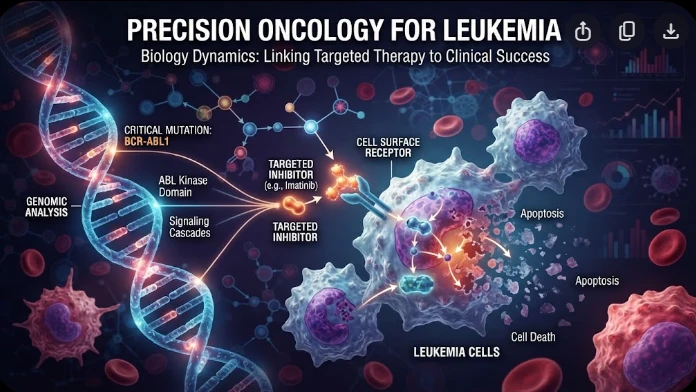
The article examines leukemia as an evolving population under targeted therapy, using chronic myeloid leukemia as the main example. BCR–ABL1 inhibition can produce deep responses, but every treatment changes the competitive environment among malignant clones. Quantitative transcript monitoring provides a continuous measure of disease burden, while deep sequencing can identify emerging resistance mechanisms before hematologic progression. A detected mutation is clinically meaningful only when its
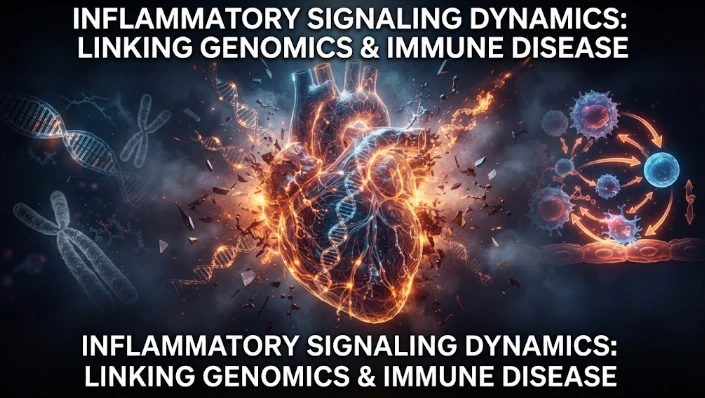
The article examines how cardiovascular genetic risk becomes biologically active through cell-specific inflammatory signaling. Because many vascular-risk variants lie in regulatory DNA rather than coding regions, their effects may appear only in particular endothelial, macrophage, smooth-muscle, or lymphocyte states. Single-cell studies of human atherosclerotic lesions and multiomic endothelial experiments are used to illustrate this context dependence. The article also discusses IL6-related sig
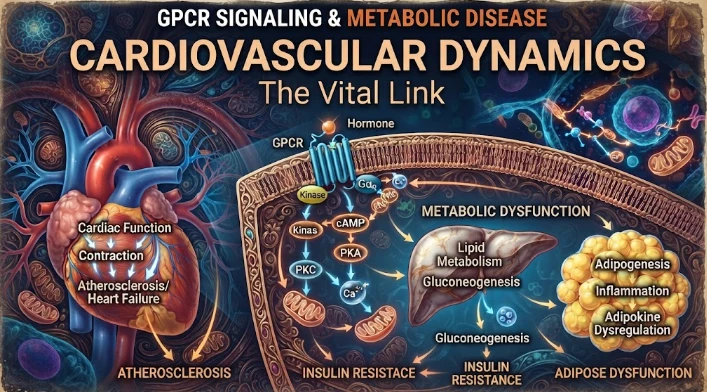
The article examines cardiovascular GPCR signaling as a dynamic response system whose abnormalities can remain hidden in resting measurements. Mechanical stretch, hormones, nutrients, sympathetic activity, and fluid balance can change the amplitude, duration, localization, and recovery of receptor signaling. Examples include mechanically activated angiotensin-receptor signaling, endosomal signaling, beta-arrestin-dependent trafficking, and biased glucagon-like peptide-one receptor responses. The