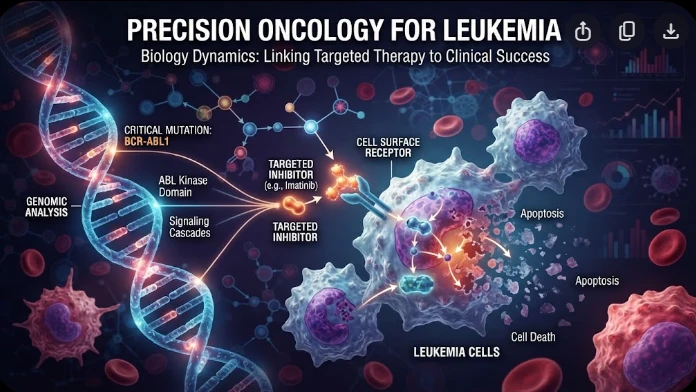
The article treats treatment response in leukemia as a mechanistic phenotype rather than a simple binary outcome. Chronic myeloid leukemia illustrates how response can vary in speed, depth, durability, and molecular pattern even when the same driver is targeted. Quantitative BCR–ABL1 monitoring provides a model for tracking response trajectories, while resistant mutations, bypass pathways, drug exposure, and microenvironmental support can explain different failure patterns. Patient-derived cells, marrow-mimetic cultures, xenografts, and functional genomics are proposed to test candidate dependencies and combination strategies. Treatment-free remission is discussed as a natural experiment showing that residual disease, stem-cell fitness, and host immunity influence durability after therapy withdrawal. The article distinguishes prognostic response markers from mechanisms that predict benefit from a specific intervention. Overall, precision treatment should explain why a response occurred, why it failed or persisted, and how that biology can inform the next decision rather than simply recording tumor reduction.
In precision oncology, response to treatment is frequently boiled down to one of two facts: the tumor shrinks, or it doesn't shrink. That is a naive perspective, as leukemia demonstrates. Patients may have rapid molecular clearance, progressive and gradual decline, a deep response but reoccurrence, or progression due to insufficient drug exposure – apparent resistance. There are different biology in each pattern. With response being defined as a mechanistic phenotype, and linked to genotype, cell state and evolutionary pressure, targeted therapy becomes truly precise.
Chronic myeloid leukemia pioneered this method with BCR ABL1 monitoring. A molecular level of response across treatment is provided by quantitative transcript measurements. The early suppression, major molecular response, and deeper levels of suppression are prognostic. The value is in the trajectory, not one single occurrence, because a steady low level and a quick rise in level can mean completely different risks.
That variation is in part due to genetics. Mutations in the kinase domain may decrease binding of the drug and other cytogenetic abnormalities may indicate wider clonal evolution. Sequencing at failure can help to determine a mechanism and inform inhibitor selection. However, a genetic discovery must be linked to the functional sensitivity, as not all rare variations will have the same biological effect.
Those differences can be systematically subjected to test by functional genomics. CRISPR screens can target genes related to signaling, apoptosis, transport, metabolism, and DNA repair and quantify the effect on drug response. A candidate resistance gene is more convincing if it is found to alter the sensitivity throughout multiple model systems and if the same pathway is affected in patient samples.
A particularly valuable concept of response is synthetic lethality. A leukemia cell that adapts to one drug can grow to be very dependent on another pathway. That dependency can be a therapeutic opportunity instead of just another marker of resistance. Drug pressure could reveal genes that are essential only in the resistant state to be candidates for rational combination therapy.
Patient derived models maintain the complex genetic background in which resistance occurs. Primary leukemia cells and xenografts and marrow mimetic cultures can help determine if a predicted combination of drugs is effective beyond a standard cell line. Environmental support via stromal or cytokine conditions should be included in models as microenvironmental support may modify apparent sensitivity.
Even if the central model is not the epithelial organoid, the organoid principle can still be applied. Cell contact, extracellular matrix, oxygen and signaling gradients can be reproduced in three dimensional marrow culture and engineered niche systems. Drugs that appear effective in suspension culture can be found by these systems when leukemia cells are provided with protective niche signals.
Independent cohort replication is necessary prior to the use of a response signature clinically. Any gene expression pattern identified in one set may be due to treatment type, sample preparation or disease phase. When testing a locked signature in another cohort, it is determined if the signature predicts the response, beyond the known factors. Prospective validation then confirms if such data can be used to enhance treatment decisions.
The exposure to a drug should be part of the response model. Concentration at the site of leukemia cells is affected by adherence, metabolism, dose intensity, other medications taken, and gastrointestinal absorption. A molecular rise in the course of interrupted therapy does not reflect genetic resistance. Pharmacologic data can help avoid erroneous biological conclusions and cases in which restoration of adequate exposure is more appropriate than a switch in drugs.
Interpretation is also influenced by timing. A mutation that is found after years of therapy may represent acquired selection; a variant found prior to therapy may represent preexisting resistance. These can be differentiated by early serial sampling. The difference is important because the strategies that are used to avoid selection are distinct from those that are used to overcome a selected resistant clone.
There should be multiple biological levels of response measured. Molecular burden indicates the size of the malignant population, single cell profiling identifies cell states, sequencing identifies resistant lineages and clinical outcomes indicate if changes are clinically relevant. Reducing a molecular marker with a concomitant preservation of the stem cell pool may have different durability than reducing both.
Treatment free remission is a natural experiment with regard to response durability. For selected patients who achieve sustained deep molecular response, the therapy can be discontinued with good monitoring. In some cases, recurrence occurs, and in others, continued remission is achieved, indicating that the host immunity, fitness of stem cells and residual clonal structure play a role in determining whether molecular disease re-establishes itself. Learning about those differences may reveal factors of long-term control that are not apparent with continuous treatment.
Precision oncology should thus shun a single definition for success. This can be rapid cytoreduction, prevention of progression, long-term suppression, eradication of a resistant clone, or safe treatment termination. The clinical decision to be made should be matched to the biomarkers or models.
Proximity is not the only factor that can cause response heterogeneity, as can also be apoptosis competence. Even when BCR ABL1 signaling is both equally inhibited in two cells, the activation of mitochondrial death pathways may vary. Target inhibition can be linked to elimination of the cell via the expression of BCL2 family proteins, p53 status, and stress signaling. Functional screens will be able to detect such downstream modifiers, even if the same target is engaged.
There is another source of persistence, the metabolic adaptation. Leukemia stem cells have the ability to switch from oxidative metabolism to alternative nutrient pathways that are less susceptible to kinase inhibition. Persistent energy programs can be identified by metabolomic profiling during treatment. The use of a targeted inhibitor in combination with a metabolic vulnerability must be based on evidence that the normal haematopoietic stem cell is not similarly vulnerable.
The difference between sensitivity and tolerance needs to be distinguished in response models. The sensitive cells either die or are unable to grow quickly, but the tolerant cells continue to grow without a stable resistance mutation and are subsequently able to grow again. The reversal of drug tolerant states is possible. Only sampling at progression will overlook this intermediate stage, and thus the opportunity for early combination therapy.
Normal cells should be included in functional validation. One gene has been found which is essential for resistant leukemia, and which is also essential for normal marrow. Therapeutic window is required. proposed combinations may be tested using co-culture and hematopoietic toxicity assays before moving to animal or clinical studies to determine if the proposed combination is toxic to the malignant cells rather than the normal cells.
Treatment efficacy can be broken down into three components: depth, speed and longevity. Rapid reduction can decrease the immediate disease threat, deep response can reduce the residual burden, and durable response can prevent regrowth. The dimensions can be of various biological causes. While one study predicts, it would be incorrect to assume the prediction of all three.
Multiple endpoints should be used for combination screens. The outcome of cell viability, apoptosis, colony formation, frequency of stem cells and drug washout recovery may indicate temporary arrest or permanent elimination of the malignant potential. The greater the number of combinations that work across patient derived samples with varying resistance backgrounds, the higher the translational confidence.
The quality of response can also be determined at very low levels below routine morphology using minimal residual disease assays. Depending on the disease type and the assay, the clinical meaning may be different, but continuous pressure may be found by persistent molecular disease. There is a question of whether residual cells are in one resistance state or multiple distinct survival programs.
These two endpoints can identify transient cytostasis versus elimination of cellular population(s) best suited to recapitulate disease.
Brian J. Druker's research interests on targeted therapy and leukemia highlight the translational nature of linking mechanism to measurable response. The interpretation of genetically similar leukemias' diverse responses to therapy, and the identification of new vulnerabilities due to their adaptations, can be achieved using functional genomics, patient derived models and independent validation. The best time for precision treatment is when the response is not only recorded, but also explained through the biology that caused the response, so that the next decision is based on the biology that produced the previous response.
For each dimension, there is a corresponding experimental and clinical decision with respect to response biology that potentially transforms into actionable steps.
CITE THIS ARTICLE
Tasneem, S. (2025). Treatment Response Roles in Precision Oncology through Targeted Cancer Therapy and Leukemia Biology. https://www.sadiaresearchhub.com/article/69d1081e-b12d-5306-8f1d-75c86fc93b96
S. Tasneem, “Treatment Response Roles in Precision Oncology through Targeted Cancer Therapy and Leukemia Biology,” 2025. [Online]. Available: https://www.sadiaresearchhub.com/article/69d1081e-b12d-5306-8f1d-75c86fc93b96
Tasneem, S. (2025) ‘Treatment Response Roles in Precision Oncology through Targeted Cancer Therapy and Leukemia Biology’. Available at: https://www.sadiaresearchhub.com/article/69d1081e-b12d-5306-8f1d-75c86fc93b96
Tasneem, Sadia. “Treatment Response Roles in Precision Oncology through Targeted Cancer Therapy and Leukemia Biology.” 2025, https://www.sadiaresearchhub.com/article/69d1081e-b12d-5306-8f1d-75c86fc93b96.
Sadia Tasneem. “Treatment Response Roles in Precision Oncology through Targeted Cancer Therapy and Leukemia Biology.” (2025). https://www.sadiaresearchhub.com/article/69d1081e-b12d-5306-8f1d-75c86fc93b96.
Tasneem S. Treatment Response Roles in Precision Oncology through Targeted Cancer Therapy and Leukemia Biology. 2025. https://www.sadiaresearchhub.com/article/69d1081e-b12d-5306-8f1d-75c86fc93b96
@misc{article_69d1081eb12d53068f1d75c86fc93b96,
  title = {Treatment Response Roles in Precision Oncology through Targeted Cancer Therapy and Leukemia Biology},
  author = {Sadia Tasneem},
  year = {2025},
  url = {https://www.sadiaresearchhub.com/article/69d1081e-b12d-5306-8f1d-75c86fc93b96},
}
TY  - GEN
AU  - Sadia Tasneem
TI  - Treatment Response Roles in Precision Oncology through Targeted Cancer Therapy and Leukemia Biology
PY  - 2025-06-29
UR  - https://www.sadiaresearchhub.com/article/69d1081e-b12d-5306-8f1d-75c86fc93b96
ER  -
The article examines leukemia as an evolving population under targeted therapy, using chronic myeloid leukemia as the main example. BCR–ABL1 inhibition can produce deep responses, but every treatment changes the competitive environment among malignant clones. Quantitative transcript monitoring provides a continuous measure of disease burden, while deep sequencing can identify emerging resistance mechanisms before hematologic progression. A detected mutation is clinically meaningful only when its
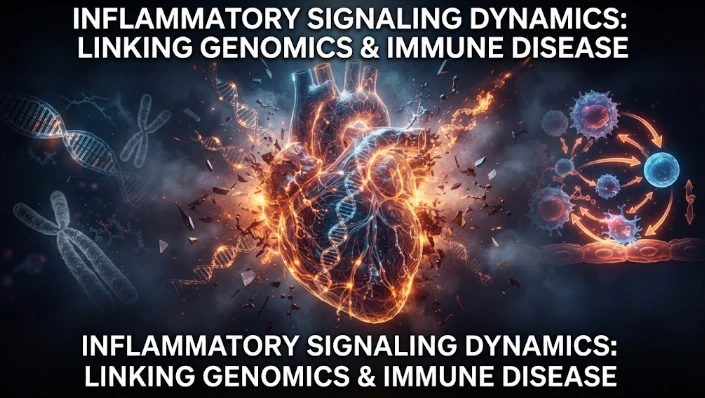
The article examines how cardiovascular genetic risk becomes biologically active through cell-specific inflammatory signaling. Because many vascular-risk variants lie in regulatory DNA rather than coding regions, their effects may appear only in particular endothelial, macrophage, smooth-muscle, or lymphocyte states. Single-cell studies of human atherosclerotic lesions and multiomic endothelial experiments are used to illustrate this context dependence. The article also discusses IL6-related sig
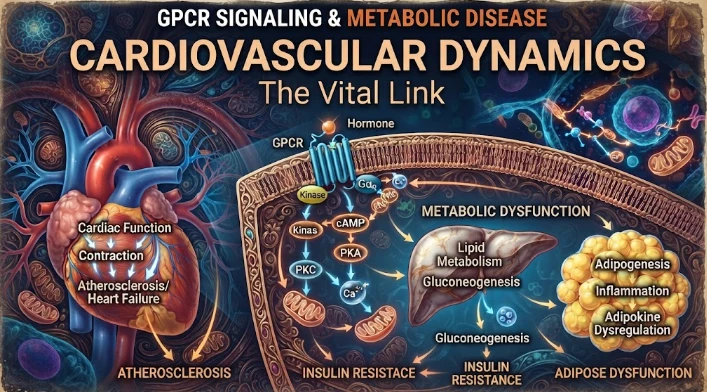
The article examines cardiovascular GPCR signaling as a dynamic response system whose abnormalities can remain hidden in resting measurements. Mechanical stretch, hormones, nutrients, sympathetic activity, and fluid balance can change the amplitude, duration, localization, and recovery of receptor signaling. Examples include mechanically activated angiotensin-receptor signaling, endosomal signaling, beta-arrestin-dependent trafficking, and biased glucagon-like peptide-one receptor responses. The