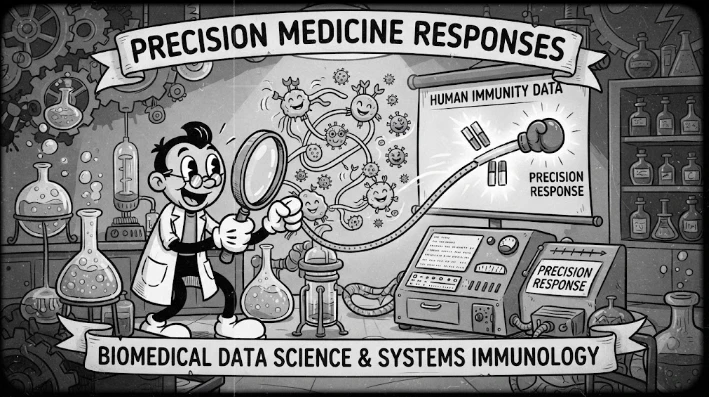
The article explores how biomedical data science and systems immunology can support individualized immune-related decisions. Immune variation reflects genetics, age, sex, prior infection and vaccination, tissue state, medication, microbiome, and other factors, so a single biomarker rarely captures clinical context. The proposed approach combines single-cell transcriptomics, cytometry, receptor sequencing, proteomics, metabolomics, and clinical outcomes to estimate a patient-specific immune state. High-dimensional pregnancy studies are cited as evidence that complex immune changes can follow structured trajectories. Translation requires stable assays, strict quality control, reproducible preprocessing, prespecified handling of missing data, subgroup testing, calibration, and external validation. Model drift after deployment must be monitored as instruments, populations, and treatment protocols change. Clinician education and review of model output are emphasized to reduce automation bias. Precision medicine is achieved when a complex immune profile becomes a transparent, validated estimate that improves a real decision without obscuring its biological basis.
Precision medicine for immunity must go beyond identifying a biomarker that is different among groups. The immune responses are different due to genetics, age, sex, prior infection, prior vaccination, tissue state, medication, microbiome and many other influencies. These variables combined with high dimensional immune measurements can be used to try to predict which biological pattern is associated with one patient at one clinical time. The objective is a model which will support a specific decision and not a generic description of immune complexity.
The first step in systems immunology is to measure many layers simultaneously. Single cell transcriptomics reveals cell states, cytometry reveals signaling and abundance of proteins, receptor sequencing reveals clonality, proteomics reveals circulating mediators, and metabolomics reveals functional chemistry. The outcome is then given by clinical data; the severity of the infection, the response to treatment, the recurrence of the disease, the adverse event, or the sustained remission.
The problem lies in the fact that the number of dimensions can be substantially higher than the number of samples. Any of thousands of immune features can be measured in a group of a few hundred people. Unregularized models will be able to fit noise. There are ways to reduce overfitting, such as feature selection, penalized models, nested cross validation, and independent test sets, but biological plausibility and replication must also be used.
The best test is prospective prediction. A model developed using baseline immune characteristics can predict subsequent response prior to treatment. The prediction should then be tested in participants not involved in the model development. Reporting of calibration and confidence intervals indicates that the predicted probabilities match the actual results rather than just ordering patients from low to high risk.
Dynamic response can enhance precision over baseline. A small standardized immune challenge may uncover signaling capacity not detected by resting measures. Vaccination, ex vivo stimulation or early treatment exposure can be considered a controlled perturbation. The strength and nature of the response may pick up functional reserve, immune memory, or dysregulated pathways.
Complex immune changes are predictable throughout the course of pregnancy in research studies. Coordination of immune changes has been described, and identified using high dimensional cytometry, which correspond to the progression of gestation. This paper shows that there is structured information in apparent variations of human immunity. Differential measures of deviation from expected trajectories in immune diseases can be similarly employed.
Single cell methods can provide information on which cells generate a predictive signal. Plasma cytokine signature may occur from a variety of sources, and single cell profiling identifies transcriptional and signaling programs in specific populations. Sequencing of receptors can reveal if the response is dependent upon the expansion of antigen specific clones. Using spatial information, it is possible to decide if the same states are present within the tissues of diseased organs.
Interpretation of the cause is still needed. Identifying a cell state that is strongly associated with response does not mean that the state actually controls response; this can be done by a machine learning model. The outcome of the biological response can be tested in reality by genetic perturbation, receptor blockade, cytokine manipulation, or controlled tissue models to determine whether the biological response can be altered by changing the nominated pathway. Predictive features are more powerful when they have a direct mechanism and can be acted upon.
Subgroup analysis should be pre-planned. Data results in uncertainty when looking at a variety of subgroups. A better strategy is to establish biologically motivated interactions in advance, including sex-dependent signaling, genetic risk or inflammatory state. Then, external validation can be used to determine if the interaction continues outside the discovery cohort.
Equity is also to some extent a data issue. Models that were trained primarily on a particular ancestry, health system or socioeconomic context can do poorly in other contexts. Baselines of immunity and history of exposures may differ by population and laboratory reference ranges may represent limited sampling. The evaluation of the performance of precision medicine should involve demographic groups and report on areas of uncertainty.
The clinical utility is dependent on the decision threshold. If there is a model that can predict immune mediated toxicity, then it's possible that if the risk is a bit higher, there might be some additional monitoring but maybe not enough to warrant treatment. The decision curve analysis can be used to compare benefit and harm across thresholds. This will not allow a statistically powerful model to be adopted as a necessarily useful model.
The use of the assays needs to be stable. The complexity of a discovery platform can evolve over time, as reagents, instruments and software evolve. Translational assays require strict protocols, QC, reproducible pre-processing and handling of missing data. A smaller, targeted panel can be more effective than a more complex research assay if it is more easily standardized across clinical sites.
In continuous learning, the drift of the model shouldn't be uncontrolled. Versioning and validation of new data are required to deploy it for enhancing performance. Model behaviour can change if there are changes in patient groups or clinical practice. Regularly tracking calibration of an immune signature can reveal if it no longer aligns with care and help identify when it is time to adjust.
The transportability of model must be explicitly tested. In community care, the disease severity is typically more moderate and the prevalence and calibration of the disease changes. Sometimes, even when the biology is not rebuilt, probability estimates can be recalibrated to correct for it. However, performance changes on a large scale may suggest that there are changes in the underlying immune context.
Cost of measurements should be taken into account for feature selection. Clinically insignificant small gains in predictive accuracy can be accompanied by a long turnaround time and high cost of an assay. Pareto analysis can be used to compare against performance vs. cost, sample volume vs. performance, and processing time vs. performance. An easier, but still good model can be better if it is fast enough to affect treatment.
The interpretability might be of a biological nature, not only mathematical. If the dozens of correlated features correspond to one “coherent pathway” then a model can still be understood. On the other hand, there is no plausible immune relationship involved in the features, and the sparse model can still be opaque. Mechanistic grouping facilitates the clinician's comprehension of the reasons for a prediction change.
The final test is a prospective impact trial. No matter how accurate a predictor is, that doesn't mean that its use will assure positive outcomes. A trial can compare the benefit and harm of standard care with model guided care, and measure resource use. This is a step toward predictive research and not to precision medicine.
When the model is deployed, it is part of the safety. Performance can change as a result of data drift, instrument changes or new treatment protocols. Recent cases can be used for periodic audit to detect decreasing calibration before systematic error is made by the model.
In addition, clinicians must have access to a mechanism to change the algorithmic output when there is a lack of biological context. Don't rely on judgment alone, use precision systems as well. The reasons of the overrides can be recorded to create new data relevant to situations where the model is missing variables and be used to inform future model refinement.
The consistency of the model over clinically relevant conditions will have to be demonstrated clearly to pass regulatory review. Testing should be performed following changes in sample handling, instrument operator and patient mix. Stress testing can reveal brittle features prior to deployment. The safer the precision tool if the failure modes are known and recorded along with the circumstances under which predictions should be avoided.
Documentation should include the following: When the model should not be used, particularly when there have been major protocol changes or when the populations do not include the populations being studied. Confident predictions outside the evidence base can be avoided by establishing clear boundaries. This restraint is also a component of precision medicine: In cases where data is available, it is important to recognize when it is inadequate to make an individual decision and to refrain from putting every patient in a model.
Nima Aghaeepour's research interests include biomedical data science, systems immunology, and precision medicine, which are pointing towards a more disciplined approach to computational immunology. These are valuable high dimensional data because they can reveal patterns of response that are not evident from a single biomarker. Their clinical utility will rely on prospective validation, mechanistic studies, robustness of the subgroups, and assay design. Precision medicine comes when the complex immune system can be repeated as an estimate that enhances a real decision while not shedding any light on the biology that created it.
The last implementation layer is clinician education. A practical understanding of the model is required, including what it measures and how confidence is reported, plus the biological variables that are not measured. Training can help mitigate automation bias and overcome the tendency to follow through with a prediction even when face with conflicting clinical evidence.
CITE THIS ARTICLE
Tasneem, S. (2025). Precision Medicine Responses through Biomedical Data Science and Systems Immunology in Human Immunity. https://www.sadiaresearchhub.com/article/dd829370-638b-5bbb-917b-1b30cff86a5a
S. Tasneem, “Precision Medicine Responses through Biomedical Data Science and Systems Immunology in Human Immunity,” 2025. [Online]. Available: https://www.sadiaresearchhub.com/article/dd829370-638b-5bbb-917b-1b30cff86a5a
Tasneem, S. (2025) ‘Precision Medicine Responses through Biomedical Data Science and Systems Immunology in Human Immunity’. Available at: https://www.sadiaresearchhub.com/article/dd829370-638b-5bbb-917b-1b30cff86a5a
Tasneem, Sadia. “Precision Medicine Responses through Biomedical Data Science and Systems Immunology in Human Immunity.” 2025, https://www.sadiaresearchhub.com/article/dd829370-638b-5bbb-917b-1b30cff86a5a.
Sadia Tasneem. “Precision Medicine Responses through Biomedical Data Science and Systems Immunology in Human Immunity.” (2025). https://www.sadiaresearchhub.com/article/dd829370-638b-5bbb-917b-1b30cff86a5a.
Tasneem S. Precision Medicine Responses through Biomedical Data Science and Systems Immunology in Human Immunity. 2025. https://www.sadiaresearchhub.com/article/dd829370-638b-5bbb-917b-1b30cff86a5a
@misc{article_dd829370638b5bbb917b1b30cff86a5a,
  title = {Precision Medicine Responses through Biomedical Data Science and Systems Immunology in Human Immunity},
  author = {Sadia Tasneem},
  year = {2025},
  url = {https://www.sadiaresearchhub.com/article/dd829370-638b-5bbb-917b-1b30cff86a5a},
}
TY  - GEN
AU  - Sadia Tasneem
TI  - Precision Medicine Responses through Biomedical Data Science and Systems Immunology in Human Immunity
PY  - 2025-05-18
UR  - https://www.sadiaresearchhub.com/article/dd829370-638b-5bbb-917b-1b30cff86a5a
ER  -
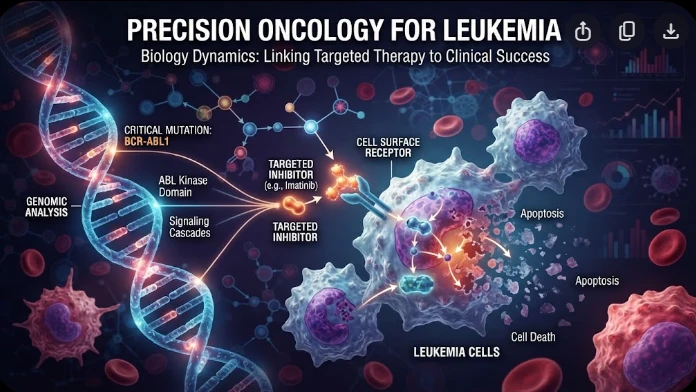
The article examines leukemia as an evolving population under targeted therapy, using chronic myeloid leukemia as the main example. BCR–ABL1 inhibition can produce deep responses, but every treatment changes the competitive environment among malignant clones. Quantitative transcript monitoring provides a continuous measure of disease burden, while deep sequencing can identify emerging resistance mechanisms before hematologic progression. A detected mutation is clinically meaningful only when its
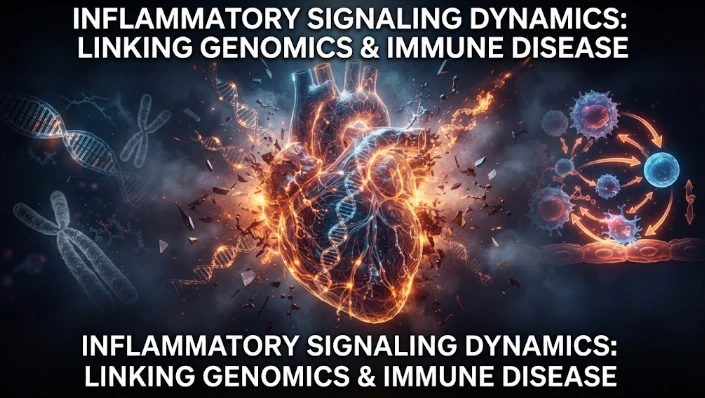
The article examines how cardiovascular genetic risk becomes biologically active through cell-specific inflammatory signaling. Because many vascular-risk variants lie in regulatory DNA rather than coding regions, their effects may appear only in particular endothelial, macrophage, smooth-muscle, or lymphocyte states. Single-cell studies of human atherosclerotic lesions and multiomic endothelial experiments are used to illustrate this context dependence. The article also discusses IL6-related sig
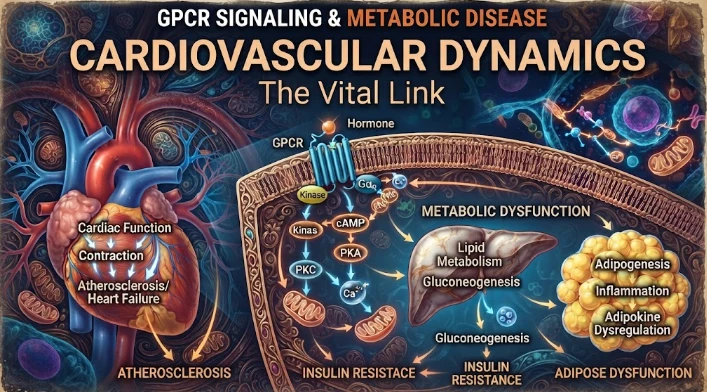
The article examines cardiovascular GPCR signaling as a dynamic response system whose abnormalities can remain hidden in resting measurements. Mechanical stretch, hormones, nutrients, sympathetic activity, and fluid balance can change the amplitude, duration, localization, and recovery of receptor signaling. Examples include mechanically activated angiotensin-receptor signaling, endosomal signaling, beta-arrestin-dependent trafficking, and biased glucagon-like peptide-one receptor responses. The