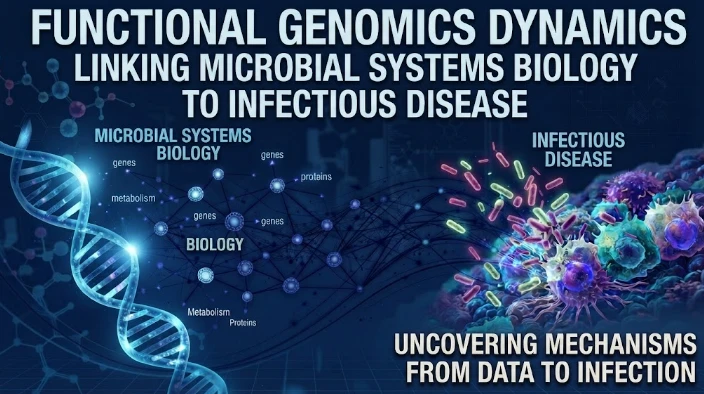
The article examines bacterial responses to antibiotics as dynamic systems involving transcription, metabolism, stress programs, growth changes, protein turnover, and heterogeneous survival. Functional genomics reveals which genes are required, while transcriptomics shows which genes respond; the two are not equivalent. Single-cell studies and time-kill kinetics are highlighted because small tolerant subpopulations can survive despite successful average responses. Environmental conditions such as nutrient limitation, oxygen, acidity, host stress, and biofilm growth alter the fitness network. The article extends this systems approach to microbiome disruption, metagenomics, metabolomics, resistance evolution, and host-response profiling. Dense longitudinal sampling can distinguish early adaptation from later selection and ecological recovery. Causal interpretation requires gene perturbation, metabolite manipulation, defined-community experiments, and reproducible protocols. Clinically, the framework can identify slow-killing signatures, disrupted recovery patterns, and pathways that promote persistence or resistance. Functional genomics becomes most predictive when time, ecology, host state, and treatment history are integrated.
A bacterium that is exposed to antibiotics will not react on one pathway. Changes in transcription, changes in metabolism, activation of defence against stress, a decrease in growth, changes in protein turnover, and changes in the probabilities of survival for subpopulations. This is a distributed response that is appropriate for microbial systems biology. Functional genomics provides causal leverage in asking what genes are necessary? Unfortunately, expression and phenotype are not always correlated, and fitness is not necessarily revealed by any individual molecular layer, hence making integrated analysis more informative.
A seminal study of systems biology compared the transcription and phenotypical responses of Gram positive and Gram negative pathogens when exposed to antibiotics. The patterns of gene expression and functional requirements were not well coordinated when examined individually but could be linked together through the higher level biological structure provided by network analysis. The outcome in the example was a general lesson: the genes that are most strongly induced by a drug are not the genes that are most strongly disrupted by a knockout. The difference between response and requirement is that they measure different properties.
This is an important difference for the tolerance of antibiotics. An activated dramatic stress transcriptome, or a pathway expressed at a low level, can mean the difference between cell death and survival in a minority. Requirement is identified by transposon sequencing, by deletion libraries and by CRISPR based perturbations.
RNA sequencing reflects regulation. Metabolomics and proteomics expose execution. Useful systems biology comes when the measurements are time and condition aligned, but not combined into a single matrix.
Single cell assays uncover another level of hidden information. Averages of populations can imply a smooth response when the bacteria are in very different states. Single cell growth and survival has been seen to separate under stress in the context of microfluidic study of mycobacterial tolerance. This is because the heterogeneity is important, as relapse can come from a small surviving fraction. If one state is protected, there is the possibility of a treatment that results in a significant decrease in average growth that still fails.
Genomic profiling should be accompanied by time kill kinetics. Minimum inhibitory concentration (MIC) indicates the level at which the growth is inhibited, but not the speed of the cell death. Similar inhibitory thresholds may result in different killing curves for two isolates. Time kill data when used with functional genomics can be used to determine factors associated with survival time and not just resistance. That is particularly true if it's becoming tolerant over time, which gives more time for mutation and stable resistance.
Those dynamics are influenced by the environmental context. Each of these (nutrient limitation, low oxygen, acidity, host derived reactive species, and biofilm growth) can affect antibiotic action. If the screens are functional, under one condition, they should not be expected to work under another. A tolerance pathway that will be helpful in times of starvation may be useless during periods of rapid growth. Several environments are mapped, resulting in a conditional fitness network, and nodes that are important in all environments.
Metagenomics from one pathogen to a community. Antibiotic exposure may lead to changes in commensal composition, metabolite production, and create ecological niches for pathogens. Even after the drug is removed, recovery can involve various routes. Community structure and function can be monitored before, during and after treatment via dense longitudinal sampling. The function of the resistance gene must be confirmed by functional assays as a resistance gene detected in community DNA does not indicate whether it is expressed, transferable or it belongs to a clinically important organism.
Taxonomic profiles cannot capture ecological consequences which metabolomics can. Short chain fatty acids, bile acid derivatives, amino acid products and other microbial metabolites have effects on the host immunity and colonization resistance. Major taxonomic shifts are not always apparent before antibiotics alter those chemical outputs. The relationship between metabolite trajectories and concentrations of pathogens and host inflammation can determine if ecological recovery restores function or just species counts.
Forward looking dimension added by resistance evolution assays. Replication of populations of bacteria under a well-defined drug treatment can bring out the changes in evolutionary pathway caused by the starting state. Whole genome sequencing detects recurrent mutations, and functional genomics determines if recurrent mutations are background pathway-dependent. A repeated tolerance state that precedes resistance is worthy of special note where it may be possible to avoid it and hence limit the chances of evolution to resistance.
Human studies can be supported with causal exposure modeling. Microbial ecology is affected by the class of antibiotic, dose, duration, route, indication and previous treatment. Associations may be confounded by disease severity: this may result in more extensive or longer treatment in more ill patients. Treatment indication and baseline microbiome state should be taken into consideration with longitudinal models. Within person comparison can minimize stable confounding and indicate if there are differences in recovery courses across repeated antibiotic courses.
Host response should not be considered a separate result, but rather a component of an overall result. Competition between microbes and the effectiveness of antibiotics can differ in the presence of intestinal inflammation, immune suppression, fever, and tissue injury. Alterations in bacterial physiology due to cytokines and host metabolites. This microbial-only systems model can then lead to incorrect inference of host driven changes as microbial regulation. Host state/host state and host state/microbial state can be correlated, with pair-wise host transcriptomics and/or host proteomics to identify times when host state and microbial state are synchronized.
The causal loop is closed by perturbation. Genes derived from integrated networks can be deleted, overexpressed, and complemented. Chemical species (candidate metabolites) can be added or removed.
Defined microbial consortia can be transferred to the community by community experiments. Mechanistic credibility is added to the network when the tolerance, ecological recovery or host response is altered in the predicted direction as a result of the change in one component. Association across numerous omic scales, without perturbation, is still susceptible to correlated noncausal signals.
There is a need for protocol discipline to achieve reproducibility. Tolerance phenotypes can shift due to antibiotic concentrations, growth phase, inoculum, sampling time, oxygenation, or media composition. In addition to the above, there are batch effects and storage and sequencing during the extraction of the microbiome. The signature of a systems must be pre-defined and validated before it can be compared between laboratories. Functional readouts should be repeated with independent strains/ communities and not just be computational readouts.
The outputs of clinical translation may be more than one. One is a functional signature that predicts for slow killing—even though the bacteria are nominally susceptible. The other is a recovery profile that can identify patients who are likely to experience long-term disruption of the microbiome. A third is a route that could be targeted to either reduce persistence or lower resistance evolution. The validation endpoint is different for each output and having them all in one generic score would make it less interpretable.
It is possible to embed these trajectories into a state space model without assigning a specific cell category to each one. Growth rate, stress transcription, metabolic activity, membrane potential, and survival could be considered as coordinates that shift upon antibiotic treatment. Single cell measurements can be performed repeatedly to measure the transition between susceptible, tolerant, recovering and proliferative states. The models are helpful only if the state definitions can shed light on future behavior, like survival following a subsequent drug pulse or the capacity to resume growth after the end of the therapy.
There must also be functional benchmarks to support community recovery. Taxonomic diversity will not restore colonization resistance or metabolic output. Two microbiomes can have quite similar compositions, but different resistance genes or different production of metabolites. Ecosystems can be challenged with defined pathogens, ex vivo fermentation or metabolite assays to determine if the ecological function is restored. Functional recovery could then be correlated with the incidence of recurrent infection, gastrointestinal symptoms or carriage of resistant organism in longitudinal clinical studies.
It is not desirable to make predictions rather than conditions. If a gene is identified as tolerance to nutrient deficit, it is not a general tolerance gene, unless other factors substantiate this. The way models can capture environment-specific edges and recognize pathways whose impact is retained across environments. Conserved nodes are desirable targets for intervention and condition specific nodes elucidate the differential response of the same strain at different infection sites.
Tim van Opijnen's research focus is on the importance of genome scale fitness analysis to understand bacterial behavior under stress. Systems biology introduces time and ecological context to help explain how the expression of genes, survival of cells, community recovery and the evolution of resistance can be decoupled. Functional genomics is not just a list of resistance determinants; its consideration in conditions and its correlations with metabolism, microbial ecology, host reaction, and treatment history make it more predictable in relation to an infectious disease.
CITE THIS ARTICLE
Tasmeem, S. (2025). Functional Genomics Dynamics Linking Microbial Systems Biology to Infectious Disease. https://www.sadiaresearchhub.com/article/e463d676-c970-55c3-a578-7804bbc6b68b
S. Tasmeem, “Functional Genomics Dynamics Linking Microbial Systems Biology to Infectious Disease,” 2025. [Online]. Available: https://www.sadiaresearchhub.com/article/e463d676-c970-55c3-a578-7804bbc6b68b
Tasmeem, S. (2025) ‘Functional Genomics Dynamics Linking Microbial Systems Biology to Infectious Disease’. Available at: https://www.sadiaresearchhub.com/article/e463d676-c970-55c3-a578-7804bbc6b68b
Tasmeem, Sadia. “Functional Genomics Dynamics Linking Microbial Systems Biology to Infectious Disease.” 2025, https://www.sadiaresearchhub.com/article/e463d676-c970-55c3-a578-7804bbc6b68b.
Sadia Tasmeem. “Functional Genomics Dynamics Linking Microbial Systems Biology to Infectious Disease.” (2025). https://www.sadiaresearchhub.com/article/e463d676-c970-55c3-a578-7804bbc6b68b.
Tasmeem S. Functional Genomics Dynamics Linking Microbial Systems Biology to Infectious Disease. 2025. https://www.sadiaresearchhub.com/article/e463d676-c970-55c3-a578-7804bbc6b68b
@misc{article_e463d676c97055c3a5787804bbc6b68b,
  title = {Functional Genomics Dynamics Linking Microbial Systems Biology to Infectious Disease},
  author = {Sadia Tasmeem},
  year = {2025},
  url = {https://www.sadiaresearchhub.com/article/e463d676-c970-55c3-a578-7804bbc6b68b},
}
TY  - GEN
AU  - Sadia Tasmeem
TI  - Functional Genomics Dynamics Linking Microbial Systems Biology to Infectious Disease
PY  - 2025-11-30
UR  - https://www.sadiaresearchhub.com/article/e463d676-c970-55c3-a578-7804bbc6b68b
ER  -
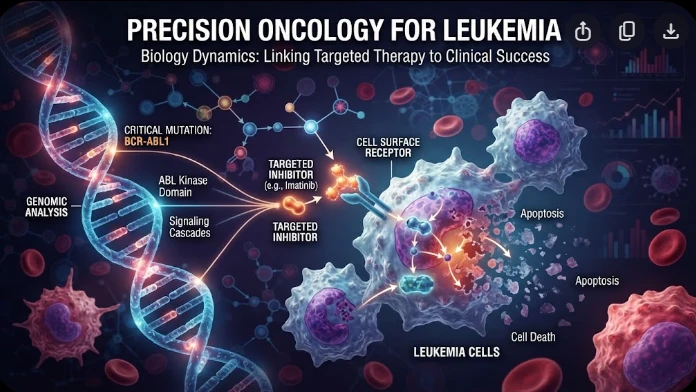
The article examines leukemia as an evolving population under targeted therapy, using chronic myeloid leukemia as the main example. BCR–ABL1 inhibition can produce deep responses, but every treatment changes the competitive environment among malignant clones. Quantitative transcript monitoring provides a continuous measure of disease burden, while deep sequencing can identify emerging resistance mechanisms before hematologic progression. A detected mutation is clinically meaningful only when its
The article examines how cardiovascular genetic risk becomes biologically active through cell-specific inflammatory signaling. Because many vascular-risk variants lie in regulatory DNA rather than coding regions, their effects may appear only in particular endothelial, macrophage, smooth-muscle, or lymphocyte states. Single-cell studies of human atherosclerotic lesions and multiomic endothelial experiments are used to illustrate this context dependence. The article also discusses IL6-related sig
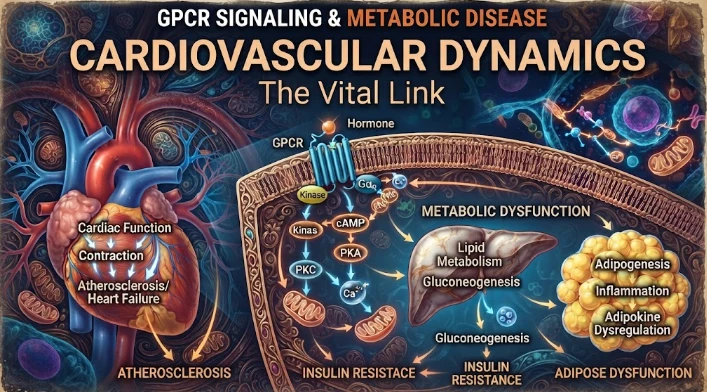
The article examines cardiovascular GPCR signaling as a dynamic response system whose abnormalities can remain hidden in resting measurements. Mechanical stretch, hormones, nutrients, sympathetic activity, and fluid balance can change the amplitude, duration, localization, and recovery of receptor signaling. Examples include mechanically activated angiotensin-receptor signaling, endosomal signaling, beta-arrestin-dependent trafficking, and biased glucagon-like peptide-one receptor responses. The