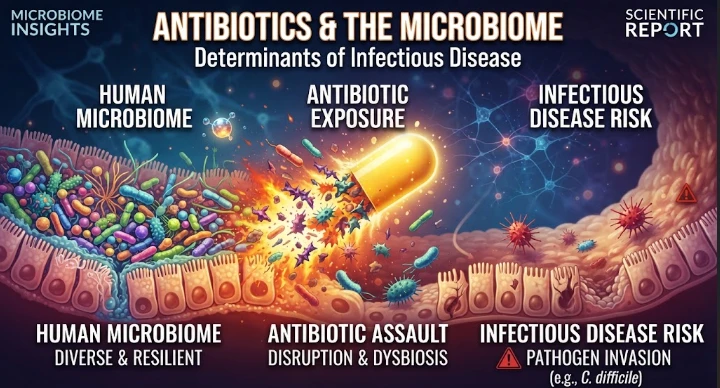
The article explains antibiotic exposure as both antimicrobial treatment and ecological disturbance of the human microbiome. Broad-spectrum therapy can reduce microbial diversity, eliminate susceptible commensals, promote resistant or opportunistic organisms, and alter metabolic functions that support colonization resistance and immune regulation. Longitudinal studies show that apparent recovery may remain incomplete at the strain or functional level even after overall diversity rebounds. The article emphasizes that antibiotic class, dose, duration, previous exposure, infection severity, diet, and baseline microbiome composition all influence outcome. Metagenomics, metabolomics, resistance-gene profiling, and repeated host measurements are proposed to track disruption and recovery. Stewardship, rapid diagnostics, and narrower therapy can reduce unnecessary ecological pressure. Microbiome-restoration approaches should be evaluated for functional recovery and safety rather than taxonomic change alone. The central message is that infectious-disease treatment should consider not only pathogen clearance but also the resilience, resistance reservoir, and protective functions of the surrounding microbial ecosystem.
Antibiotics work to reduce the activity of harmful bacteria, but most do not differentiate a pathogen from any other bacterium that can be suppressed by the antibiotic. Treatment is then an ecological disturbance and an antimicrobial intervention. The short-term clinical advantage may be crucial, while the long-term alteration of commensal community may be a consequence. Knowing that disturbance is significant for infectious disease due to the influence of the microbiome structure on the colonization resistance, immune signaling, metabolism, and reservoir of resistance genes.
The very dramatic first phase has been demonstrated in longitudinal studies of humans. Exposing organisms to broad antibiotics lowers species richness and alters relative abundance and can promote the growth of resistant organisms or opportunistic species. Recovery varies by community, and some communities may return to baseline within weeks or months, but recovery may be incomplete at the strain level. After the total diversity has improved, several taxa may be absent for an extended period.
The difference between apparent recovery and ecological recovery is important. A community may get the same species back, but lose specific butyrate producers, or become more effective at producing butyrate, or gain new resistant producers. Shotgun metagenomics can identify taxonomic and resistance gene shifts and metabolomics can indicate if functions like the production of short chain fatty acids are re-established.
Resistome is a primary issue of infectious diseases. Exposure to antibiotics will result in a selection of genes that confer resistance to the class of antibiotics, and will also increase the opportunity for mobile genetic elements with antibiotic resistance to be enriched. Those genes can remain in harmless commensals, and be available to pass on under changed selective pressures in the future. In the absence of a pathogenic infection, the microbiome is thus also involved in antimicrobial resistance.
Disturbances can also cause a decline in colonization resistance. There are also diverse resident communities—niche occupants, nutrient consumers, producers of inhibitory compounds, and stimulators of host defenses. Organisms like Clostridioides difficile or resistant Enterobacterales may increase in numbers when competitors like antibiotics are eliminated. Ecological vacancy, rather than the presence of a pathogen, is indicated by the infection risk.
The same change triggers host immunity. Metabolites from microbes affect epithelial cells, Tregs, and inflammation. Loss of the metabolite-producing organisms can cause immune tone to shift even after the infection is gone. The ecological evidence is strong, whereas the human evidence is more complicated and should be thoroughly tested for causal claims.
Early life exposure is one of the areas of concern as microbial communities develop along with immune systems. There have been observational studies associations between exposure to antibiotics during infancy or childhood and later allergic, metabolic and inflammatory outcomes. Confounding due to family environment and prescription patterns are hard to control for when infection severity is also a confounding factor. Association does not imply causation in regards to human responsibility, but mechanistic models can make a contribution to plausibility.
Pathogen functional genomics can help explain the alterations in infection caused by microbiome disturbance. Sequencing of isolates before and after treatment can be used to detect resistance mutations, mobile elements and/or fitness adaptations. There are competition assays for determining if the post-treatment strains have an advantage in the changed community. Experimental infection systems can then be used to determine if those changes have any impact on virulence or persistence.
Another dimension is added by longitudinal host profiling. Blood and mucosal samples can record inflammatory markers, antibody responses, barrier injury and immune cell states, prior, during and after antibiotics. In combination with metagenomics, this can help determine if immune response alterations occur after the loss of certain microbial functions. A temporal link is stronger than comparing non-related exposed and unexposed groups.
The class of antibiotic, dose, length of treatment and administration route all affect the ecological impact of the treatment. It is possible that a short narrow spectrum course can create a different disturbance than a long broad spectrum course. The concentrations of drugs are also different in different parts of the body. Stewardship is not just about minimizing the total number of prescriptions; it can also be a process of choosing an effective prescription with the minimum of unwanted ecological stress.
Diet and microbial immigration can influence the course of recovery. Organisms that produce helpful fermentation products are influenced by fiber availability, as are household and environmental contacts which introduce new strains. A post-antibiotic community can bounce back either by regrowth of survivors or acquisition of replacement strains or a combination of both. Strain resolved longitudinal sequencing is needed to distinguish those processes.
Intervention research must be related to function and safety. There are three types of probiotics (defined microbial consortia, dietary strategies and faecal microbiota based therapies) that have potential to impact recovery, with different effects depending on the setting. The restoration of one taxon cannot ensure the restoration of the previous ecosystem. The clinical endpoints should be assessed with microbial function, not necessarily a change in composition.
Drug metabolism can also be altered by disturbance of the microbiome. Selected medicines may be altered by resident bacteria or they may change bile acid pools which affect the physiology of the liver and intestine. These effects may alter once treatment against the respective organisms has been undertaken. Pharmacokinetic studies can be conducted to determine if microbial disruption plays a significant role in the variations of exposure when drugs are administered simultaneously.
The "colonization pressure" of hospital settings. A patient on broad-spectrum antibiotics may lose colonization resistance from exposure to resistant organisms in the healthcare environment. Surveillance cultures and strain sequencing will be able to distinguish if the next resistant infection is an expansion of a strain or acquisition of a new hospital strain. Prevention strategies are different for those routes.
Fungal communities should be considered too. Antibiotics target bacteria, which can indirectly alter the abundance of fungi through their effects on competitors. Antibacterial therapy is a familiar clinical example in which the overgrowth of Candida occurs. Integrated bacterial and fungal profiling can provide cross kingdom effects, which are not captured by bacterial sequencing.
Outcome studies should differentiate between necessary and unnecessary exposures. Severe bacterial infection is a risk greater than ecological disturbance and treatment of a viral disease with antibiotics results in harm with no antimicrobial benefit. The microbiome is thus best protected through stewardship, that is, with greater diagnosis and indication, not by treating all courses of antibiotics as the same.
Preservation of the microbiome can be an explicit secondary outcome in an antibiotic trial. Loss of diversity, resistome expansion and recurrent infections are possible differences between two regimens with equal cure rates. Identifying those differences can inform decision making to keep things effective and minimize environmental harm.
Rapid pathogen diagnostics can limit needless exposure by differentiating between bacterial infection and other non-infectious diseases. Once culture or molecular identification is achieved, narrowing therapy can further decrease selection pressure. Such practices link to existing stewardship without necessitating a new field of therapy.
The ecological cost of treatment should still be assessed in the context of the risk of treatment failure. The delay of an effective antibiotic therapy in sepsis does immediate harm. We should use Microbiome informed stewardship to optimise drug choice, and not to substitute evidence based treatment for an aim of maintaining diversity for the sake of it. When therapeutic effectiveness is of acceptable level, future trials can be compared to regimens.
Prescribing that is informed by the microbiome also relies on infection prevention. Baseline measures (e.g., vaccination, hand hygiene, source control, rapid diagnosis) lower the need for antibiotic use prior to ecological harm. Equally effective programs for spectrum, duration, resistance selection and recovery of community function can then be compared within stewardship programs. This framing locks in the focus on curing infection, and turns the disruption of microbes into a quantifiable secondary impact, but not abstract concern.
An ecological perspective of treatment for infectious diseases is reflected in the focus of Martin J. Blaser's research on the human microbiome, antibiotic use, and chronic disease. Antibiotics are potentially life-saving and also alter the microbial system that promotes resistance to future infections. Most informative studies relate exposure to strain level community change, host response, resistance evolution, and clinical outcomes over time. This knowledge can underpin stewardship that ensures protection for the patient when they're at risk of infection and the microbial functions that continue to have a significance beyond the end of treatment.
The same framework can compare ecological cost, between equally effective treatment options.
Measure ecological recovery.
CITE THIS ARTICLE
Tasneem, S. (2025). Human Microbiome Determinants through Antibiotic Exposure in Infectious Disease. https://www.sadiaresearchhub.com/article/f42706df-675d-57ab-9a7f-c238122e0944
S. Tasneem, “Human Microbiome Determinants through Antibiotic Exposure in Infectious Disease,” 2025. [Online]. Available: https://www.sadiaresearchhub.com/article/f42706df-675d-57ab-9a7f-c238122e0944
Tasneem, S. (2025) ‘Human Microbiome Determinants through Antibiotic Exposure in Infectious Disease’. Available at: https://www.sadiaresearchhub.com/article/f42706df-675d-57ab-9a7f-c238122e0944
Tasneem, Sadia. “Human Microbiome Determinants through Antibiotic Exposure in Infectious Disease.” 2025, https://www.sadiaresearchhub.com/article/f42706df-675d-57ab-9a7f-c238122e0944.
Sadia Tasneem. “Human Microbiome Determinants through Antibiotic Exposure in Infectious Disease.” (2025). https://www.sadiaresearchhub.com/article/f42706df-675d-57ab-9a7f-c238122e0944.
Tasneem S. Human Microbiome Determinants through Antibiotic Exposure in Infectious Disease. 2025. https://www.sadiaresearchhub.com/article/f42706df-675d-57ab-9a7f-c238122e0944
@misc{article_f42706df675d57ab9a7fc238122e0944,
  title = {Human Microbiome Determinants through Antibiotic Exposure in Infectious Disease},
  author = {Sadia Tasneem},
  year = {2025},
  url = {https://www.sadiaresearchhub.com/article/f42706df-675d-57ab-9a7f-c238122e0944},
}
TY  - GEN
AU  - Sadia Tasneem
TI  - Human Microbiome Determinants through Antibiotic Exposure in Infectious Disease
PY  - 2025-06-22
UR  - https://www.sadiaresearchhub.com/article/f42706df-675d-57ab-9a7f-c238122e0944
ER  -
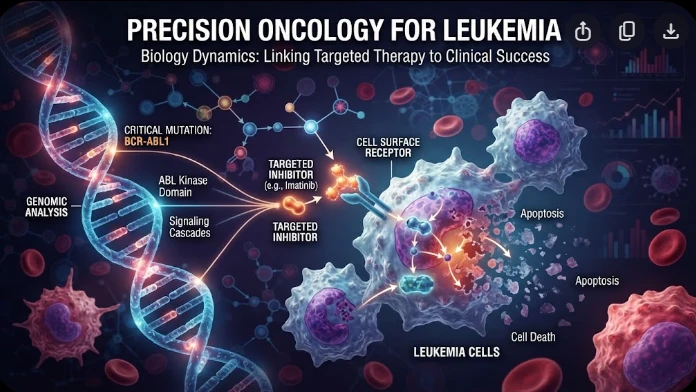
The article examines leukemia as an evolving population under targeted therapy, using chronic myeloid leukemia as the main example. BCR–ABL1 inhibition can produce deep responses, but every treatment changes the competitive environment among malignant clones. Quantitative transcript monitoring provides a continuous measure of disease burden, while deep sequencing can identify emerging resistance mechanisms before hematologic progression. A detected mutation is clinically meaningful only when its
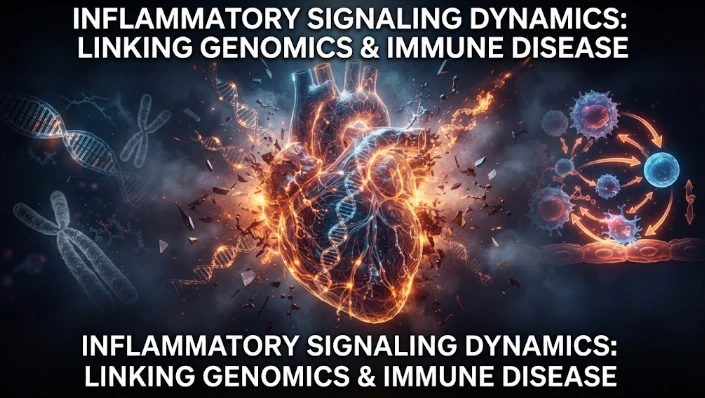
The article examines how cardiovascular genetic risk becomes biologically active through cell-specific inflammatory signaling. Because many vascular-risk variants lie in regulatory DNA rather than coding regions, their effects may appear only in particular endothelial, macrophage, smooth-muscle, or lymphocyte states. Single-cell studies of human atherosclerotic lesions and multiomic endothelial experiments are used to illustrate this context dependence. The article also discusses IL6-related sig
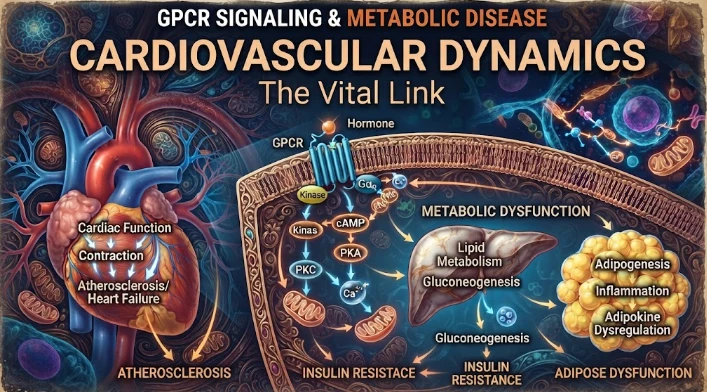
The article examines cardiovascular GPCR signaling as a dynamic response system whose abnormalities can remain hidden in resting measurements. Mechanical stretch, hormones, nutrients, sympathetic activity, and fluid balance can change the amplitude, duration, localization, and recovery of receptor signaling. Examples include mechanically activated angiotensin-receptor signaling, endosomal signaling, beta-arrestin-dependent trafficking, and biased glucagon-like peptide-one receptor responses. The