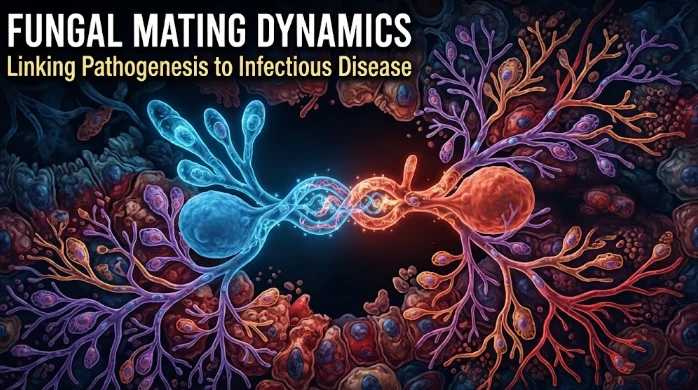
The article presents fungal mating as a time-dependent component of pathogenesis rather than an isolated reproductive event. In Candida albicans, white–opaque switching controls mating competence, pheromone signaling coordinates partner recognition, and nutrient conditions influence whether reproductive programs are activated. Mating-associated signaling can also alter adhesion and biofilm organization, linking reproductive biology with persistence and antifungal tolerance. After fusion, parasexual chromosome loss creates new allele combinations and copy-number states that can be selected by drug or immune pressure. The article discusses haploid states, host niches, quorum sensing, anatomical variation, and the challenge of determining how often mating occurs during infection. Longitudinal sequencing of serial isolates and experimental evolution are proposed to connect reproductive events with changes in virulence, resistance, and fitness. The central model is sequential: phenotypic switching creates competence, environmental signals permit mating, genome reduction generates diversity, and host or treatment pressures select the surviving fungal states.
Fungal mating becomes relevant to the clinic if traits are changed by reproductive signals that are relevant to the infection process. Cell identity, phenotypic switching, sensing of pheromones, nutrients, biofilm behavior, and genome state are all factors that regulate mating in Candida albicans. All elements may vary over time. Pathogenesis may then interact with mating, particularly because host conditions may promote one state, selection occurs during antifungal therapy, or compatible cells may be brought together within structured communities.
The white opaque switch plays a critical role for the mating competence of C. albicans. White cells are prevalent under a host of growth conditions, with opaque cells exhibiting another set of cellular programs and ability to respond efficiently to mating pheromone. Switching is controlled by the mating type configuration and environmental signals. The onset of a reproductive event is thus a big change in cell identity, not a minor adjustment of a constitutive pathway.
Cells that are opaque demonstrate changes in their morphology, metabolism, antigen expression, and responses to their environment. Those differences can affect in certain hosts niches survival. One of the limiting factors in the past was the inhibition of stability of the opaque cells at standard mammalian temperature, but host environments are not all alike. Mating competent states can be sustained in certain contexts due to such differences in conditions provided in niches of the skin, gastrointestinal surfaces, and core body tissues.
Pheromone signaling is responsible for coordinating partner recognition. Cells that are compatible send peptide signals through the receptors that trigger mitogen activated protein kinase pathways and initiate mating gene expression. During polarized growth, cells are attracted together prior to fusion. This process gives rise to an activated transcriptional response, which can also be induced by the pheromone signaling in nonmating cells, which can alter adhesion and community organization. Under non-fusion conditions, therefore, local fungal behavior can be altered by reproductive communication.
This is a particularly important bridge provided by biofilms. Cell-to-cell contact can be promoted by the formation of specialized biofilm structures that are promoted by mating-related signaling. These communities are assembled by adhesion proteins and diffusion and local signaling is altered by the matrix. Biofilms also modify resistance to antifungal agents, stress resistance and interaction with immune system. A structure that can enhance mating efficiency can also result in conditions that engender persistent infections.
Sensitivities to nutrients regulate the likelihood of mating. Environmental resources are linked to reproductive behaviour via G protein pathways that include the Gpa2 pathway. Responses or switching to pheromones can be altered by carbon sources and other nutritional stimuli. This type of control is evolutionary sound as it requires a lot of energy to mate. All of these activities are also affected by the same nutrient conditions in the host, including growth, stress resistance, and virulence gene expression.
Following cell fusion, genome dynamics persist. Parasexual chromosome loss may occur in tetraploids to yield progeny with novel combinations of alleles and chromosome copy number. This reduction is not a foreseeable occurrence. Some chromosomes are lost in an arbitrary sequence, and some recombination may create further diversity. Pathogenic populations are thus given several avenues of increase at each mating.
Antifungal exposure can make a choice among those paths. Copy number change or aneuploidy may result in changes in gene expression of drug targets, transporters, stress response factors and metabolic pathways. A neutral state of the genome prior to drug exposure could become beneficial under drug exposure. Rarity of mating is not required to change resistance if rare offspring have a high survival advantage and increase under selection.
A similar filter can be created by immune pressure. Surface structure and stress responses are relevant to host phagocytes, complement, antimicrobial peptides and nutrient limitation. The indirectly altered properties can be mating derived genome changes. This experimental approach allows for determination of if there is any reproductive variation that influences macrophage survival, epithelial interaction, tissue invasion, or inflammatory signaling.
Another potential route is the haploid C. albicans. The mating competent haploids show that sets of chromosomes can traverse unusual ploidy states to converge on diploidy or ploidy higher than diploidy. Haploids show recessive mutations right away and alleles in diploid cells are subject to selection. These can produce phenotypic diversity in a brief time frame, but may be short-lived if fitness costs are high.
To find out if these mechanisms are involved in human infection, longitudinal genomics is required. Changes in mating type, heterozygosity, chromosome copy number, ploidy and recombination patterns can be evaluated in serial isolates obtained from the same patient. Those genomic alterations can be correlated with antifungal therapy, immune defenses, anatomical localization, and clinical manifestation. A temporal sequence can differentiate between adaptation during infection, and variation already occurring at the time of diagnosis.
Laboratory evolution can be used in conjunction with clinical sampling. Mixed populations of compatible strains may be cultured under stress conditions, such as: antifungals or immune cells; and then the survivors are deep sequenced. Mating markers and genomic changes can be used to estimate the frequency of reproductive events contributing to adaptation. Progeny with altered virulence or response to therapy can then be selected for functional assays.
The interpretation of the fungal epidemiology is also affected by the mating dynamics. Clonal stability is not necessary for genetic relatedness if there are recombination events, chromosome losses or parasexual events. Reconstruction of transmission and adaptation should take into account genome plasticity in population studies. The appearance of a new genotype may be due to a change in the genotype within a lineage rather than acquisition from an unrelated source.
One of the most important unknowns is how often they mate within the host. Direct observation is challenging because reproductive events can be rare and/or transient, and progeny can subsequently lose clear markers of the event. Experimental models have sensitive lineage tracing systems which can give an estimate of frequency, under defined host conditions. Genomic bar coding may provide insights into whether the genetic diversity of the population is enhanced by treatment or nutrient stress through the production of more descendants from mating or whether the population loses genetic diversity through the production of fewer descendants from mating.
Quorum sensing can interact with reproduction. C. albicans secretes small molecules which affect morphology and community state, while dense biofilms generate chemical environments distinct to planktonic growth. Understanding the effect quorum signals have on opaque stability, pheromone response and partner finding may lead to an explanation for the variation in mating competence with population density. The kind of work we do ties in reproduction with the ecology of persistent colonization.
The mating history should also be examined at different anatomical sites. The environment in the oral cavity and gastrointestinal tract, the genital area, the skin and the blood stream are very different from one another in terms of temperature, microbial ecology, oxygen content, and nutrient availability. Suppressed pathway can be active in another site. Reproductive competence could reflect local environment or lineage history, with serial isolates from different compartments of a single host illustrating this.
There is no need to block mating directly for therapeutic implications. Mating with an associated state may reveal the problem in metabolism, cell wall structure or stress response. If the vulnerabilities are passed on to the offspring, they may become indirect targets. On the other hand, there is a possibility of unintentionally increasing adaptive diversity when favoring for mating competent cells. Therefore, the effects on population evolution should be studied in the process of drug development, in addition to the immediate killing of fungi.
Rare mating is important in a clinical context and can be estimated using mathematical population models. Even a very low mating rate may be important if offspring have a substantial survival benefit with treatment. Combination of mating frequency, fitness cost, drug selection, and population size may help determine situations in which reproductive diversity can be observed. Experimental evolution can then be used to test those predicted thresholds, and to estimate the thresholds with measured rates instead of assumptions.
Reversibility to the environment should also be assessed. Reproductive diversity may be very local when mating competence wanes very quickly as niche shifts. A temporary host condition can lead to a lasting shift in the population with more clinical implications if descendants hold on to the adaptive traits after they have left the niche.
The linkage of mating and infectious disease is therefore a series of state changes: phenotypic switching is competence; pheromone and nutrient signals control interactions; mating and fusion expands ploidy; parasexual processes produce diversity; host and/or drug pressure selects survivors. Pathogenesis exerts an impact on each step by modifying the environment that fungal cells live in. Understanding the dynamics of that sequence can identify the rarity of reproductive events that result in long-term changes in virulence, persistence, and response to antifungal drugs.
CITE THIS ARTICLE
Tasmeem, S. (2026). Fungal Mating Dynamics Linking Fungal Pathogenesis to Infectious Disease. https://www.sadiaresearchhub.com/article/40c69792-bf34-5fba-ad2b-c20167749e83
S. Tasmeem, “Fungal Mating Dynamics Linking Fungal Pathogenesis to Infectious Disease,” 2026. [Online]. Available: https://www.sadiaresearchhub.com/article/40c69792-bf34-5fba-ad2b-c20167749e83
Tasmeem, S. (2026) ‘Fungal Mating Dynamics Linking Fungal Pathogenesis to Infectious Disease’. Available at: https://www.sadiaresearchhub.com/article/40c69792-bf34-5fba-ad2b-c20167749e83
Tasmeem S. Fungal Mating Dynamics Linking Fungal Pathogenesis to Infectious Disease. 2026. https://www.sadiaresearchhub.com/article/40c69792-bf34-5fba-ad2b-c20167749e83
@misc{article_40c69792bf345fbaad2bc20167749e83,
  title = {Fungal Mating Dynamics Linking Fungal Pathogenesis to Infectious Disease},
  author = {Sadia Tasmeem},
  year = {2026},
  url = {https://www.sadiaresearchhub.com/article/40c69792-bf34-5fba-ad2b-c20167749e83},
}
TY  - GEN
AU  - Sadia Tasmeem
TI  - Fungal Mating Dynamics Linking Fungal Pathogenesis to Infectious Disease
PY  - 2026-05-17
UR  - https://www.sadiaresearchhub.com/article/40c69792-bf34-5fba-ad2b-c20167749e83
ER  -
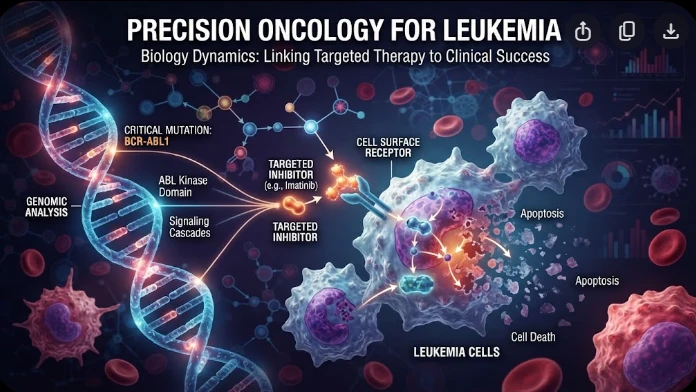
The article examines leukemia as an evolving population under targeted therapy, using chronic myeloid leukemia as the main example. BCR–ABL1 inhibition can produce deep responses, but every treatment changes the competitive environment among malignant clones. Quantitative transcript monitoring provides a continuous measure of disease burden, while deep sequencing can identify emerging resistance mechanisms before hematologic progression. A detected mutation is clinically meaningful only when its
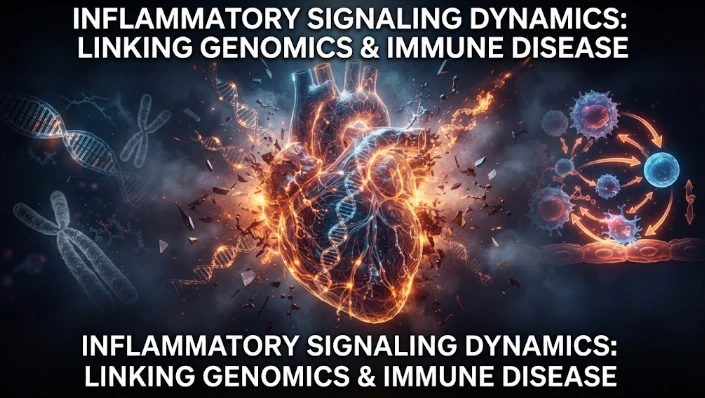
The article examines how cardiovascular genetic risk becomes biologically active through cell-specific inflammatory signaling. Because many vascular-risk variants lie in regulatory DNA rather than coding regions, their effects may appear only in particular endothelial, macrophage, smooth-muscle, or lymphocyte states. Single-cell studies of human atherosclerotic lesions and multiomic endothelial experiments are used to illustrate this context dependence. The article also discusses IL6-related sig
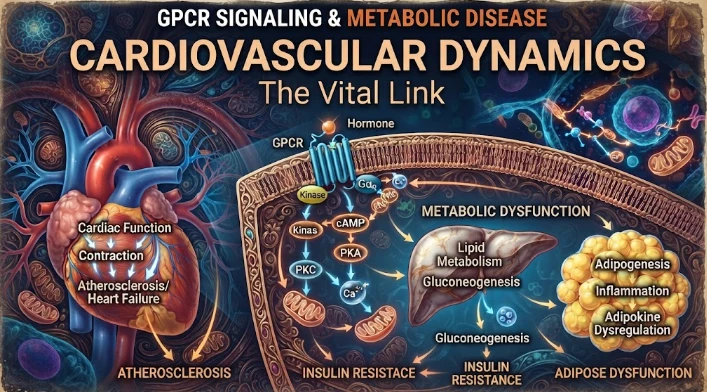
The article examines cardiovascular GPCR signaling as a dynamic response system whose abnormalities can remain hidden in resting measurements. Mechanical stretch, hormones, nutrients, sympathetic activity, and fluid balance can change the amplitude, duration, localization, and recovery of receptor signaling. Examples include mechanically activated angiotensin-receptor signaling, endosomal signaling, beta-arrestin-dependent trafficking, and biased glucagon-like peptide-one receptor responses. The