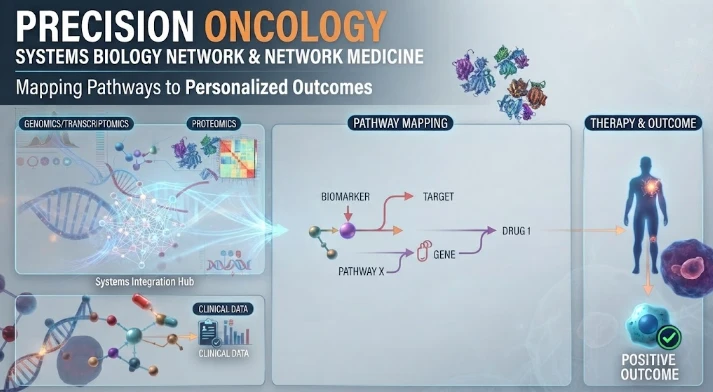
The article evaluates whether systems biology and network medicine can produce clinically meaningful outcomes in precision oncology. It explains how master-regulator analysis and tools such as VIPER infer functional regulatory activity from coordinated downstream expression, allowing tumors to be grouped by state rather than mutation alone. Drug-perturbation signatures can then nominate therapies expected to reverse those states, but patient-derived models and functional assays are needed before clinical interpretation. The article emphasizes treatment resistance, single-cell detection of rare subpopulations, spatial niches, external validation, calibration, and prospective trials. It distinguishes prognostic network signatures from genuinely predictive treatment biomarkers and discusses pharmacodynamic testing, toxicity, health-system turnaround, and equitable validation across populations. The overall framework moves from tumor state to dependency prediction, experimental validation, treatment selection, and longitudinal monitoring. Network medicine is presented as useful only when this chain improves a defined clinical decision and patient outcome.
Precision oncology will only work if there is more value in molecular information than in the descriptive information provided. Systems biology and network medicine provide tools to link disease markers to therapy by identifying programs of regulation that sustain the "malignant cell state. The central question is pragmatic: can network defined dependencies predict a therapy, explain resistance, and be sufficiently robust across patients that they can influence a clinical decision?
Traditional genomic matching is better if a change causes a direct dependency that can be targeted with a drug. Not many tumours have such a simple relationship. Multiple mutations can affect a similar transcriptional program, and single mutations can result in different behavior in different tissues or depending on the other changes. Network models tackle this ambiguity by estimating the functional activity of regulators based on coordinated target gene expression.
The use of master regulator analysis is particularly convenient for this purpose. A transcription factor or signalling protein may regulate a host of ‘downstream’ genes, which give expression to the proliferation, lineage identity, stress response or survival. Algorithms like VIPER make inferences of regulator activity based on collective behavior of those targets. This would change the interpretation from messenger RNA level to the functional status – a better reflection of post translational activation.
Linking network states with response allows outcome prediction. Mutations that drive the tumors may be different, but tumors sharing a master regulator module can be tested for their common sensitivity to certain targeted compounds. On the contrary, when the regulatory programs differ, the patients with the same nominal genomic subtype can be separated. This stratification might account for this response heterogeneity which mutation models are unable to resolve.
One bridge between state and therapy are the drug perturbation databases. A model system produces a distinct transcriptional response to a drug. If this response turns off the master regulator program that is active in a patient tumor, the compound may be a candidate for functional state reversal. The hypothesis is still to be tested as the perturbation signature may vary depending on cell line, dose, and exposure time.
That test can be provided by patient derived models. For each organoid, xenograft and ex vivo culture, network state can be characterized to see if the same network state exists in vitro. Subsequently, viability, apoptosis, pathway inhibition and regulator reversal can be tested for predicted compounds. A treatment is more believable when it is predicted by molecules, responds and the regulators are suppressed.
Resistance is also important for clinical outcome. A therapy can give a temporary result and choose an alternative regulatory state. The important question of whether the original master regulators disappear, and whether they are replaced by another one during residual disease can be answered by serial profiling. Network medicine may thus be used to detect baseline sensitivity and adaptive escape. This affords a chance for sequential or combination strategies based on changing state.
Single cell analysis can enhance models of outcome as rare populations cause relapses. A large population of treatment-sensitive cells can outnumber a small population of cells that has a different network program, and be the cause of a bulk tumor profile. Single cell regulatory inference can help identify that minority and estimate the effect of therapy on the size of that minority. Spatial data can reveal the presence or absence of resistant cells in either hypoxic, immune excluded, or stromal rich niches.
Before these models can be correlated with patient outcomes, they must be "externally validated. A network established from one institution may be biased due to local sample handling or platform effects or cohort composition. Independent cohorts should be tested to see if there is a relationship between progression, survival or response to treatment and regulator activity. Built-in algorithms and locked thresholds minimize the chances of picking a desired pattern once the results have been determined.
The best evidence comes from prospective trials. The participants are allowed to be network profiled before treatment and therapy may be chosen or prioritized based on preset rules. Response, PFS, DoB, and TTF are possible endpoints. A comparison with the standard genomic selection can be used to check whether network information does add value beyond what is offered by genomic selection.
When predictions are uncertain, decision utility is also important. A network model can generate a list of candidate therapies, not just one single therapy. In order to use the prediction of activity in the clinic, a system must be set up to integrate the prediction of activity with toxicity, previous treatment, and availability of the drug and existing evidence. Network predictions should reduce uncertainty with constraints subordinate to existing and validated clinical constraints.
Calibration deserves attention. Predicted values must correspond to observed frequencies in the risk group if a model gives estimates of probabilities of response. A valid model ranking patients, but over-estimating benefit, can be deleterious. Discrimination metrics should be accompanied by prospective calibration and subgroup assessment. Analysis of the performance by ancestry, sex, age, tumor type, and/or previous treatment may uncover unexpected failure modes.
When no immediate therapy follows, network medicine might help. A master regulator module may identify a biological subgroup for trial enrolment, uncover a resistance mechanism that is important to monitor or prioritize a target for drug development. These results go far beyond the standard drug menu in precision oncology. Mechanistic classification can generate future treatment opportunity even if there is no current evidence to promote off label use.
There is a need to differentiate between state prediction and drug sensitivity prediction in outcome analysis. A network signature does not need to identify a treatment that improves the biology in order to be able to accurately classify aggressive biology. To support the interpretation of a treatment interaction, the provider of the predictive evidence must also show that the interaction was observed, preferably in a prospective study. This separation allows for the ability to present prognostic network scores without having evidence of intervention.
Mechanistic redundancy is another challenge. There are multiple upstream pathways that tumors can support a master regulator program. Blocking one input can thus leave the downstream state alone. Combination design should look for independent control points such that their combined perturbation will bring the network to its acceptable toxicity. Functional screens can assess if predicted combinations have a synergy effect due to network structure and not due to a non-specific drug stress.
Pharmacodynamic measurement can validate that the therapy selected has the desired impact on the network. A biopsy can be performed after treatment to determine if the activity of master regulators occurs earlier than clinical response. If the network is still active even after appropriate drug exposure, then the predicted mechanism has failed even if there is a temporary shrinkage. On the other hand, if the tumor does not respond to the regulators, they may be the only indicator of a parallel survival program. Intermediate endpoints provide more information on trials.
The practicality of the health system also has a bearing on results. Tissue quality and rapid sequencing, standardisation of computation, and access to nominated therapy are essential for network profiling. Model which give the answer after the start of the treatment is not useful in aggressive disease. Response metrics should thus be considered in conjunction with turn-around time and assay failure when assessing network guided precision oncology.
Regulatory state may also provide endpoints for the trials that go beyond radiographic response. Molecular response, disappearance of a resistant module and delayed emergence of adaptive programs can show beneficial responses prior to changes of size. These endpoints must be validated against survival and quality of life, but can provide early phase trials with more mechanistic information. Once network guided treatment is made, then it can be assessed for if it actually affects the predicted biology.
The implementation of it needs to be equitable and that means different training and validation cohorts. The expression patterns of the tumors themselves, as well as ancestry associated biology, access to treatments, and sample quality may differ among health systems. The transfer of a network model developed in one population for referral should not be assumed. Multicenter testing can help identify if the same regulator states and treatment associations are maintained across settings when using prospective testing.
So, the best precision oncology result is not a more complex molecular report. It's a repeatable pathway from tumour state to dependency prediction, dependency to validation, validation to clinical benefit. Network medicine connects maps with action in systems biology. If longitudinal monitoring is included, the same framework can be used to monitor and test adaptation and update treatment hypotheses as the tumor progresses
CITE THIS ARTICLE
Tasmeem, S. (2026). Precision Oncology Outcomes through Systems Biology Network and Network Medicine. https://www.sadiaresearchhub.com/article/535e5b04-2348-5249-b11c-2db35819a3cc
S. Tasmeem, “Precision Oncology Outcomes through Systems Biology Network and Network Medicine,” 2026. [Online]. Available: https://www.sadiaresearchhub.com/article/535e5b04-2348-5249-b11c-2db35819a3cc
Tasmeem, S. (2026) ‘Precision Oncology Outcomes through Systems Biology Network and Network Medicine’. Available at: https://www.sadiaresearchhub.com/article/535e5b04-2348-5249-b11c-2db35819a3cc
Tasmeem, Sadia. “Precision Oncology Outcomes through Systems Biology Network and Network Medicine.” 2026, https://www.sadiaresearchhub.com/article/535e5b04-2348-5249-b11c-2db35819a3cc.
Sadia Tasmeem. “Precision Oncology Outcomes through Systems Biology Network and Network Medicine.” (2026). https://www.sadiaresearchhub.com/article/535e5b04-2348-5249-b11c-2db35819a3cc.
Tasmeem S. Precision Oncology Outcomes through Systems Biology Network and Network Medicine. 2026. https://www.sadiaresearchhub.com/article/535e5b04-2348-5249-b11c-2db35819a3cc
@misc{article_535e5b0423485249b11c2db35819a3cc,
  title = {Precision Oncology Outcomes through Systems Biology Network and Network Medicine},
  author = {Sadia Tasmeem},
  year = {2026},
  url = {https://www.sadiaresearchhub.com/article/535e5b04-2348-5249-b11c-2db35819a3cc},
}
TY  - GEN
AU  - Sadia Tasmeem
TI  - Precision Oncology Outcomes through Systems Biology Network and Network Medicine
PY  - 2026-03-29
UR  - https://www.sadiaresearchhub.com/article/535e5b04-2348-5249-b11c-2db35819a3cc
ER  -
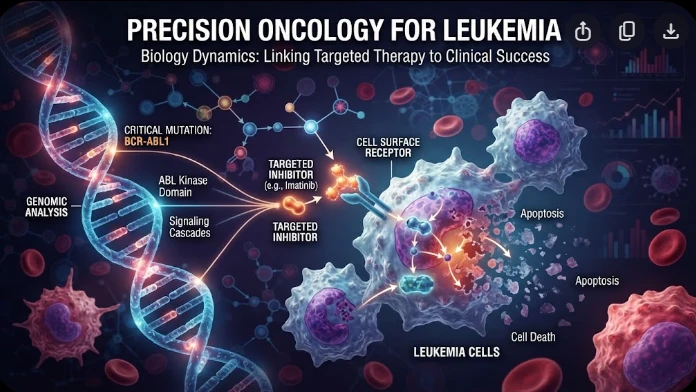
The article examines leukemia as an evolving population under targeted therapy, using chronic myeloid leukemia as the main example. BCR–ABL1 inhibition can produce deep responses, but every treatment changes the competitive environment among malignant clones. Quantitative transcript monitoring provides a continuous measure of disease burden, while deep sequencing can identify emerging resistance mechanisms before hematologic progression. A detected mutation is clinically meaningful only when its
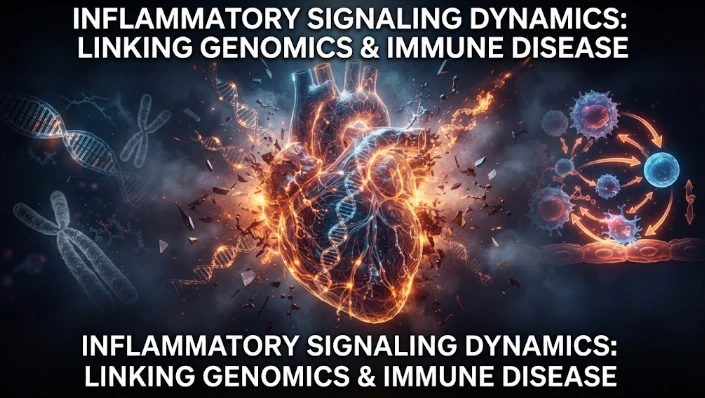
The article examines how cardiovascular genetic risk becomes biologically active through cell-specific inflammatory signaling. Because many vascular-risk variants lie in regulatory DNA rather than coding regions, their effects may appear only in particular endothelial, macrophage, smooth-muscle, or lymphocyte states. Single-cell studies of human atherosclerotic lesions and multiomic endothelial experiments are used to illustrate this context dependence. The article also discusses IL6-related sig
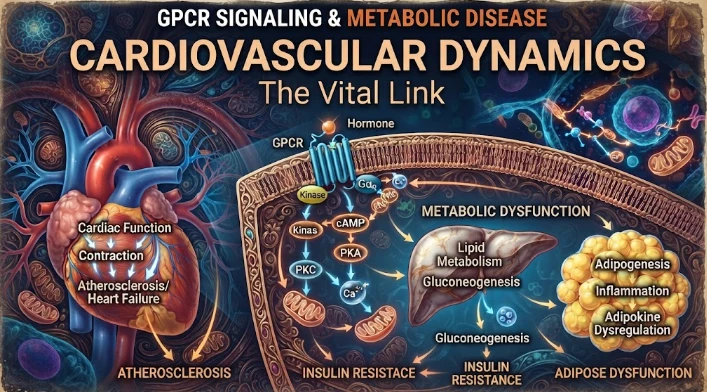
The article examines cardiovascular GPCR signaling as a dynamic response system whose abnormalities can remain hidden in resting measurements. Mechanical stretch, hormones, nutrients, sympathetic activity, and fluid balance can change the amplitude, duration, localization, and recovery of receptor signaling. Examples include mechanically activated angiotensin-receptor signaling, endosomal signaling, beta-arrestin-dependent trafficking, and biased glucagon-like peptide-one receptor responses. The