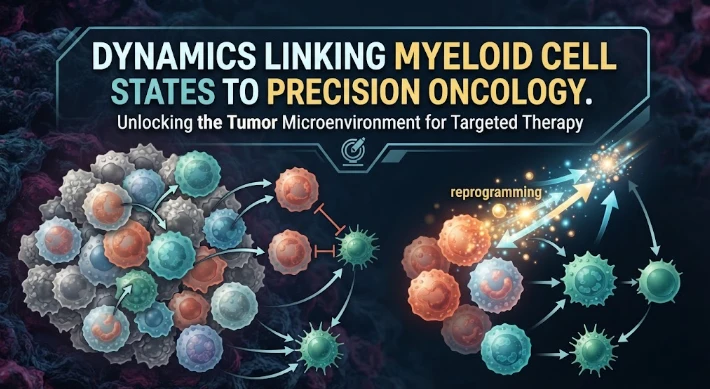
The article follows myeloid-cell states longitudinally during cancer immunotherapy, arguing that similar immune-cell counts can conceal very different functional transitions. Melanoma studies illustrate coordinated changes between macrophages and T cells, including MerTK-associated macrophage programs linked to resistance. Serial biopsies, circulating myeloid measurements, tumor genomics, and spatial profiling are proposed to determine whether a suppressive state precedes resistance, follows tumor evolution, or arises through treatment-induced adaptation. The article distinguishes recruitment of new monocytes from local reprogramming of resident cells because the therapeutic implications differ. Functional perturbation can test candidate receptors, transcription factors, metabolic pathways, or cytokine circuits, while patient-derived models assess reversibility. Sampling bias, analytical stability, toxicity, and treatment context must be considered. The central goal is to identify an early, reproducible myeloid resistance trajectory that can be causally reversed before a durable therapy-resistant ecosystem becomes established.
respond to treatment or respond in a very different manner. The distinction is frequently in cell state and interaction. Myeloid cells may switch between antigen presentation and inflammatory states to macrophage phenotypes that promote tumor persistence, inhibit T cells and promote tissue healing. It is therefore essential that precision oncology monitor myeloid dynamics as the patient enters and progresses through therapy, rather than just looking at the level of myeloid cells at the start of treatment and comparing them between responders and nonresponders.
Single-cell studies in melanoma have started mapping those transitions. Pre-treatment states of the myeloid cells and T cells, prior to checkpoint inhibition, were studied by research that revealed coordinated transitions between the macrophages and T cells. These results are in line with a relational perspective of resistance. The clinical importance of a macrophage state is partly due to the T cell state in the same tumor ecosystem.
A more specific example is macrophages that are positive for Mer. A single-cell analysis of melanoma revealed an AhR and ALKAL1 signaling pathway that is linked to macrophages with high expression of MerTK, which correlate with progression and therapeutic resistance to immunotherapy. The result indicates that a surface phenotype can be associated with a specific tumor myeloid communication pathway, rather than being just a descriptive cluster label.
It is crucial to collect samples longitudinally as baseline association is not sufficient to determine cause and effect. The presence of a suppressive macrophage population prior to therapy may be responsible for causing resistance, or this may due to a tumor program that causes resistance on its own. Temporal evidence is strengthened if the state expands first, then T cell dysfunction and clinical progression.Temporal evidence is strengthened when the state expands first, then T cell dysfunction, then clinical progression. Treatment biopsies are particularly valuable early on treatment.
Blood can complement tissue to monitor the presence of monocyte precursors and soluble mediators more regularly. This change in the composition of circulating myeloid cells may occur before infiltrating cells and should not be taken as a mirror of the tumor state. The paired analysis can detect the presence of similar transcriptional or receptor characteristics in circulating cells and tumor macrophages. Experimental models can be used to assess the ability of nominated precursors to give rise to the resistant state using either clonal or barcoding approaches.
Spatial profiling helps to explain interaction. A suppressive macrophage in the vicinity of exhaust T cells, blood vessels or tumor nests may establish a local barrier to immune attack. Multiplex imaging can provide a quantitative measurement of distance and neighborhood composition before and after treatment. Cytokine and receptor programs can be added to spatial transcriptomics. By repeating spatial maps, it is possible to determine if checkpoint therapy allows T cells to enter or if it promotes formation of additional suppressive niches.
We need to scale cancer cell evolution by clonally. Antigen loss by a tumor clone can escape the killing by the T cells and change the production of cytokines, which also attract myeloid cells as a consequence. If no information on tumor genomics, that swelling of macrophages might be attributed to primary resistance as well. Joint profiling can be used to differentiate escape by myeloid cells from adaptation of a newly resistant tumour clone by myeloid cells.
Serial liquid biopsy can monitor the growth and evolution of tumour clones where repeated tissue is not possible. Plasma proteins and/or immune phenotyping may be used to monitor systemic myeloid signals, and circulating tumor DNA to track emergence of genomic resistance. The model of the two trajectories can be designed together. If the first change is a myeloid change, rather than a change after clonal expansion, it would indicate a different mechanism than a change after the domain of the resistant clone is established.
After trajectory analysis, functional perturbation should be done. In tumor models treated with checkpoint blockade, candidate myeloid receptors, transcription factors or metabolic pathways are inhibited. Targeted true resistance dependency should restore T cell function or tumour control. To determine if the effect is mediated by macrophages vs other cells expressing the same molecule, rescue experiments and cell specific perturbation can be performed.
State changes may be reversible as well. Cytokines and metabolites make macrophages respond and change the tumor environment can change the program without destroying them. This difference has therapeutic implications. Depletion takes cells broadly, and reprogramming aims to change function from one extreme to the other, such as from the antigen presentation to the phagocytosis or T cell-supporting. Longitudinal single cell analysis can help confirm if a therapy has a desired effect.
There might be an underlying cause for metabolism. Myeloid programs are regulated by hypoxia, lactate, lipids, purines, and competition for nutrients. The macrophage phenotype that is associated with resistance might rely on a metabolic niche and not a stable lineage program. These dependencies can be found by measuring metabolites in addition to cell states. In some cases, the effects of such a perturbation are indirect and modify the behavior of the myeloid cells.
Future clinical trials should have pre-defined endpoints and time points. Baseline, early treatment, best response, and progression samples can be used for baseline modelling. Radiographic response, progression free survival and immune related adverse events provide different insights into efficacy and toxicity and should be analyzed separately. Care needs to be taken with the handling of any samples that are missing, because progressive tumors are not sampled randomly.
Treatment context should be maintained during external validation. Anti PD-1 response in melanoma cannot be directly translated to renal cancer or lung cancer. There are differences in tissue architecture, oncogenic signaling, prior therapy, and resident macrophages. States of conservation can be identified in the cross cancer analysis, but the effects on the cancer state shouldn't be averaged away.
A dynamic biomarker should be "actionable. Patients might be randomized to adaptive intensification by a rising baseline state and to a combination therapy by a rising early state. These strategies must be tested and demonstrated to improve outcome when based on the biomarker. If there is no effective state specific intervention before the resistant individuals are detected, there may be no benefit.
Recruitment should be distinguished from reprogramming when making trajectory analysis. A more resistant macrophage state can be produced due to infiltration of new monocytes or due to the change of resident cells' phenotype. Those processes can be separated with circulating precursor measurements, chemokine gradients and lineage inference. The therapeutic approach is different: recruitment is to block trafficking, local reprogramming is to directly target differentiation signals or metabolism in the tumor.
Apparent dynamics can be affected by sampling bias. Patients with "responding" tumors have a higher probability of being fit to undergo subsequent biopsy, whereas a fast-growing disease may be under-represented. Some missingness can be overcome by statistical methods but it is important that the problem is anticipated in the study design, for example by employing assay on blood or clinically indicated tissue as a substitute for research biopsy. If paired samples are reported as missing, they should include how many are missing and why.
Additionally, there are some relationships between myeloid dynamics and immune related toxicity. Systemic immunity is activated by checkpoint blockade and inflammatory monocyte/macrophage programs can lead to tissue injury other than at the tumor site. By measuring the efficacy and toxicity of the same candidate, it may be possible to determine if there is a relationship between the two. If a biomarker identifies strong responders but also high toxicity risk, it can still be of benefit if it is used to monitor or provide a prophylax plan.
The adaptive trial offers a direct way to assess early changes of state. The participant can start checkpoint therapy, receive a prespecified early immune assessment and get a myeloid targeted addition if a resistance trajectory occurs. These designs call for the validation of rapid assays and explicit decision thresholds. They demonstrate that dynamics are clinically meaningful and not just a reflection of subsequent progression.
Another desirable property for a good early biomarker is analytical stability. Sequencing platforms, tissue processing or annotation methods may change, which can cause cell state classifiers to drift. If the relationship between the treatment response can be maintained in independent cohorts, a dynamic signature can be translated to a smaller protein or flow cytometry panel to improve repeatability.
Miriam Merad's work on myeloid cell states and human tumor immunity enables a paradigm shift in immune classification from static to treatment-driven. Check point therapy disrupts a living ecosystem, and myeloid cells can transit between states that promote or inhibit the activity of T cells. Different types of single cell, spatial, genomic and liquid cell biopsies can detect those transitions. Precision comes when a dynamic myeloid program is causally connected to resistance, and this process can be reversed prior to fixity of resistance.
CITE THIS ARTICLE
Tasmeem, S. (2025). Tumor Immunology Dynamics Linking Myeloid Cell States to Precision Oncology. https://www.sadiaresearchhub.com/article/689dd9c7-b8bd-5337-b417-bb7985fd9376
S. Tasmeem, “Tumor Immunology Dynamics Linking Myeloid Cell States to Precision Oncology,” 2025. [Online]. Available: https://www.sadiaresearchhub.com/article/689dd9c7-b8bd-5337-b417-bb7985fd9376
Tasmeem, S. (2025) ‘Tumor Immunology Dynamics Linking Myeloid Cell States to Precision Oncology’. Available at: https://www.sadiaresearchhub.com/article/689dd9c7-b8bd-5337-b417-bb7985fd9376
Tasmeem, Sadia. “Tumor Immunology Dynamics Linking Myeloid Cell States to Precision Oncology.” 2025, https://www.sadiaresearchhub.com/article/689dd9c7-b8bd-5337-b417-bb7985fd9376.
Sadia Tasmeem. “Tumor Immunology Dynamics Linking Myeloid Cell States to Precision Oncology.” (2025). https://www.sadiaresearchhub.com/article/689dd9c7-b8bd-5337-b417-bb7985fd9376.
Tasmeem S. Tumor Immunology Dynamics Linking Myeloid Cell States to Precision Oncology. 2025. https://www.sadiaresearchhub.com/article/689dd9c7-b8bd-5337-b417-bb7985fd9376
@misc{article_689dd9c7b8bd5337b417bb7985fd9376,
  title = {Tumor Immunology Dynamics Linking Myeloid Cell States to Precision Oncology},
  author = {Sadia Tasmeem},
  year = {2025},
  url = {https://www.sadiaresearchhub.com/article/689dd9c7-b8bd-5337-b417-bb7985fd9376},
}
TY  - GEN
AU  - Sadia Tasmeem
TI  - Tumor Immunology Dynamics Linking Myeloid Cell States to Precision Oncology
PY  - 2025-11-09
UR  - https://www.sadiaresearchhub.com/article/689dd9c7-b8bd-5337-b417-bb7985fd9376
ER  -
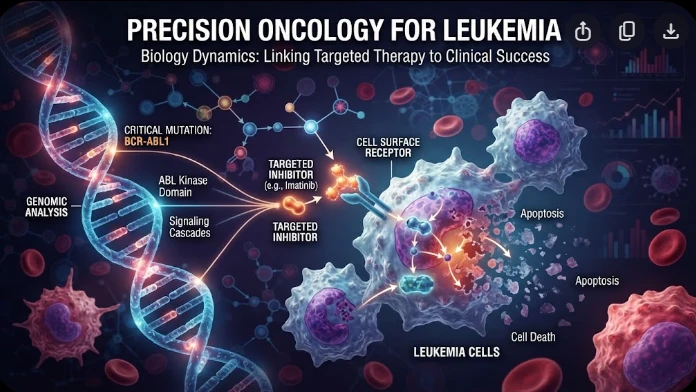
The article examines leukemia as an evolving population under targeted therapy, using chronic myeloid leukemia as the main example. BCR–ABL1 inhibition can produce deep responses, but every treatment changes the competitive environment among malignant clones. Quantitative transcript monitoring provides a continuous measure of disease burden, while deep sequencing can identify emerging resistance mechanisms before hematologic progression. A detected mutation is clinically meaningful only when its
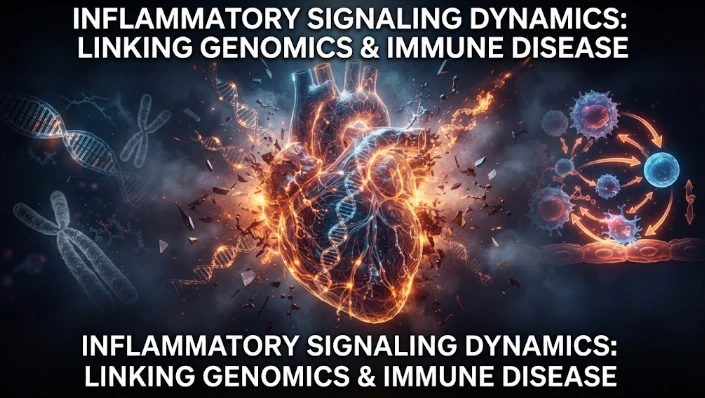
The article examines how cardiovascular genetic risk becomes biologically active through cell-specific inflammatory signaling. Because many vascular-risk variants lie in regulatory DNA rather than coding regions, their effects may appear only in particular endothelial, macrophage, smooth-muscle, or lymphocyte states. Single-cell studies of human atherosclerotic lesions and multiomic endothelial experiments are used to illustrate this context dependence. The article also discusses IL6-related sig
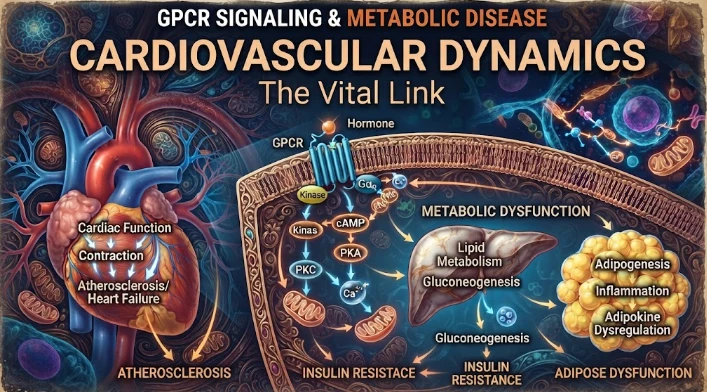
The article examines cardiovascular GPCR signaling as a dynamic response system whose abnormalities can remain hidden in resting measurements. Mechanical stretch, hormones, nutrients, sympathetic activity, and fluid balance can change the amplitude, duration, localization, and recovery of receptor signaling. Examples include mechanically activated angiotensin-receptor signaling, endosomal signaling, beta-arrestin-dependent trafficking, and biased glucagon-like peptide-one receptor responses. The