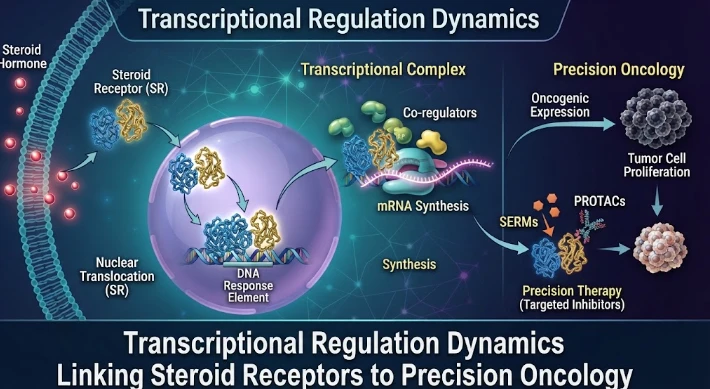
The article explores how steroid-receptor transcription changes over time under endocrine treatment and why this dynamic behavior matters for precision oncology. Receptor binding, coactivator recruitment, chromatin remodeling, phosphorylation, protein turnover, and enhancer activity occur across different timescales, allowing tumors to reprogram before receptor expression is visibly lost. Estrogen-receptor biology is used to show how ligand-specific conformations and changing cofactor interactions can reshape transcription. Growth-factor signaling, metabolic pathways, and chromatin memory can maintain or redirect survival programs during treatment. The article argues that serial tissue and liquid-biopsy measurements are needed to distinguish temporary adaptation from durable resistance and inadequate drug exposure. Single-cell and spatial methods can reveal rare resistant states hidden in bulk measurements. CRISPR and patient-derived models are proposed for causal validation. The overall message is that precision treatment should follow regulatory trajectories, identifying emerging dependencies early enough to intercept resistance rather than waiting for established progression.
occur in seconds. Steroid receptors translocate between compartments, interact with and dissociate from chromatin, interact with varying coregulator complexes and are subject to phosphorylation and degradation. The issue with precision oncology is a temporal issue – the receptor measured at diagnosis may be in a different regulatory state than after months of endocrine pressure. Knowing the dynamics of transcription can reveal resistance prior to the loss of receptor expression.
The example of estrogen receptor is most illustrative. Receptor binding to a ligand alters the conformation of the receptor, and promotes the binding of coactivators; however, transcription requires a series of other events. The receptor complexes bind to enhancers, bind chromatin modifying enzymes, bring together distant regulatory elements, and organize RNA polymerase machinery. The alteration of each stage is a signal for crosstalk, or it can be a treatment by mutation. Dynamic regulation is thus a consequence of the repeated cycles of recruitment and release, not a single permanent receptor-DNA complex.
The crystal structure of active estrogen receptor complexes revealed the difference in coactivator binding depending on the identity of the ligand. There are different receptor conformations that promote different coregulator interactions that can account for the selective estrogen receptor modulator activity. These studies were also performed sequentially and revealed that coactivators can bind to the receptor complex in sequence. The timing is important because one coactivator can modify chromatin (its structure) for the other, creating a "cascade" that results in a greater or different level of transcription.
The memory in the system is created by chromatin accessibility. Pioneer factors can open up new regions of the genome prior to activation, and histone modifications ensure the competence of enhancers even after a brief activation signal. Every time that cancer cells are exposed to endocrine therapy, they can remodel those accessible regions. A cell can survive first treatment and grow into a cell with a different set of enhancers, which will allow other transcription factors to maintain control of genes that were previously mostly under the regulation of the steroid receptor.
There are also changes in the number of coregulators. Growth factor and metabolic signals can induce, phosphorylate, ubiquitinate or degrade SRC family proteins. SRC three has been associated with progression of breast cancer and has been shown to be able to couple nuclear receptor activity to kinase pathways. An upregulation of coactivator activity may activates transcription even if receptor levels remain constant. However, abnormal degradation may cause a prolonged regulatory state when the initiating signal has subsided.
This is often the type of endocrine resistance. PI3K, MAPK, cyclin dependent kinase or other pathways may be activated in tumour cells, thereby altering receptor associated proteins. These signals can facilitate receptor ligand independent activity or alter transcription to alternative survival programs. If you lower a hormone in circulation then a downstream transcriptional engine can be partially "on". Dynamic profiling can tell the difference between pathway shutdown and compensatory pathway reactivation.
Time resolved measurement is crucial to differentiate cause and effect. The state of the biopsy at the end after progression is what is determined, but the sequence of the state is not determined by a resistant biopsy. Early changes in chromatin accessibility, receptor occupancy, phosphoproteins and transcript levels can be detected by serial sampling in therapy. If such changes occur prior to radiographic progression, they are potential predictive biomarkers and potential intervention points, not simply descriptions of known resistance.
Single cell methods are also useful for providing the required resolution as resistant populations can start as rare clones or as reversible cell states. Bulk RNA measurements are sensitive to and resistant cells, obscuring a small population with active alternative enhancers. Single cell transcriptomics and chromatin accessibility profiling provide a means to track the expansion of such states across treatment. Combined spatial approaches can determine if resistant states are enriched at stromal or immune niches that promote survival signals.
Liquid biopsy may be used in conjunction with tissue when repeat biopsies are not possible. Circulating tumor DNA can provide genomic evolution and extracellular RNA or protein markers can provide pathway activity. These signals have to be carefully validated as the transcriptional states are not as reliable as mutations in the circulation. Circulating measurements can be utilized for frequent surveillance, and tissue sampling for mechanistic confirmation, as a combined strategy when a regulatory shift is noted.
Functional perturbation turns dynamic observations into causal evidence. CRISPR editing or targeted inhibition allows one to test whether a program is necessary for survival, if longitudinal profiling has determined that there is a coactivator or enhancer program in existence that enlarges under therapy. Patient derived organoids can maintain aspects of their original regulatory context and can enable drug combination studies. Successful overcoming of the resistance following the perturbation is supportive of a mechanistic association between transcriptional reprogramming and clinical behavior.
Under this model the time of combination therapy becomes significant. A resistant regulatory program can become stable if it is allowed to proceed to full clinical resolution. Molecular state change may be validated and an early intervention may be possible that would not allow the dominant resistant clone to emerge. Precision oncology might then move from targeting a known phenotype to targeting a trajectory.
This interception takes disciplined biomarkers. A dynamic marker should be reproducible, relate to treatment exposure and correlate to outcomes in independent cohorts. Biological change can be simulated by baseline variability, sampling noise, and normal tissue signals. The modeling should differentiate between transient adaptation and durable resistance, and only report on calibration, not on relative risk. Clinical action should be taken based on validated thresholds, not exploratory molecular fluctuations.
Biology is thus the science of steroids that demands systems thinking about time. A network of regulatory events involving receptor conformation, coregulator recruitment, chromatin accessibility, signaling crosstalk, and protein turnover exists that is constantly changing. Selection pressure is imposed on that network in the form of endocrine therapy. The underlying transcription dynamics that are observed could be the rationale for the fact that a receptor positive tumor may be biologically hormone driven, but then become resistant to one of the drugs.
These time dependent measurements can be organized with the help of mathematical modelling. State or trajectory models of the state space can predict transitions between the sensitive, adaptive, and resistant transcriptional programs even in the absence of complete sampling. This should be models that can be interpreted, and the transition probabilities be correlated with measurable molecular properties. A model that predicts a repeatable change in advance of the conventional progression has the greatest predictive value.
Another approach to determining if a resistant state is reversible is to give a drug holiday and then give intermittent exposures. Genetically fixed vs. after withdrawal of treatment there are some transcriptional adaptations that have declined. Experimental cycling within organoids can provide answers about the organoids' sensitivity and whether memory is retained in the program. These kinetics can determine sequencing strategies and support understanding of whether the pathway pressure is stabilized by continued pathway pressure or not, and that a resistant enhancer landscape is created.
Additionally, integration with pharmacokinetics is required. A rebound in transcription does not necessarily indicate biological resistance, but may instead be due to insufficient drug exposure. Combining measurements of drug concentration, receptor occupancy and subsequent transcription can provide separation of pharmacological failure from regulatory resistance. Clinical studies that don't consider the risk of exposure to label underdosing as tumor adaptation, and therefore provide a wrong mechanism, and potentially the combination therapy.
There are several timescales for these transcriptional dynamics. Receptor binding can occur within minutes, coactivator recruitment can occur within hours, chromatin remodeling can last for days, and clonal selection can take months. The sampling timeframes should be consistent with that. Early pharmacodynamic biopsies show suppression of the pathway and later biopsies show adaptation. The combination of both prevents that slow evolutionary change to be mistaken for incomplete initial target engagement.
Replicate sampling can help further discriminate between the impact of a biological transition and measurement noise. A change in a state of a protein, chromatin, and RNA is more significant than a change in one of these assays. Concordance may also be used to determine the first molecular layer to shift providing better practical monitoring biomarkers.
Those dynamics when measured longitudinally mark a new frontier in precision oncology. The pertinent question is not only what kind of receptor is present, but what kind of regulatory program is on, which state is growing, and which dependency remains vulnerable. Incorporating serial multiomics with functional validation can turn transcriptional change into a treatment guide. Dynamic steroid receptor regulation is then a mechanism of resistance and potential earlier and more precise intervention point.
CITE THIS ARTICLE
Tasmeem, S. (2026). Transcriptional Regulation Dynamics Linking Steroid Receptors to Precision Oncology. https://www.sadiaresearchhub.com/article/72fb1dbd-311e-5f2a-9d65-314a5b6e0656
S. Tasmeem, “Transcriptional Regulation Dynamics Linking Steroid Receptors to Precision Oncology,” 2026. [Online]. Available: https://www.sadiaresearchhub.com/article/72fb1dbd-311e-5f2a-9d65-314a5b6e0656
Tasmeem, S. (2026) ‘Transcriptional Regulation Dynamics Linking Steroid Receptors to Precision Oncology’. Available at: https://www.sadiaresearchhub.com/article/72fb1dbd-311e-5f2a-9d65-314a5b6e0656
Tasmeem S. Transcriptional Regulation Dynamics Linking Steroid Receptors to Precision Oncology. 2026. https://www.sadiaresearchhub.com/article/72fb1dbd-311e-5f2a-9d65-314a5b6e0656
@misc{article_72fb1dbd311e5f2a9d65314a5b6e0656,
  title = {Transcriptional Regulation Dynamics Linking Steroid Receptors to Precision Oncology},
  author = {Sadia Tasmeem},
  year = {2026},
  url = {https://www.sadiaresearchhub.com/article/72fb1dbd-311e-5f2a-9d65-314a5b6e0656},
}
TY  - GEN
AU  - Sadia Tasmeem
TI  - Transcriptional Regulation Dynamics Linking Steroid Receptors to Precision Oncology
PY  - 2026-06-28
UR  - https://www.sadiaresearchhub.com/article/72fb1dbd-311e-5f2a-9d65-314a5b6e0656
ER  -
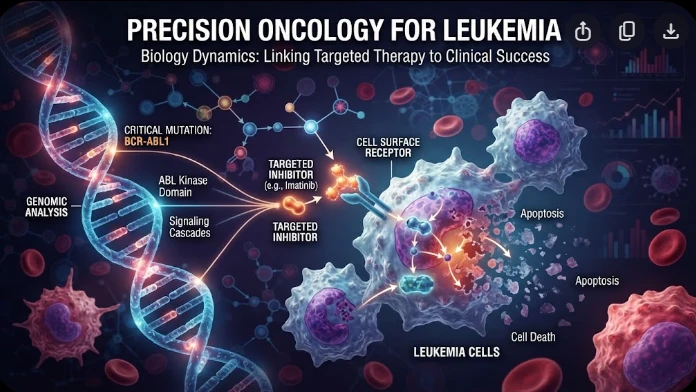
The article examines leukemia as an evolving population under targeted therapy, using chronic myeloid leukemia as the main example. BCR–ABL1 inhibition can produce deep responses, but every treatment changes the competitive environment among malignant clones. Quantitative transcript monitoring provides a continuous measure of disease burden, while deep sequencing can identify emerging resistance mechanisms before hematologic progression. A detected mutation is clinically meaningful only when its
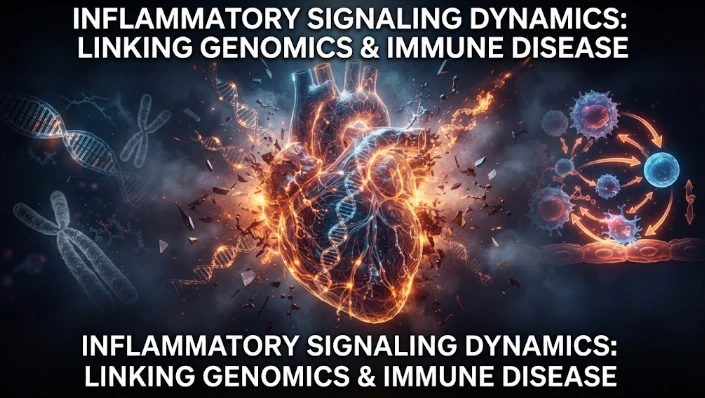
The article examines how cardiovascular genetic risk becomes biologically active through cell-specific inflammatory signaling. Because many vascular-risk variants lie in regulatory DNA rather than coding regions, their effects may appear only in particular endothelial, macrophage, smooth-muscle, or lymphocyte states. Single-cell studies of human atherosclerotic lesions and multiomic endothelial experiments are used to illustrate this context dependence. The article also discusses IL6-related sig
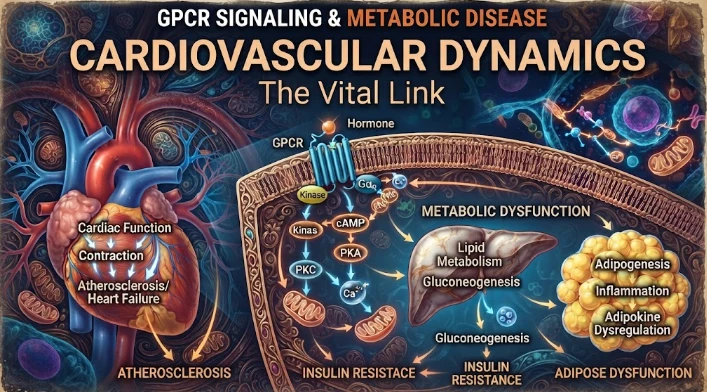
The article examines cardiovascular GPCR signaling as a dynamic response system whose abnormalities can remain hidden in resting measurements. Mechanical stretch, hormones, nutrients, sympathetic activity, and fluid balance can change the amplitude, duration, localization, and recovery of receptor signaling. Examples include mechanically activated angiotensin-receptor signaling, endosomal signaling, beta-arrestin-dependent trafficking, and biased glucagon-like peptide-one receptor responses. The