The article evaluates proposed links among antibiotic exposure, microbiome disruption, infection, and later chronic disease with deliberate caution. It accepts strong evidence that antibiotics alter microbial communities, resistance genes, and metabolic functions, while emphasizing that causal connections to chronic inflammatory or metabolic disease remain harder to prove. Exposure must be measured in detail by drug class, dose, timing, route, repeated courses, and life stage. Longitudinal microbiome, metabolite, immune, and clinical data can then identify persistent ecological pathways rather than simple associations. Recurrent infection should be studied with isolate sequencing to distinguish relapse from reinfection and to track resistant lineages. Stewardship, vaccination, rapid diagnostics, and infection prevention may preserve microbiome function by reducing unnecessary antibiotic exposure. Target-trial emulation and mechanistic validation can strengthen causal inference from observational data. The article concludes that chronic-disease prevention requires specific, reproducible biological pathways, not generalized assumptions that every post-antibiotic microbiome difference is harmful.
There is a tension between a strong biological plausibility and incomplete causal evidence for chronic disease associated with the human microbiome. It is clear that bacteria exposure to antibiotics can certainly impact microbial communities, resistance genes and metabolic functions. Differences in the microbiome are also linked to many chronic inflammatory and metabolic diseases. The more difficult issue is whether antibiotic-induced ecological shift is a cause of subsequent disease; or whether other commonalities (including infection, diet, healthcare, and host genetics) account for much of the link.
There is a strict sequence: exposure measurement followed by a robust pathway. The classes of antibiotics, dose, timing, route and courses of antibiotic treatment must be documented, not just as a yes or no variable. Early-life exposure may have different impacts than exposure in adulthood since microbial and immune development continues. One recent course may not be able to capture an ecological history either if it is repeated prescriptions.
Longitudinal microbiome data then reveal if exposure leads to long lasting changes. In human studies, loss of microbial diversity, continued disappearance of certain species, increased resistance genes, and changed metabolic patterns have been recorded following antibiotic use. The magnitude is different for each person. This variability provides a chance to see if there are long-term health risks for people with partial ecological recovery vs. those with more rapid recovery in their community.
Precision is needed for chronic disease outcomes as well. Asthma, inflammatory bowel disease, obesity, diabetes, and autoimmune diseases have different mechanisms and should not be combined under a single outcome of the microbiome. A believable study should establish a temporal order, a plausible microbial mediator, and a specific disease process. The term dysbiosis is used in a way that is too vague to be applicable clinically as a cause of chronic disease.
Pathogen/host interactions can make the way complicated. Antibiotics have the ability to eliminate a pathogen, limit inflammation and also affect commensals. Original infection, or the treatment or the interaction of the original infection and treatment, may result in a later disease risk. Pathogens can be identified through prospective surveillance and severity of infection can also be recorded to help differentiate pathogen and antibiotic use.
If the infection is recurrent, isolate sequencing is helpful. The second infection may be a relapse of the same strain or a reinfection with a new strain which colonised post microbiome disruption. They can be distinguished by whole genome sequencing. Repeated exposure to an antibiotic will select for a resistant lineage, which will persist from one episode of clinical infection to the next, making the clinical problem a part of an evolutionary process.
Host response profiling can be used to determine if the immune system is affected by the change in microbiomes. Time of measurement can be used for cytokines, antibody indices, epithelial injury markers and immune cell states. An effect of antibiotic exposure on the microbial metabolism, followed by a persistent immune shift, and eventually disease occurs before a cross sectional association measured at the time of diagnosis.
Metabolites may be mechanistic intermediates. Epithelial and Immunological pathways are modified by short chain fatty acids, secondary bile acids and compounds formed from tryptophan. Metagenomics makes predictions about the capacity of microbes, metabolomics measures how much is actually being produced. Mediation analysis can then be used to determine if functional changes are a mediator of an association between exposure and outcome; however experimental confirmation is required.
Indication bias continues to be a significant issue. Recurrent infections, chronic lung disease, immune disorders, health care contact or other conditions predisposing to chronic disease are common in patients who are taking antibiotics frequently. This problem can be minimized, but it cannot be eliminated, by using statistical adjustment. Careful prospective designs, negative control exposures, sibling comparisons and natural experiments can enhance causal inference.
The effect can be modified due to genetic susceptibility. Different variants may increase individual sensitivity to the same microbial disturbance, such as barrier function, innate sensing, metabolism and/or immune regulation. Therefore, it is important to determine the impact of microbiome changes associated with antibiotic treatment in different host. Identifying susceptible contexts is the key to precision medicine, not taking a population effect for granted.
The best test of intervention is the one that is actually used. Receiving a restored microbial function should alter a biological endpoint if a chronic outcome depends on the specific lost microbial function. This can be tested with a defined consortium, specific metabolites, food molecules or carefully selected microbiota based therapeutics. Judging by the severity of the effects of the microbes the safety and long-term engraftment are of paramount importance, since the introduction of a microbe is a biological intervention, not a neutral supplement.
Prevention of unnecessary reoccurrence is another aspect of clinical control. Broad spectrum exposure can be minimized, maintaining colonization resistance and decreasing selection for resistant organisms. Preventing infection, vaccinating and rapid diagnostics can help to decrease antibiotic usage upstream. These strategies may have benefits for infectious disease control and microbiome preservation, without the need for dubious health claims for chronic disease prevention.
It is necessary to include both microbial and clinical endpoints in surveillance. A hospital/community cohort can monitor antibiotic exposure, resistant colonization, re-infection rates, inflammatory markers, and chronic diseases over time. There is mechanism by sequencing a subset of isolates, microbiomes, and there is population power in large scale health records. The two are linked to prevent the choice of biological detail versus clinical relevance.
There are instances where host genetic variants can influence a microbial trait or metabolite, leading to a more robust causal inference via Mendelian randomization, but there are not always adequate instruments. The features of the Microbiome are very environmentally and measurement specific. Longitudinal and experimental evidence should thus be used in conjunction with genetic instrumental analysis.
Scale can be obtained from health record studies, but with caution regarding the validity of phenotype. Prescription records do not provide information on actual consumption and diagnostic codes may contain more than one disease subtype. A well characterized microbiome cohort paired with an administrative dataset can provide mechanistic resolution with population reach.
There is a need for dose response evidence in a chronic disease pathway as well. The more times one is exposed, the more likely it is that the exposure caused the ecological disruption and increased risk. After adjusting for infection burden, the pattern should remain. It is possible that one course is reversible to a certain extent and repeated courses would take the ecosystem beyond the recovery point; this is possible due to the nonlinear relationship.
Both negative and positive findings are significant. Many microbiome associations don't replicate, and some people who've been exposed to antibiotics bounce back without any lasting effects. If such results are published, the field will not be able to pick out only the dramatic links. The effects should be repeatable and significant enough to guide clinical recommendations to improve health care decisions.
Target trial emulation can also be employed in observational data for causal inference. Biases associated with retrospective comparisons can be minimized by defining eligibility, treatment strategies before analysis, follow up, and outcomes. Randomization cannot be substituted by designing, but it can facilitate the interpretation of large scale evidence.
Mechanistic pathways should end in clinically meaningful outcomes. If the metabolite change is persistent and can be used to predict disease activity, hospitalization or functional impairment, this is more significant. Only biomarker only conclusions can overestimate relevance. The connection of microbial mechanisms with patient centered outcomes continues to keep chronic disease research grounded in decisions impacting patient care.
Economic and behavioral factors can affect the pathway in terms of who has access to care, who prescribes the medication, diet, and exposure to infection. These variables may be associated with antibiotic use, and with chronic disease. Where possible, they should be explicitly measured in prospective studies. With better causal control, it is possible to rule out the possibility that the social and healthcare difference is merely a microbial mechanism.
Replicated temporal association, a specific microbial mediator, a mechanism, and a clinically important outcome should all accompany a credible prevention claim.
Disciplined causal thinking is urgently needed in the study of the human microbiome, antibiotics, and chronic disease, as demonstrated by Martin J. Blaser. There is, in fact, evidence of antibiotic-driven ecological disruption, but it is not trivial to show which changes do not persist, which disrupt host biology, and which have a meaningful impact on disease risk. Prospective surveillance, sequencing, host profiling and mechanistic validation are all combined in the most defensible strategy. Once chronic disease control becomes more than a general worry about dysbiosis, it's time to implement specific pathways that can be measured, replicated, and, ultimately, targeted.
This convergence is required before microbiome change can be a prevention goal.
CITE THIS ARTICLE
Tasneem, S. (2025). Chronic Disease Control through Human Microbiome and Antibiotic Exposure in Human Infection. https://www.sadiaresearchhub.com/article/8a9f9227-65e6-5f01-9c38-fe3d9b82a0d5
S. Tasneem, “Chronic Disease Control through Human Microbiome and Antibiotic Exposure in Human Infection,” 2025. [Online]. Available: https://www.sadiaresearchhub.com/article/8a9f9227-65e6-5f01-9c38-fe3d9b82a0d5
Tasneem, S. (2025) ‘Chronic Disease Control through Human Microbiome and Antibiotic Exposure in Human Infection’. Available at: https://www.sadiaresearchhub.com/article/8a9f9227-65e6-5f01-9c38-fe3d9b82a0d5
Tasneem, Sadia. “Chronic Disease Control through Human Microbiome and Antibiotic Exposure in Human Infection.” 2025, https://www.sadiaresearchhub.com/article/8a9f9227-65e6-5f01-9c38-fe3d9b82a0d5.
Sadia Tasneem. “Chronic Disease Control through Human Microbiome and Antibiotic Exposure in Human Infection.” (2025). https://www.sadiaresearchhub.com/article/8a9f9227-65e6-5f01-9c38-fe3d9b82a0d5.
Tasneem S. Chronic Disease Control through Human Microbiome and Antibiotic Exposure in Human Infection. 2025. https://www.sadiaresearchhub.com/article/8a9f9227-65e6-5f01-9c38-fe3d9b82a0d5
@misc{article_8a9f922765e65f019c38fe3d9b82a0d5,
  title = {Chronic Disease Control through Human Microbiome and Antibiotic Exposure in Human Infection},
  author = {Sadia Tasneem},
  year = {2025},
  url = {https://www.sadiaresearchhub.com/article/8a9f9227-65e6-5f01-9c38-fe3d9b82a0d5},
}
TY  - GEN
AU  - Sadia Tasneem
TI  - Chronic Disease Control through Human Microbiome and Antibiotic Exposure in Human Infection
PY  - 2025-06-08
UR  - https://www.sadiaresearchhub.com/article/8a9f9227-65e6-5f01-9c38-fe3d9b82a0d5
ER  -
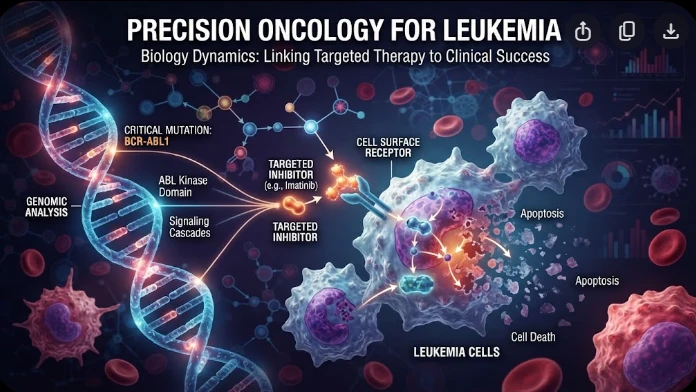
The article examines leukemia as an evolving population under targeted therapy, using chronic myeloid leukemia as the main example. BCR–ABL1 inhibition can produce deep responses, but every treatment changes the competitive environment among malignant clones. Quantitative transcript monitoring provides a continuous measure of disease burden, while deep sequencing can identify emerging resistance mechanisms before hematologic progression. A detected mutation is clinically meaningful only when its
The article examines how cardiovascular genetic risk becomes biologically active through cell-specific inflammatory signaling. Because many vascular-risk variants lie in regulatory DNA rather than coding regions, their effects may appear only in particular endothelial, macrophage, smooth-muscle, or lymphocyte states. Single-cell studies of human atherosclerotic lesions and multiomic endothelial experiments are used to illustrate this context dependence. The article also discusses IL6-related sig
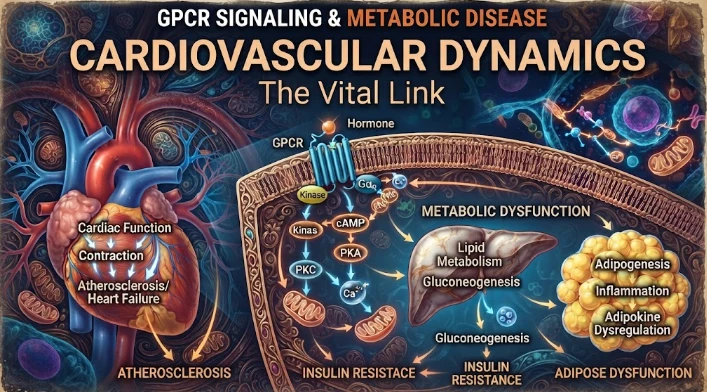
The article examines cardiovascular GPCR signaling as a dynamic response system whose abnormalities can remain hidden in resting measurements. Mechanical stretch, hormones, nutrients, sympathetic activity, and fluid balance can change the amplitude, duration, localization, and recovery of receptor signaling. Examples include mechanically activated angiotensin-receptor signaling, endosomal signaling, beta-arrestin-dependent trafficking, and biased glucagon-like peptide-one receptor responses. The