The article explains HIV assembly as a coordinated host–virus process centered on the viral Gag polyprotein. Gag binds membrane lipids, oligomerizes into an immature lattice, packages viral RNA, recruits host proteins needed for membrane fission, and helps organize later maturation. The plasma membrane is treated as a specialized assembly environment shaped by phosphoinositides and cholesterol rather than a passive surface. Viral RNA functions both as messenger RNA and packaged genome, linking translation with particle formation. ESCRT factors, host RNA-binding proteins, restriction mechanisms, Env incorporation, and protease timing influence whether released particles become infectious. Live-cell imaging and mechanistic perturbation are highlighted because assembly and maturation are kinetically coupled. The article also stresses therapeutic selectivity, since many host pathways used by HIV are essential for normal membrane biology. HIV assembly is therefore presented as a vulnerable network of viral components and host interfaces whose timing and organization determine particle quality.
HIV assembly is an extremely complex process that requires a small viral genome and is heavily dependent on host cell protein. The structural backbone is supplied by the viral Gag polyprotein. Gag forms a lattice by oligomerisation, binds to the viral RNA, interacts with cellular proteins that are required for the fission of the plasma membrane, and packages the cellular proteins that are required for the maturation. Any step in this process can cause a decrease in the production of infectious particles even if viral genes are expressed at normal levels.
Membrane targeting starts with the matrix region of Gag, and some lipid interactions. Gag is enriched in the phosphatidylinositol bisphosphate rich membrane environments and is capable of effecting the local mobility of cholesterol and lipids on assembly. This forms a special ‘nanoplateform' instead of a random area of plasma membrane.
The viral RNA genome also is involved in assembly. Full length unspliced RNA is the mRNA for Gag and Gag Pol as well as being packaged into the new virions as the genome. Gag identifies structures in the RNA close to the packaging signal, so that viral RNA can be discriminated from a plentiful amount of cellular RNA. Self assembly of Gag and selective genome packaging have been shown to be coupled in vitro in membrane systems.
Live cell imaging shows that the assembly sites develop within minutes as Gag localizes to the membrane. The individual sites are mostly assigned to one particle. Gag molecules can be brought in from the cytosol or from neighbouring membrane pools, incrementing the immature lattice. This imaging made the assembly from the static electron micrograph into the measurable kinetic process.
This is a stage that can be affected by host RNA binding proteins. The trafficking or multimerization of Gag and viral ribonucleoprotein complexes is influenced by Staufen1 and other cellular factors. Host RNAs can be incorporated into particles too. The interactions indicate that the assembly of the virus takes place in the normal cellular RNA environment, not in isolation.
Endosomal sorting complexes for transport play a crucial role in the final membrane scission step. Late domain motifs of HIV Gag interact with host proteins such as TSG101 and ALIX. Such interactions bring in subsequent ESCRT components at the budding neck. The virus thus directs machinery that normally is used in remodeling of the cell membranes to separate the newly formed particle from the cell.
Timing is critical. Dynamics of recruitment of early and late ESCRT factors by live imaging following Gag assembly near completion. Delays in budding may permit viral protease to be active at the wrong time and so decrease infectivity. The process of assembly and maturation are therefore not just sequential steps in a pathway diagram, but kinetically coupled.
There are restriction factors for the host. Tetherin physically can prevent the release of virions because it can bind them to the cell surface. HIV Vpu overcomes this restriction by decreasing the activity and level of tetherin. The degree of host restriction and viral antagonism is a determining factor in the efficiency of escape of assembled particles.
Additional host dependencies can be identified via functional genomics. Several genes such as those involved in membrane trafficking, lipid metabolism, ubiquitin pathway, RNA binding proteins, and ESCRT components can be tested for their effect on particle production via gene perturbation screens. Hits must be confirmed by rescue experiments and direct imaging as output may be reduced due to general cell toxicity and not specifically due to assembly defect.
Longitudinal host profiling may be less apparent for a cellular assembly mechanism, but can illustrate changes in host factors available in different interferon states and activation. Activated T cells alter their membrane composition, trafficking and expression of restriction factors. The same viral sequence could then be able to put together with varying efficiency in different cellular states.
Experimental validation of infection ensures that it is validated as a mechanism and links it to viral fitness. Any perturbation that is likely to decrease the release of virus like particles should also be tested in replication competent infection if safe and appropriate to do so. There are tests available to determine which stage is being affected, such as particle number, maturation and infectivity, and cell to cell spread. The mechanism cannot be defined by a change in the extracellular capsid protein.
Structural methods give supporting information. The lattice architecture is seen by cryogenic electron microscopy and tomography and the location of host proteins near the budding sites is mapped by super resolution imaging. A biochemical reconstitution can be performed with purified components in a laboratory environment. A convergence of structural, live cell and functional experiments yields a more robust model than any individual technique.
In addition to particle competence, Env incorporation is added. Both Gag and infectious HIV require the correct context of the envelope glycoprotein in the membrane in order to build and release. Excessive or insufficient Env incorporation can affect Env delivery in host trafficking pathways. The studies of the assembly should thus be separated from the production of a complete infectious virion.
The location of an assembly can vary depending on cell to cell transmission. Polarized T cells may concentrate viral RNA and Gag at uropods, bringing newly formed virions into proximity of contact points with target cells. This can help in the process of forming virological synapses. Modest effect on free virus release may have a greater effect on direct cell associated spread.
Self-curvature is a physical limitation. Growth bend in the plasma membrane is seen as lattice growth in Gag. ESCRT proteins act on that topologically unusual geometry. These biophysical curvature and protein assembly measurements can thus be used in conjunction with molecular genetics to help elucidate the relationship of interaction energy to the release of a particle.
A direct measurement of packaging fidelity of RNA should be used. Gag may be packaged as a viral particle and may remain normal when RNA (wrong or insufficient) is packaged. A quantitative RNA analysis of purified virions can distinguish an assembly defect from a packaging defect. Finally, there is the outcome of infectivity.
Resistance needs to be taken into account from the conception of an antiviral. A small molecule blocking a Gag host interface could be used to select mutations that restore binding, or an alternative route. Drug pressure serial passage can be used to search for probable escape mutations prior to clinical testing. The high genetic barrier is particularly useful for a virus that mutates quickly.
The assembly of virus also relies on stoichiometry. If the amount of Gag is too small, then the lattice doesn't form, and if the ratio of Gag to Gag Pol is changed, then the enzymes don't get incorporated. Experimental systems need to maintain the same biologically relevant expression levels as in natural infection, as an over-expression may lead to the formation of particles through other pathways that are not employed during natural infection.
Membrane repair pathways can overlap with ESCRT function. Under mechanical stress, host directed inhibition may lead to toxicity due to rapid repair of membrane injury by cells. In fact, the assessment of the integrity of membranes under candidate interventions is part of antiviral selectivity testing.
There is a possibility of developing assembly inhibitors as an adjunct to existing therapy that would act at a stage different from the reverse transcription, integration and protease steps. Resistance profile would also vary. Additive or synergistic suppression can be tested by preclinical combinations and cellular toxicity and viral escape can be monitored.
Productivity versus defective particles should be separated during assembly studies too. Extracellular vesicles and incomplete viral structures are excreted by cells and may be present in measurements. Genuine virions can be isolated from noninfectious material by density purification, RNA quantification, structural imaging, and infectivity assays. This will avoid the misinterpretation that the reduction in one biochemical marker is a sign of selective inhibition of infectious particle formation.
These measurements can also be used to determine if a perturbation affects the quality of the particles without affecting the quantity, which is critical for antiviral mechanism.
Mechanistic framework can be applied to Carol A. Carter's research on HIV assembly, viral budding and host virus interactions. Assembly requires the coordination of Gag, viral RNA, membrane lipids, RNA binding proteins, ESCRT machinery and host restriction factors. The infectious disease control can only take advantage of such dependencies once it has been decided what are the necessary steps, what are steps that can be treated, and what are steps that are virus specific. Understanding of HIV assembly is thus best viewed as a host/-pathogen interface taking place over a period of time, with the molecular organization dictating whether or not the assembly of a new particle produces an infectious virion.
The quality of the particles is therefore an essential endpoint.
CITE THIS ARTICLE
Tasneem, S. (2025). HIV Assembly Determinants through Viral Assembly in Infectious Disease. https://www.sadiaresearchhub.com/article/9462d710-4408-5f58-b459-1db30383d3e7
S. Tasneem, “HIV Assembly Determinants through Viral Assembly in Infectious Disease,” 2025. [Online]. Available: https://www.sadiaresearchhub.com/article/9462d710-4408-5f58-b459-1db30383d3e7
Tasneem, S. (2025) ‘HIV Assembly Determinants through Viral Assembly in Infectious Disease’. Available at: https://www.sadiaresearchhub.com/article/9462d710-4408-5f58-b459-1db30383d3e7
Tasneem, Sadia. “HIV Assembly Determinants through Viral Assembly in Infectious Disease.” 2025, https://www.sadiaresearchhub.com/article/9462d710-4408-5f58-b459-1db30383d3e7.
Sadia Tasneem. “HIV Assembly Determinants through Viral Assembly in Infectious Disease.” (2025). https://www.sadiaresearchhub.com/article/9462d710-4408-5f58-b459-1db30383d3e7.
Tasneem S. HIV Assembly Determinants through Viral Assembly in Infectious Disease. 2025. https://www.sadiaresearchhub.com/article/9462d710-4408-5f58-b459-1db30383d3e7
@misc{article_9462d71044085f58b4591db30383d3e7,
  title = {HIV Assembly Determinants through Viral Assembly in Infectious Disease},
  author = {Sadia Tasneem},
  year = {2025},
  url = {https://www.sadiaresearchhub.com/article/9462d710-4408-5f58-b459-1db30383d3e7},
}
TY  - GEN
AU  - Sadia Tasneem
TI  - HIV Assembly Determinants through Viral Assembly in Infectious Disease
PY  - 2025-05-11
UR  - https://www.sadiaresearchhub.com/article/9462d710-4408-5f58-b459-1db30383d3e7
ER  -
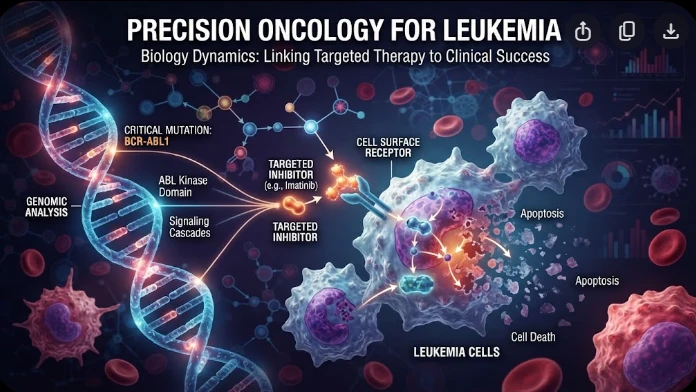
The article examines leukemia as an evolving population under targeted therapy, using chronic myeloid leukemia as the main example. BCR–ABL1 inhibition can produce deep responses, but every treatment changes the competitive environment among malignant clones. Quantitative transcript monitoring provides a continuous measure of disease burden, while deep sequencing can identify emerging resistance mechanisms before hematologic progression. A detected mutation is clinically meaningful only when its
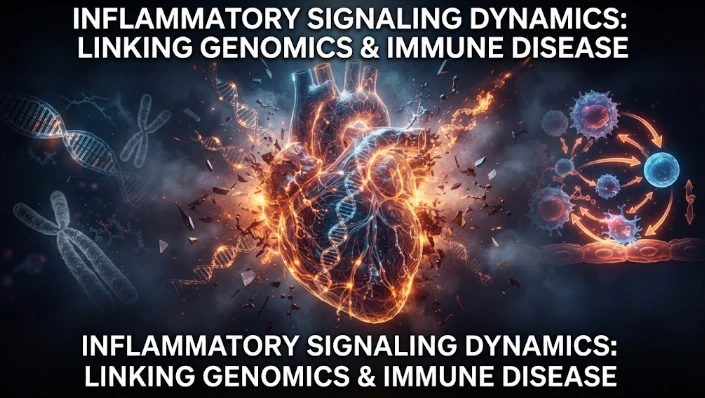
The article examines how cardiovascular genetic risk becomes biologically active through cell-specific inflammatory signaling. Because many vascular-risk variants lie in regulatory DNA rather than coding regions, their effects may appear only in particular endothelial, macrophage, smooth-muscle, or lymphocyte states. Single-cell studies of human atherosclerotic lesions and multiomic endothelial experiments are used to illustrate this context dependence. The article also discusses IL6-related sig
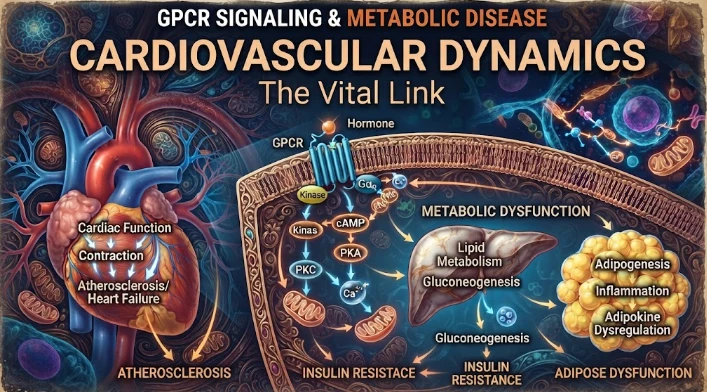
The article examines cardiovascular GPCR signaling as a dynamic response system whose abnormalities can remain hidden in resting measurements. Mechanical stretch, hormones, nutrients, sympathetic activity, and fluid balance can change the amplitude, duration, localization, and recovery of receptor signaling. Examples include mechanically activated angiotensin-receptor signaling, endosomal signaling, beta-arrestin-dependent trafficking, and biased glucagon-like peptide-one receptor responses. The