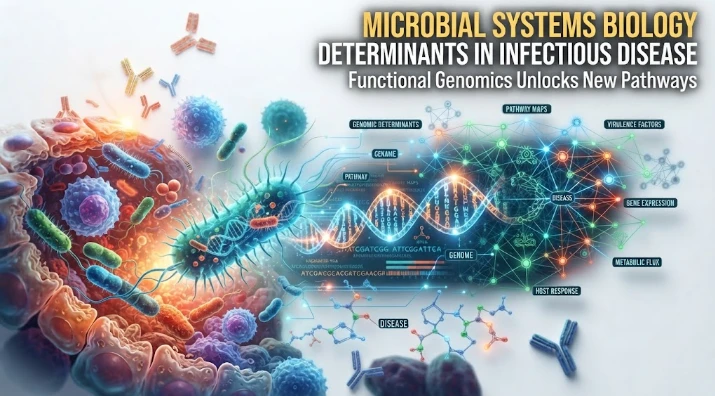
The article uses microbial systems biology and functional genomics to explain antibiotic survival as more than classical resistance. Bacterial tolerance, persistence, metabolic adaptation, stress repair, and host fitness can allow survival even without a stable resistance mutation. Transposon-insertion sequencing and related genome-wide perturbation approaches identify genes required under specific antibiotics and infection conditions, revealing conditional fitness networks rather than single resistance determinants. The article emphasizes differences between resistance and tolerance, the central role of metabolism, host-specific environments, and the importance of linking pathogen genotype with immune responses and treatment outcomes. Transcriptomics, proteomics, metabolomics, time-kill assays, competition studies, and clinical isolates provide complementary evidence. Functional validation through targeted mutants and rescue is essential because expression changes do not prove necessity. The article also discusses evolutionary trade-offs, drug combinations, pharmacokinetic realism, and genomic surveillance. Overall, microbial fitness is presented as a context-dependent network shaping persistence, treatment failure, and resistance evolution.
Typically, antibiotic resistance is characterized as the ability of a bacterium to grow at a concentration of an antibiotic that it could not grow at if it were susceptible to the antibiotic; however, antibiotic resistance may occur before it is stable. It can be tolerated, persisted, metabolically adapted, and/or be found in the host as a fit species without a resistance mutation. Microbial systems biology seeks to answer the question of what genes and pathways confer that ability to survive in changing environments. This is rendered experimentally tractable by functional genomics, which involves perturbing thousands of genes and assessing fitness in a defined drug and infection setting.
An important tool for such use is the transposon insertion sequencing. Large mutant libraries have disruptions of the bacterial genome, and sequencing the library before and after a selective challenge reveals which mutants are lost from the library and which are amplified. A gene necessary for survival in that condition is indicated by a depleted mutant. The method can detect ways that would not be detected by studying known resistance genes alone, as thousands of perturbations are tested simultaneously.
The extent of that approach was illustrated in a genome wide antibiotic atlas of Streptococcus pneumoniae. The researchers identified genetic determinants that made bacteria more susceptible to or tolerant of twenty antibiotics and used these to map genetic interactions between exposure to antibiotics. The work also identified certain pathways associated with fitness during infection and observed overlaps with mutations observed in resistant clinical isolates. In fact, more than just genes related to the direct target of an antibiotic, drug response became a network property.
The value of systems analysis is particularly great because there are biological differences between tolerance and resistance. Resistance increases the concentration needed to inhibit growth and tolerance can extend the period of survival without shifting the concentration needed to inhibit growth during lethal exposure. A tolerant population can persist for a long enough period to allow for the emergence of relapse or stable resistance mutations. Functional screens can be used to identify genes that control killing kinetics, stress adaptation, repair, metabolism and dormancy, generating a map of survival that is not provided by standard susceptibility testing.
These maps tend to have metabolism in the middle. Antibiotics affect cell energy metabolism, redox balance, nucleotide biosynthesis, membrane function, and protein quality control. A mutation that makes a growth rate lower can make a killing by one drug but make the organism more sensitive to another. Fitness is consequently conditional. A gene that is useful in a rich culture medium may be expensive in conditions of nutrient scarcity or hypoxia, inflammatory stress or in the host environment.
It is this context dependence that makes the need for infection models important. Colonization, immune evasion or acquisition of a nutrient from a host may require different genes than broth culture. Experimental infection can be used to discover pathogen functions that help survive within tissues using functional genomics. When used in conjunction with antibiotic exposure, these data demonstrate the importance of a target in a host under both host pressure and antibiotic therapy.
Host Profiling brings the other side of the interaction. There are investigations that can be carried out using the longitudinal measures of cytokines, immune cell states, tissue injury, and pathogen burden which will determine whether a bacterial fitness program is associated with a specific host response. The two types of mutants are not the same one that does not acquire nutrients and the other that causes stronger immunity, both of which disappear from an infection. Microbial genotype-to-host phenotype linkage keeps fitness from being a purely numerical readout.
Those layers can be incorporated into network models. Modules found by gene interaction maps are groups of genes that have similar fitness profiles over drugs and environments. Transcriptomics identifies the genes that are induced, proteomics quantifies the levels of proteins, and metabolomics identifies the functional chemistry. A pathway can be identified if there is consensus across multiple layers. Disagreement can also be useful in that induction does not establish necessity, and an essential role can exist without a significant expression change.
The use of the time design is important as bacteria populations shift rapidly when subjected to stress. Early samples elicit protective responses before killing occurs and later samples represent survivors already filtered by the treatment. With several samples, immediate adaptation can be distinguished from population selection. For assessing the state of the lineages during survival, RNA and metabolite measurements can be used and for monitoring the lineages that survive, barcoded or transposon based approaches are useful.
Experimental validation should be done from screen to mechanism. Deletions or targeted mutations can be used to confirm the effect seen in a pooled library. Can be used to complement the gene to see if the phenotype is rescued. Time kill assays are meant to differentiate tolerance from resistance, while competitive infection experiments assess fitness in vivo. If by genetic perturbation, drug survival and infection outcome are altered in the desired direction, a candidate pathway is more likely to be compelling.
A vital next step is the clinical isolates. Laboratory strains may be used to capture the mechanism but may not be representative of the genomic diversity of circulating pathogens. A determinant found in one background may be missing, over- or under-dominant in another. When different isolates are tested, epistasis, where the effect of one gene is dependent on the variation of other genes, can be seen. This background dependence is the reason that the same resistance gene can give varied treatment results between strains.
Target selection can also be facilitated by functional genomics. The protein essential in nutrient rich culture may be an excellent drug target, but is unessential in tissue. A pathway, on the other hand, used only in infection may be attractive even if growth is normal in the laboratory. By combining host relevant fitness with chemical susceptibility, targets for candidates can be limited to functions relevant to the situation the treatment has to address in order to win.
This mechanistic information could be invaluable for surveillance. A large number of mutations found in clinical isolates have unknown functional significance in practice, and are routinely observed during genome sequencing. A genome wide fitness atlas can assist categorizing a recurrent mutation as affecting antibiotic susceptibility or tolerance, virulence or compensatory growth. The next step in surveillance is the interpretation of changes in sequence that may impact treatment or transmission.
Any tradeoffs made should be apparent from evolution. An increased ability to survive antibiotics can lead to slower growth rate, lower transmission or host adaptation. Another can bear little cost since compensatory variants re-establish fitness. By measuring several environments these tradeoffs become apparent, along with possible evolutionary routes that are likely to survive. Fitness landscapes become clinically relevant when they allow the prediction of the adaptability of a variant after the end of antibiotic stress.
Prospective translation necessitates establishing an association between the isolate genotype, functional phenotype, treatment, and patient outcome. Sequencing is not sufficient to show that failure to achieve a therapeutic effect was due to a tolerance pathway. Standardized killing assays, pharmacological exposure data, infection site, immune status and clinical response are required. Functional signatures can be validated across laboratories and pathogen populations by multicentre validation.
Combination drugs can reveal drug vulnerabilities that aren't present with individual drugs. A mutation that confers resistance to one antibiotic may confer sensitivity to another antibiotic by sharing common metabolic and/or repair pathways. These tradeoffs can be identified on the genome scale and combinations that limit escape can be suggested. Time kill experiments and resistance evolution studies are required for validation, as synergy can be achieved only at one concentration and does not necessarily mean that the combination will suppress for a long period when the drug level fluctuates.
Functional interpretation should also include the pharmacokinetics. Intracellular bacteria within cell, lung cavity, or biofilm may be exposed to sub-peak concentrations of a drug within abscesses. A steady state concentration can not be reproduced with a steady state screen. Pulsed and ramped exposure designs may provide a more realistic simulation of the changing concentrations. Genes needed only at the sublethal stage may be clinically significant as they can allow for the selection of tolerant cells and opportunity for the evolution of resistance.
Tim van Opijnen's research interest in the field of microbial systems biology and functional genomics is driven by a broader interest in moving away from single resistance genes towards fitness networks that depend on the context in which the microbe is used. Genome wide perturbations can identify the mechanisms by which pathogens become resistant to antibiotics, host stress and competing ecological pressures. The best infectious disease model links those pathways to longitudinal host responses and clinical responses, finding determinants that affect not only growth in a dish, but persistence, treatment failure, and evolutionary potential in the real infection
CITE THIS ARTICLE
Tasmeem, S. (2025). Microbial Systems Biology Determinants through Functional Genomics in Infectious Disease. https://www.sadiaresearchhub.com/article/d4995af7-3874-513e-91ae-bf557e6f332f
S. Tasmeem, “Microbial Systems Biology Determinants through Functional Genomics in Infectious Disease,” 2025. [Online]. Available: https://www.sadiaresearchhub.com/article/d4995af7-3874-513e-91ae-bf557e6f332f
Tasmeem, S. (2025) ‘Microbial Systems Biology Determinants through Functional Genomics in Infectious Disease’. Available at: https://www.sadiaresearchhub.com/article/d4995af7-3874-513e-91ae-bf557e6f332f
Tasmeem, Sadia. “Microbial Systems Biology Determinants through Functional Genomics in Infectious Disease.” 2025, https://www.sadiaresearchhub.com/article/d4995af7-3874-513e-91ae-bf557e6f332f.
Sadia Tasmeem. “Microbial Systems Biology Determinants through Functional Genomics in Infectious Disease.” (2025). https://www.sadiaresearchhub.com/article/d4995af7-3874-513e-91ae-bf557e6f332f.
Tasmeem S. Microbial Systems Biology Determinants through Functional Genomics in Infectious Disease. 2025. https://www.sadiaresearchhub.com/article/d4995af7-3874-513e-91ae-bf557e6f332f
@misc{article_d4995af73874513e91aebf557e6f332f,
  title = {Microbial Systems Biology Determinants through Functional Genomics in Infectious Disease},
  author = {Sadia Tasmeem},
  year = {2025},
  url = {https://www.sadiaresearchhub.com/article/d4995af7-3874-513e-91ae-bf557e6f332f},
}
TY  - GEN
AU  - Sadia Tasmeem
TI  - Microbial Systems Biology Determinants through Functional Genomics in Infectious Disease
PY  - 2025-12-07
UR  - https://www.sadiaresearchhub.com/article/d4995af7-3874-513e-91ae-bf557e6f332f
ER  -
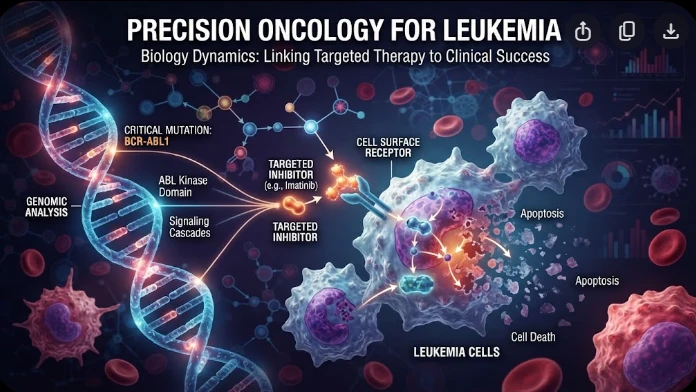
The article examines leukemia as an evolving population under targeted therapy, using chronic myeloid leukemia as the main example. BCR–ABL1 inhibition can produce deep responses, but every treatment changes the competitive environment among malignant clones. Quantitative transcript monitoring provides a continuous measure of disease burden, while deep sequencing can identify emerging resistance mechanisms before hematologic progression. A detected mutation is clinically meaningful only when its
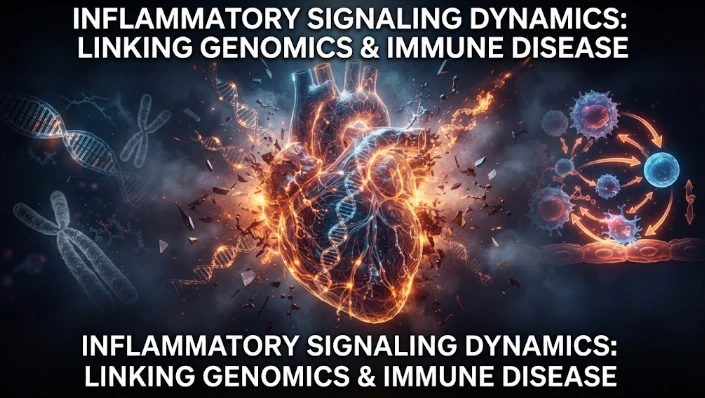
The article examines how cardiovascular genetic risk becomes biologically active through cell-specific inflammatory signaling. Because many vascular-risk variants lie in regulatory DNA rather than coding regions, their effects may appear only in particular endothelial, macrophage, smooth-muscle, or lymphocyte states. Single-cell studies of human atherosclerotic lesions and multiomic endothelial experiments are used to illustrate this context dependence. The article also discusses IL6-related sig
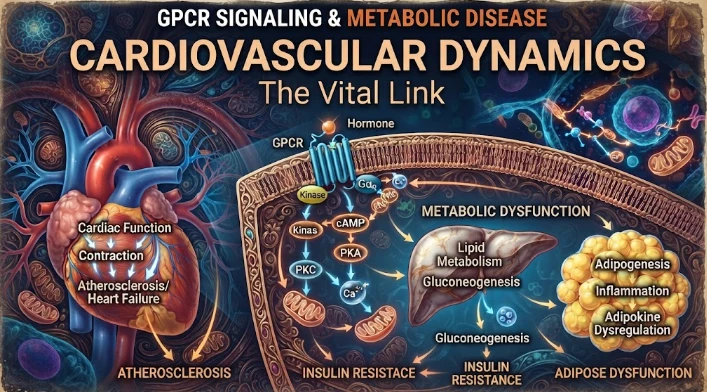
The article examines cardiovascular GPCR signaling as a dynamic response system whose abnormalities can remain hidden in resting measurements. Mechanical stretch, hormones, nutrients, sympathetic activity, and fluid balance can change the amplitude, duration, localization, and recovery of receptor signaling. Examples include mechanically activated angiotensin-receptor signaling, endosomal signaling, beta-arrestin-dependent trafficking, and biased glucagon-like peptide-one receptor responses. The