The article presents endocrine-resistant breast cancer as an evolving system shaped by genetic selection, transcriptional plasticity, chromatin remodeling, metabolism, and microenvironmental support. Endocrine therapy changes the selective environment, allowing resistant clones or adaptive cell states to expand. Mechanistic examples include enhancer reprogramming involving estrogen-receptor-associated factors, CoREST and AP1, and metabolic dependence on fatty-acid oxidation and oxidative phosphorylation. The article argues for longitudinal sampling before treatment, during response, at residual disease, and at progression, combining circulating tumor DNA with tissue-based RNA, protein, chromatin, single-cell, and spatial analysis. CRISPR perturbation and patient-derived organoids or xenografts are proposed to test whether candidate regulators are causal and therapeutically reversible. Distinguishing drug tolerance from stable resistance and accounting for pharmacologic exposure are emphasized. The central goal is to identify transitional dependencies early enough to prevent or reverse resistant growth rather than merely characterize resistance after progression.
Endocrine therapy can inhibit estrogen receptor activity for many years but some hormone-dependent breast cancers come back. Resistance is not a single switch. The signal of receptors can be changed in tumor cells, their transcription can be rewired, the accessibility of the chromatin can be changed, alternative growth pathways may be activated, growth metabolism can change, and cells can change their identity. Precision oncology should thus investigate how endocrine resistance is a dynamic system, in which therapy can shape the selective environment and reveal novel cell states resistant to extended hormonal selection pressure.
The static pretreatment biopsy only reflects the initial population. Resistant clones that survive are enriched, or adaptive states that were small at first, grow in response to the endocrine therapy. Some changes occur due to genetic selection such as alteration of the estrogen receptor signaling. Others demonstrate reversible transcriptional plasticity. This means that a tumour might at diagnosis be estrogen dependent and possess the ability to reorganize its regulatory network after months of treatment.
Experimental studies on breast cancer plasticity have identified that in these cells, there is potential to become either luminal to basal or mesenchymal to luminal cells with enhancer reprogramming. Estrogen receptor can use these same transcription factors (GATA3 and AP1) to influence regulatory activity throughout the genome. Such changes are seen in clinical and patient derived resistance settings as well. These results indicate that chromatin state and cell identity are the main resistances and not just a loss of receptor expression.
Additional routes can be possible thanks to transcriptional cofactors. Reprogramming towards AP1 associated sites within the CoREST complex during endocrine resistance was observed, accompanied by changes in chromatin opening and modification in recruitment of chromatin remodeling machinery. The mechanism is of this kind, and illustrates how a cell can keep a background regulation on a hormone-related mechanism, while varying the accessibility of various enhancers. Therapeutic pressure can then modify the interpretation of the same genome by altering the regulation around it.
Metabolism also is involved in adaptation. Endocrine resistant ER positive models have revealed elevated reliance on fatty acid oxidation and oxidative phosphorylation, and AMPK associated metabolic pathways are correlated with survival. When growth factor and hormone pathways have been altered, metabolic rewiring can provide them with energy and tolerance to stress. Therefore, a precision framework should assess both receptor and chromatin biology and metabolic state, not just resistance in transcription.
The best way to link these mechanisms is through the use of longitudinal samples. Changes can be seen in the tumor prior to treatment, at the time of first response to therapy, at minimal residual disease (MRD), and at the time of progression. However, serial genomic information can be added through circulating tumor DNA, which is not always possible due to repeated tissue. Sequencing of both blood cells and tissue samples can capture changes over time, detecting emerging ESR1 mutations, and both of these types of sequencing can give in-depth transcriptional and spatial context that a DNA-based method cannot.
Selection and state transition can be distinguished using single cell profiling. It is possible that there exists a unique genetic clone of the resistant cell population, which is detectable at baseline, and this can suggest clonal selection. The greater the difference in the transcriptional and chromatin states of genetically similar cells between treatment, the more weight adaptive plasticity takes. Mixtures of both processes can be observed by measuring DNA, RNA, and chromatin. It is not always one path of evolution that leads to resistance, but rather resistance can be seen as evolution on genetic and nongenetic levels.
The tumor ecosystem is added to the spatial multiomics. Cancer cells can obtain survival signals in areas where they are near other cells like fibroblasts, immune cells, hypoxic areas, or vascular niches. Those neighborhoods can be modified by endocrine therapy, which modifies tumor composition and cytokine production. A resistant state that has a high concentration in one microenvironmental niche implies that microenvironmental support is a component of the mechanism. The presence or absence of the supporting signal can then be tested using functional co culture or organoid experiments to determine if the hormone sensitivity is restored.
CRISPR perturbation offers direct association to causality. Individual or combination of candidate transcription factors, cofactors, metabolic enzymes or signaling nodes can be disrupted, based on identification from a longitudinal profiling analysis. Resistance should be diminished if the proposed driver is indeed necessary. Specificity can be confirmed by rescue experiments, in which the gene or pathway is reintroduced. Synthetic lethal relationships can also be uncovered on screens where a resistant state leads to a new dependency that was not present in non-resistant cells.
Patient-derived organoids and xenograft models can be used to determine if those dependencies persist in cells outside of the norm. Existing models can be treated with endocrine drugs and candidate combinations pre and post therapy. A concordant response by independent patient derived systems decreases the likelihood that the mechanism is from one laboratory lineage. Molecular profiling can also be used to see if the combination prevents the adaptive transition that has been seen in humans over time.
Clinical resistance is variable. Integrated sequences of the metastatic ER-resistant breast cancers have revealed a variety of changes in estrogen receptor, HER2, GATA3, AKT, RAS, and other pathways. No single mechanism can account for all the progressions. Resistance should thus be broken down into mechanistic categories and be permitted to be in more than one category. Combined treatment may be more relevant than a single biomarker rule because a tumour with an ESR1 alteration may also be able to turn on alternative signalling or metabolic pathways.
The timing is crucial in that a target can only be important at transition time. Preventing establishment of resistance by blocking an adaptive regulator early may be more effective than blocking an adaptive regulator after resistance has been established, because if it is, a different clone may dominate. Future longitudinal functional studies should be conducted comparing prevention and reversal. This distinction alters clinical trial design: a therapy that is designed to delay resistance should be tested in the early (not late) stages of disease.
Outcome validation needs to relate molecular states to clinically relevant value. A resistance signature should be predictive of duration of endocrine response, progression free survival, or benefit from some combination in an independent cohort. Calibration is crucial across treatment type and disease setting, for example, as a result of aromatase inhibition, selective estrogen receptor degradation and other endocrine therapies. A biomarker identified in one therapy can not be assumed to be applicable to another.
Combinations that are possible depends on safety and tolerability. MDRs or growth signaling inhibitors, in addition to endocrine therapy, can enhance toxicity. Mechanistic specificity can aid in the identification of patients who are most likely to benefit from treatment and may help limit unnecessary exposure. A serial biomarker could be used in an adaptive trial to verify if the desired resistance pathway is actually suppressed. When a negative clinical result could be a result of an incorrect mechanism, pharmacodynamic confirmation is important.
Level regulation of proteins also needs to be considered, as the amount of RNA is not always correlated with the level of signaling activity. Endocrine therapy causes rapid changes in receptor phosphorylation, protein degradation, subcellular localization and complex formation. Transcriptomics cannot detect pathway activation that is detected by Proteomics/Phosphoproteomics. Coupling those measurements to chromatin and RNA states will reveal if a resistance program is due to new transcription, changes in protein stability, or post translational signaling.
Tolerance should also be differentiated from resistance in modeling. A small population is able to live for a while on endocrine therapy without becoming resistant, but can either die, become sensitive again or gain another growth advantage. The reservoirs of drug tolerant persisters can be a source for long-lasting resistance. During this minimal residual phase, non-dependency specific to therapy can be discovered, which can allow for the elimination of the persisters, before the genetically or epigenetically stable resistant population becomes large.
If possible, the extent of drug exposure should be quantified. Tumor cells undergo selective pressures that are affected by tissue concentrations, adherence, metabolism and pharmacokinetics. Sometimes, low exposure can result in apparent biological resistance and high exposure can support other escape routes. Combining pharmacology with molecular evolution helps eliminate the ambiguity surrounding the origin of the resistant state.
Robert Clarke's research interests in breast cancer, endocrine resistance and systems biology are consistent with considering resistance as a longitudinal network problem. The interplay between the four processes of clonal evolution, chromatin plasticity, metabolism, and microenvironmental support under treatment pressure. When a perturbation and patient-derived validation are performed along with a profiling, precision oncology enters into a new phase: the identification of the state that is associated with progression, but also the identification of the causal dependency that can be interrupted before the resistant growth becomes dominant in the clinic.
CITE THIS ARTICLE
Tasmeem, S. (2025). Breast Cancer Mechanisms through Endocrine Resistance in Precision Oncology. https://www.sadiaresearchhub.com/article/d5b5d0db-d901-5a06-8d5b-79f31588227c
S. Tasmeem, “Breast Cancer Mechanisms through Endocrine Resistance in Precision Oncology,” 2025. [Online]. Available: https://www.sadiaresearchhub.com/article/d5b5d0db-d901-5a06-8d5b-79f31588227c
Tasmeem, S. (2025) ‘Breast Cancer Mechanisms through Endocrine Resistance in Precision Oncology’. Available at: https://www.sadiaresearchhub.com/article/d5b5d0db-d901-5a06-8d5b-79f31588227c
Tasmeem, Sadia. “Breast Cancer Mechanisms through Endocrine Resistance in Precision Oncology.” 2025, https://www.sadiaresearchhub.com/article/d5b5d0db-d901-5a06-8d5b-79f31588227c.
Sadia Tasmeem. “Breast Cancer Mechanisms through Endocrine Resistance in Precision Oncology.” (2025). https://www.sadiaresearchhub.com/article/d5b5d0db-d901-5a06-8d5b-79f31588227c.
Tasmeem S. Breast Cancer Mechanisms through Endocrine Resistance in Precision Oncology. 2025. https://www.sadiaresearchhub.com/article/d5b5d0db-d901-5a06-8d5b-79f31588227c
@misc{article_d5b5d0dbd9015a068d5b79f31588227c,
  title = {Breast Cancer Mechanisms through Endocrine Resistance in Precision Oncology},
  author = {Sadia Tasmeem},
  year = {2025},
  url = {https://www.sadiaresearchhub.com/article/d5b5d0db-d901-5a06-8d5b-79f31588227c},
}
TY  - GEN
AU  - Sadia Tasmeem
TI  - Breast Cancer Mechanisms through Endocrine Resistance in Precision Oncology
PY  - 2025-12-28
UR  - https://www.sadiaresearchhub.com/article/d5b5d0db-d901-5a06-8d5b-79f31588227c
ER  -
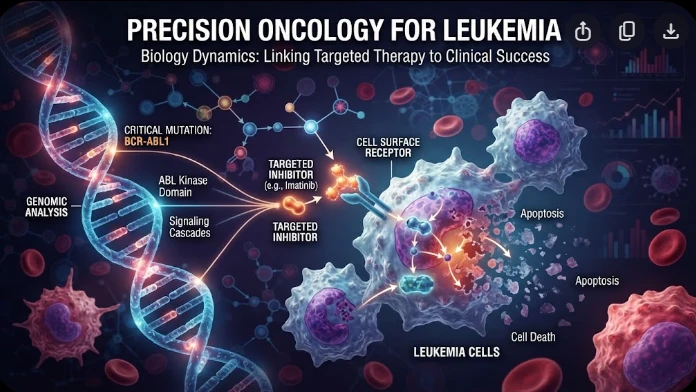
The article examines leukemia as an evolving population under targeted therapy, using chronic myeloid leukemia as the main example. BCR–ABL1 inhibition can produce deep responses, but every treatment changes the competitive environment among malignant clones. Quantitative transcript monitoring provides a continuous measure of disease burden, while deep sequencing can identify emerging resistance mechanisms before hematologic progression. A detected mutation is clinically meaningful only when its
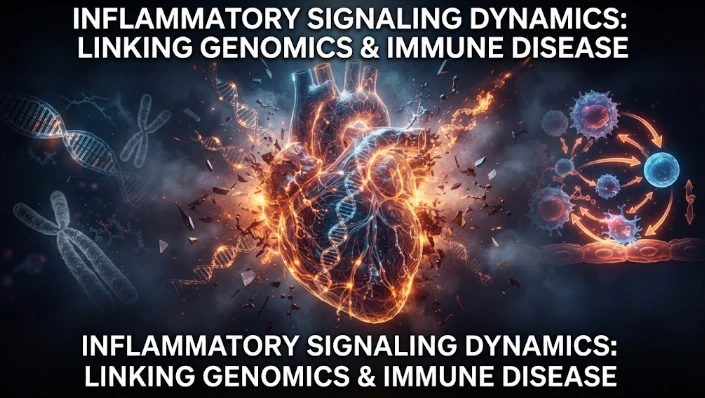
The article examines how cardiovascular genetic risk becomes biologically active through cell-specific inflammatory signaling. Because many vascular-risk variants lie in regulatory DNA rather than coding regions, their effects may appear only in particular endothelial, macrophage, smooth-muscle, or lymphocyte states. Single-cell studies of human atherosclerotic lesions and multiomic endothelial experiments are used to illustrate this context dependence. The article also discusses IL6-related sig
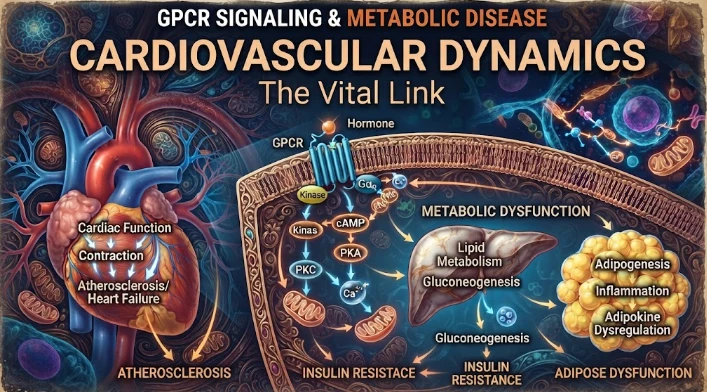
The article examines cardiovascular GPCR signaling as a dynamic response system whose abnormalities can remain hidden in resting measurements. Mechanical stretch, hormones, nutrients, sympathetic activity, and fluid balance can change the amplitude, duration, localization, and recovery of receptor signaling. Examples include mechanically activated angiotensin-receptor signaling, endosomal signaling, beta-arrestin-dependent trafficking, and biased glucagon-like peptide-one receptor responses. The