The article explores how fungal pathogenesis and antibody function can be integrated into human infectious-disease control. Cryptococcal disease is used to show that treatment outcomes depend on antifungal drugs, fungal virulence, tissue distribution, immune status, and humoral function together. The discussion highlights the feasibility of antibody-based therapy through the 18B7 cryptococcal meningitis study while stressing that efficacy requires stronger evidence. A precision approach is proposed in which fungal isolates are tested for capsule biology, antibody binding, complement deposition, phagocytosis, drug interactions, and genomic variation, while host samples are assessed for isotype, avidity, epitope breadth, and Fc-dependent function. The article also considers diagnostics, vaccine design, immune escape, tissue-specific pharmacology, and combined antifungal–antibody strategies. Overall, it argues that antibodies should be treated as active components of fungal pathogenesis and therapy, with clinical use guided by matched pathogen and host functional profiling.
affected by invasive fungal disease are susceptible. Drug activity is still at the heart of the issue – but sometimes infections clear even with what seems like the right drug, and sometimes they don't. Host immunity, fungal virulence, tissue distribution and pathogen adaptation are interacting during treatment. One way to link those factors is by antibody response, which has the potential to enhance clinical stratification as well as therapeutic design.
This connection is important in the case of cryptococcal disease. The organism may lead to pneumonia and meningitis, especially in cases of low cell immunity. It has a polysaccharide capsule which both hampers phagocytosis and affects inflammatory signaling and fungal cells are able to survive in macrophages and disseminate beyond the lung. Thus coordinated activity of antifungal drugs, phagocytes, complement, T cells, and humoral factors are necessary for good control. Antibodies are strategically positioned to modify the recognition at the surface of fungi and to modify the interactions with several immune pathways.
After the therapeutic concept was taken beyond the laboratory with 18B7, the monoclonal antibody was evaluated in a phase one clinical trial for the treatment of cryptococcal meningitis. The study showed that a capsule system directed monoclonal antibody could be given to individuals who are already taking other antifungal treatments and its safety and pharmacokinetics evaluated in a systematic manner. The first study provided no definitive proof for efficacy. Despite this, the experiment was a significant proof of feasibility when it comes to antibody treatment of a human fungal infection.
Contemporary infectious disease control can be developed on the basis of that foundation, with more selective characterization of patients and pathogens. Monoclonal antibodies are not expected to have the same behaviour in fungal strains with different capsule architecture, levels of antigen expression, fungal growth or adaptation to tissues. Pre-treatment antibody binding, complement deposition, phagocytosis and drug interaction may be assessed using baseline isolates. This approach to functional phenotyping would allow identification of infections in which antibody therapy has a plausible mechanism, as opposed to applying the same intervention to different biologically distinct infections.
But host profiling is just as critical. The absolute level of antibody does not provide much information as to whether a patient has antibodies that bind to protective epitopes or which are effective in promoting Fc mediated responses. Serum assays measure isotype, avidity, epitope breadth and opsonic function, and cellular assays measure responses by macrophages and neutrophils to antibody coated fungi. Explanatory information can be provided by complement activity and Fc receptor variation. A combined profile will provide a distinction between humoral abundance and humoral competence.
Diagnostics are another opportunity. Circulating microbial molecules have already been identified in fungal antigen tests, showing that they can help make quick clinical decisions. In the appropriate context, antibody signatures could provide additional information of stage, exposure history, or immune phenotype. A common mistake is, however, to assume that statistically different antibody levels necessarily result in a clinically useful test to develop. Whether an antibody marker is useful in making decisions depends on its sensitivity, specificity, predictive value, prevalence of the disease, immune suppression and cross reactivity.
Mechanism should not be overlooked in vaccination. Since protection against complex eukaryotic pathogens is unlikely to be provided by a single arm of the immune system, the fungus vaccine candidates typically seek to elicit humoral and cellular responses. These are desirable properties of an antibody response: it should be able to recognize antigens that are accessible, it should be able to recognize antigens of many different strains and it should work with the phagocytes. Challenge experiments should include severe disease in addition to antibody titer. Protection that is lost in immunocompromised hosts would be of little use to those with highest risk of invasive mycoses.
Genomics of pathogens can fine-tune these strategies. Variation in capsule synthesis, cell wall pathways, stress response, and other factors that affect immune recognition can be identified by sequencing. The transcriptomic analysis of antibody exposure can identify the induction of fungal stress programs vs metabolic adaptation. These data, when coupled with infection models, can be used to determine if molecular responses lead to changes in dissemination or survival. Mechanistic signals from incidental changes in gene expression can be distinguished from such evidence.
But treatment combinations should also be directly explored. Antibody mediated opsonization may affect the uptake of fungi by phagocytes, and antifungal drugs may affect the properties of the cell walls or membranes. Such effects might be synergistic, independent, or antagonistic with respect to drug class and fungal state. Combination studies should thus assess killing, intracellular survival, inflammatory injury and the development of resistant subpopulations. A reduction in fungi may fail to detect deleterious host effects or persistence within protected niches.
Surveillance may be expanded to include other types of fungal resistance than the usual. A pathogen that is repeatedly exposed to host antibodies may change surface antigens or capsule organization but not the susceptibility in the standard drug testing. Such immune escape may not be analogous to antigenic variation, but small phenotypic changes may decrease the ability to get opsonized or alter the tissue fitness. If the changes do occur, repeated isolates from persistent infection can be used to determine the change. Comparing antibody function with genome variation would render surveillance more informative clinically.
Tissue compartment is also important for human infection. The efficiency of efficient bloodstream penetration and the efficiency of penetration of cerebrospinal fluid may be different from one antibody to another, and organ-dependent complement activity might also vary. Lung granuloma, brain tissue, bloodstream or biofilm contain different immune pressures on the fungal cells. Whenever possible, pharmacology and immune function needs to be investigated at the site of disease. Conclusions that are based on serum measurements alone can be misleading and can be avoided by using tissue specific measurements.
A real-world program for translation would run in steps of evidence. First, try to define antibodies that consistently have protective activity against a variety of isolates. Second, identify fungal and host characteristics that determine those functions. Thirdly, screen combinations of existing antifungals in models that mimic relevant tissue niches. Last, but not least, conduct preliminary human studies to validate safety, target engagement, and biological activity before embarking on large efficacy studies.
This is a new paradigm for the use of antibodies in fungal disease. Rather than as an adjunct to cellular immunity, antibodies are looked upon here as a quantifiable aspect of pathogenesis and therapy. Rather than looking for one antibody mechanism that is protective against all fungal phenotypes and in all host contexts, it would ask which antibody mechanism is protective against which fungal phenotype and in which host context. This high level of precision is important because there is a biological heterogeneity in invasive fungal disease despite the same diagnostic label.
Diagnostic timing is also a factor in the control strategies. Cryptococcal antigen testing is efficient to detect fungal burden but the level of antigen does not reflect antibody function or host cellular competence. A combination of pathogen burden and functional immune measures may be able to pinpoint patients with ongoing infection despite sufficient humoral recognition. Such stratification might be used to facilitate trials of additional immune therapies without the assumption that all patients with the same diagnosis are immune deficient.
Vaccination research is confronted with a similar challenge. Even when the vaccine is able to generate high antibody titers, it still needs to demonstrate that antibody repertoire recognises protective epitopes and triggers effective Fc functions. Breadth can be tested with experimental challenge using genetically different strains. Measuring fungal transcription following antibody binding would indicate if vaccine induced antibodies apply adaptive pressure that is different across strains, thus giving an early warning of potential escape.
The public health significance goes beyond just treating one infection. Increased incidence of immunocompromised patients and the emergence of antifungal resistance also makes fungal disease more important. In addition to the conventional drugs, an antibody-based approach can offer another mechanism of action but should still be developed as part of antifungal stewardship and pathogen surveillance. A dual approach can be used to identify if immune escape and drug resistance develop simultaneously or independently of each other.
When combined with pathogen biology and host antibody function, infectious disease control is enhanced. The immune targets that are presented are influenced by fungal virulence, the properties of the antibody are influenced by the immune targets presented, and both viral and immune targets are affected by treatment. The best interventions will come from an understanding of that system, not only one part of it. In the integrated strategy for human fungal infection, antibody response can be utilized for diagnosis, prevention, and therapy.
CITE THIS ARTICLE
Tasmeem, S. (2026). Infectious Disease Control through Fungal Pathogenesis and Antibody Response in Human Infection. https://www.sadiaresearchhub.com/article/d7bd8538-6941-58cd-a09a-4a96ec94011a
S. Tasmeem, “Infectious Disease Control through Fungal Pathogenesis and Antibody Response in Human Infection,” 2026. [Online]. Available: https://www.sadiaresearchhub.com/article/d7bd8538-6941-58cd-a09a-4a96ec94011a
Tasmeem, S. (2026) ‘Infectious Disease Control through Fungal Pathogenesis and Antibody Response in Human Infection’. Available at: https://www.sadiaresearchhub.com/article/d7bd8538-6941-58cd-a09a-4a96ec94011a
Tasmeem, Sadia. “Infectious Disease Control through Fungal Pathogenesis and Antibody Response in Human Infection.” 2026, https://www.sadiaresearchhub.com/article/d7bd8538-6941-58cd-a09a-4a96ec94011a.
Sadia Tasmeem. “Infectious Disease Control through Fungal Pathogenesis and Antibody Response in Human Infection.” (2026). https://www.sadiaresearchhub.com/article/d7bd8538-6941-58cd-a09a-4a96ec94011a.
Tasmeem S. Infectious Disease Control through Fungal Pathogenesis and Antibody Response in Human Infection. 2026. https://www.sadiaresearchhub.com/article/d7bd8538-6941-58cd-a09a-4a96ec94011a
@misc{article_d7bd8538694158cda09a4a96ec94011a,
  title = {Infectious Disease Control through Fungal Pathogenesis and Antibody Response in Human Infection},
  author = {Sadia Tasmeem},
  year = {2026},
  url = {https://www.sadiaresearchhub.com/article/d7bd8538-6941-58cd-a09a-4a96ec94011a},
}
TY  - GEN
AU  - Sadia Tasmeem
TI  - Infectious Disease Control through Fungal Pathogenesis and Antibody Response in Human Infection
PY  - 2026-08-02
UR  - https://www.sadiaresearchhub.com/article/d7bd8538-6941-58cd-a09a-4a96ec94011a
ER  -
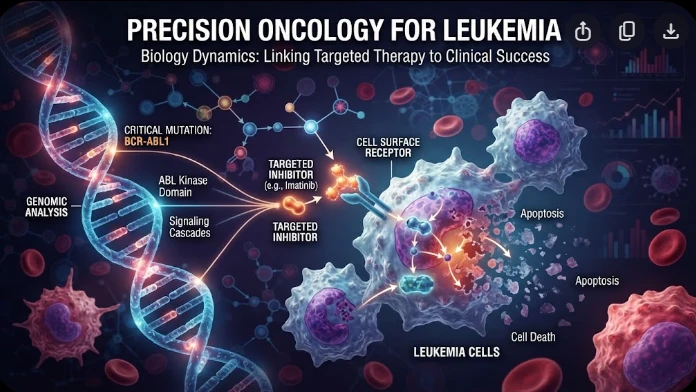
The article examines leukemia as an evolving population under targeted therapy, using chronic myeloid leukemia as the main example. BCR–ABL1 inhibition can produce deep responses, but every treatment changes the competitive environment among malignant clones. Quantitative transcript monitoring provides a continuous measure of disease burden, while deep sequencing can identify emerging resistance mechanisms before hematologic progression. A detected mutation is clinically meaningful only when its
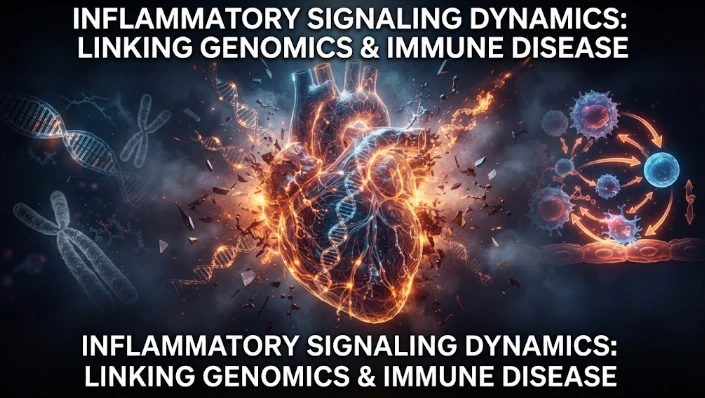
The article examines how cardiovascular genetic risk becomes biologically active through cell-specific inflammatory signaling. Because many vascular-risk variants lie in regulatory DNA rather than coding regions, their effects may appear only in particular endothelial, macrophage, smooth-muscle, or lymphocyte states. Single-cell studies of human atherosclerotic lesions and multiomic endothelial experiments are used to illustrate this context dependence. The article also discusses IL6-related sig
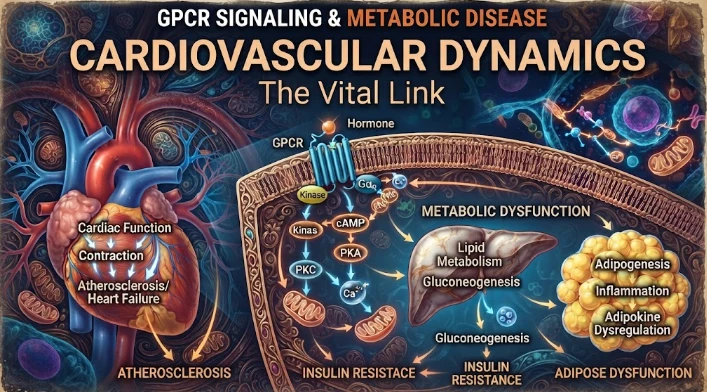
The article examines cardiovascular GPCR signaling as a dynamic response system whose abnormalities can remain hidden in resting measurements. Mechanical stretch, hormones, nutrients, sympathetic activity, and fluid balance can change the amplitude, duration, localization, and recovery of receptor signaling. Examples include mechanically activated angiotensin-receptor signaling, endosomal signaling, beta-arrestin-dependent trafficking, and biased glucagon-like peptide-one receptor responses. The