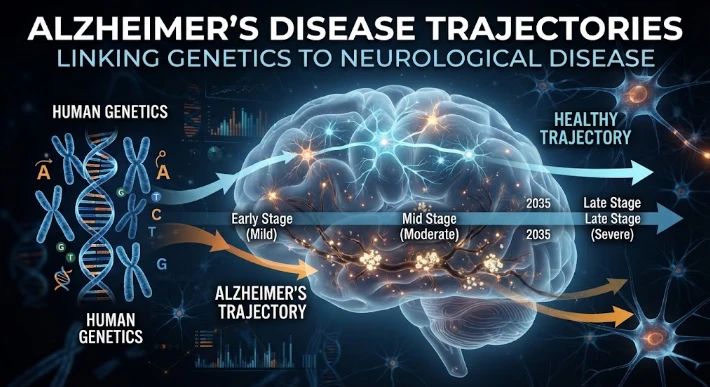
The article treats Alzheimer’s disease as a set of long biological trajectories shaped partly by fixed genetic variation. APOE and polygenic risk are discussed in relation to the timing of amyloid accumulation, tau spread, neurodegeneration, vascular injury, and cognitive decline. Because genotype is stable while biomarkers change, longitudinal studies can identify whether a genetic factor influences disease initiation, acceleration, resilience, or later clinical conversion. The article emphasizes multi-ancestry cohorts, founder populations, repeated imaging, fluid biomarkers, cognitive testing, and non-linear trajectory models. It also distinguishes pathology from resilience, noting that cognition depends on vascular health, education, reserve, and other factors. Functional studies using cell-specific genomic and chromatin data can explain why a locus alters a particular stage. Trial design can benefit from biologically defined trajectories, but prediction should remain probabilistic. Overall, the article links human genetics with time to create stage-specific explanations of Alzheimer’s progression.
Alzheimer's is a genetically predetermined disease that is played out over decades. This contrast represents a valuable research design for the study of why some people follow differing biological trajectories prior to the onset of clinical dementia. The central question is how to connect static genotype with dynamic changes of amyloid, tau, neurodegeneration, vascular injury and cognition. That connection is made possible by longitudinal data.
The trajectory effects are well shown in APOE epsilon four. Carriers tend to have earlier onset of accumulation of amylod and increased life-time risk, but the allele does not guarantee one outcome. Many carriers have no problem cognitively even as they get older and some noncarriers become sick. Genetic effect is thus a change in a probability distribution over time. The age, ancestry, vascular health and other genetic traits determine where the right person falls in that distribution.
GWAS revealed additional loci with smaller effects; such as genes involved in complement regulation, endocytosis, lipid metabolism and microglial function. A polygenic profile can provide a summary of part of that burden but a score is more meaningful when associated with a trajectory. There is variability in the onset of pathology, in the rate of change of biomarkers and in the degree of preserved cognition between individuals with a similar polygenetic risk.
Transitions from low to high amyloid burden can be detected by longitudinal amyloid imaging. Biomarkers of ASCF and blood could be additional measures of amyloid related change. The genetic analysis can be used to determine if there are genes that affect the age of the transition or the rate of the transition. The importance of timing is that a gene with an effect on initiation of the disease may be a different therapeutic target than a gene with an effect on progression once the amyloid is in place.
There's another stage marker, Tau. In many settings, the extent of tau accumulation and spread is more closely linked with the degree of neurodegeneration and cognitive decline than is the amount of amyloid burden. Tau pathways can be separated from each other by genetic variants and by separating pathways that affect the initiation of amyloid formation from pathways that affect downstream neuronal injury. When imaging is combined with fluid biomarkers it could be hoped that there will be a higher temporal resolution.
Cognition is complicated because clinical performance is a function of pathology and resilience. Measured decline is influenced by factors such as education, vascular health, neural reserve, sensory function, mood and others. Genetic research on cognitive preservation can find variants associated with slower deterioration as a result of ageing or neuropathology. This brings attention to biological mechanisms that promote resistance, rather than risk of disease.
Trajectory modelling relies on ancestry. Effect sizes are also subject to variation between populations and some loci, like ABCA7, have exhibited significant associations among African American populations. The trajectory model constructed largely from one ancestry may overestimate the risk in another. It is important to have a longitudinal depth adequate to estimate the baseline differences and rates of change for multiancestry cohorts rather than to combine them into an average curve.
Patterns can be revealed in founder populations. Some alleles related to disease may be easier to identify because of reduced genetic diversity and/or increased prevalence of rare variants. Variants related to risk or resilience can be identified in Amish and other genetically informative populations. Follow-up over time can then be done to determine the impact of those variants on onset, the progression of those biomarkers and/or the preservation of cognition.
Biomarkers do not change linearly, so this must be taken into account in statistical models. Symptoms can take years to develop from an increase in amyloid, tau can increase at a later stage, and cognition may not change until there is a loss of compensatory reserve. Individual paths can be estimated using latent trajectory models, mixed effects models, and event based approaches. Genetic predictors can then be evaluated in the context of individual trajectory parameters instead of just a single case control label.
Competing risks are also important. Cardiovascular disease, cancer and other conditions can kill older adults before they develop dementia. Caution is required in modelling apparent Alzheimer associations, as these may be skewed by genetic variants that impact survival. Vascular risk is associated with cognitive trajectory and may exacerbate the neurodegenerative effects of vascular risk. Cardiovascular data can be integrated to differentiate disease specific genetics from aging biology.
Functional data at the single cell level can be used to explain the existence of a trajectory association. Functional and chromatin assays can be used to distinguish which cells the locus is active in if a risk variant is associated with tau related decline. The candidate gene can be tested in human derived neural or glial cells using CRISPR editing. When the function of the association is established, the realistic explanation of this function becomes a plausible biological mechanism.
Prediction is not the only goal, but a secondary one. The potential of using polygenic scores in combination with biomarkers for risk stratification needs to be validated and calibrated for clinical use, and shown to be superior to current predictive factors. Often the most helpful scientific input is understanding when a pathway acts. There is an early acting pathway that is relevant for prevention and a late acting pathway that is relevant once a pathology is present.
Trial Design can be enhanced by using Longitudinal Genetics. Biological trajectories can be different among participants with similar clinical status. Subgroups can be defined using genetic/b biomarker information with a more rapid expected progression or different pathway involvement. Stratification may lead to a reduction of heterogeneity and facilitate the testing of mechanism based treatment, but should not exclude populations that are already underrepresented in research for making eligibility decisions.
To avoid missing important transitions, it is essential that the trajectory studies are sampled at a dense enough frequency. Frequent sampling can detect a threshold event from gradual accumulation and a biomarker measured over time can make an abrupt change appear gradual. The sampling rate should reflect the timescale at which each marker is expected to change, e.g., more frequent sampling of measures that vary rapidly than measures that do not change rapidly such as structural imaging.
Joint modeling can link different biomarkers that have different rates of change. The genetic variants could influence some aspect of the amyloid, tau, neurofilament related markers, brain volume, and cognition all within one multivariate framework. These models can be used to determine if a locus alters the sequence of events or whether it only modifies the pace with which a common sequence occurs.
There are other meaningful endpoints besides clinical conversion. There may be differences in functional independence, language, memory, executive performance and neuropsychiatric change within individuals. A global cognitive score can moderate genetic influences across domains. Specific trajectories can provide insight into mechanisms more closely associated with specific neural systems and can provide insight into protection that is not seen in a general diagnosis.
For participants who have a rate of decline that is faster than others, attrition must be addressed explicitly as they may not be as likely to follow up. Failure to account for this pattern can result in an impression of subsequent cohorts being healthier and a skewed assessment of genetic effects. This problem can be minimized by using joint models of dropout and sensitivity analyses and home based assessment. Maintaining the most clinically at-risk participants in the trajectory analysis is essential to reliable trajectory genetics.
Repeated clinic visits may be avoided with digital cognitive assessment to increase sampling frequency. Short validated tasks: can document subtle change between imaging visits while being collected remotely; Passive activity measures can provide functional context. This data should be carefully quality controlled as familiarity with the device, fatigue, and sensory impairment can impact performance. Higher frequency cognition combined with genetics and biomarkers can refine the determination of the transition from biology to clinically significant change.
The uncertainty in the trajectory should be displayed in the individual predictions. A probabilistic model of the onset or decline rate can be confused with certainty if confidence intervals are not used around the rate. When risk is represented as a range, with evidence that underlies that evidence, there is better clinical communication.
Alzheimer's disease is thus not viewed as a two-state condition, but rather a series of trajectories. Human genetics offer fixed points of reference, and repeated biomarkers indicate disease stages. If both are performed together, these can be used to determine which inherited mechanisms affect initiation, acceleration, resilience or clinical conversion. The resulting map brings together genotype and time, taking neurological research beyond lists of risk loci to stage-specific biological explanations.
CITE THIS ARTICLE
Tasmeem, S. (2026). Alzheimer’s Disease Trajectories Linking Human Genetics to Neurological Disease. https://www.sadiaresearchhub.com/article/70d0a259-f79b-5798-98e9-0cbae1c47749
S. Tasmeem, “Alzheimer’s Disease Trajectories Linking Human Genetics to Neurological Disease,” 2026. [Online]. Available: https://www.sadiaresearchhub.com/article/70d0a259-f79b-5798-98e9-0cbae1c47749
Tasmeem, S. (2026) ‘Alzheimer’s Disease Trajectories Linking Human Genetics to Neurological Disease’. Available at: https://www.sadiaresearchhub.com/article/70d0a259-f79b-5798-98e9-0cbae1c47749
Tasmeem, Sadia. “Alzheimer’s Disease Trajectories Linking Human Genetics to Neurological Disease.” 2026, https://www.sadiaresearchhub.com/article/70d0a259-f79b-5798-98e9-0cbae1c47749.
Sadia Tasmeem. “Alzheimer’s Disease Trajectories Linking Human Genetics to Neurological Disease.” (2026). https://www.sadiaresearchhub.com/article/70d0a259-f79b-5798-98e9-0cbae1c47749.
Tasmeem S. Alzheimer’s Disease Trajectories Linking Human Genetics to Neurological Disease. 2026. https://www.sadiaresearchhub.com/article/70d0a259-f79b-5798-98e9-0cbae1c47749
@misc{article_70d0a259f79b579898e90cbae1c47749,
  title = {Alzheimer’s Disease Trajectories Linking Human Genetics to Neurological Disease},
  author = {Sadia Tasmeem},
  year = {2026},
  url = {https://www.sadiaresearchhub.com/article/70d0a259-f79b-5798-98e9-0cbae1c47749},
}
TY  - GEN
AU  - Sadia Tasmeem
TI  - Alzheimer’s Disease Trajectories Linking Human Genetics to Neurological Disease
PY  - 2026-04-26
UR  - https://www.sadiaresearchhub.com/article/70d0a259-f79b-5798-98e9-0cbae1c47749
ER  -
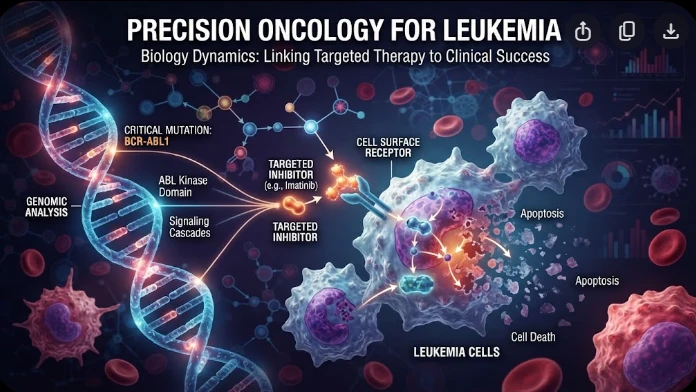
The article examines leukemia as an evolving population under targeted therapy, using chronic myeloid leukemia as the main example. BCR–ABL1 inhibition can produce deep responses, but every treatment changes the competitive environment among malignant clones. Quantitative transcript monitoring provides a continuous measure of disease burden, while deep sequencing can identify emerging resistance mechanisms before hematologic progression. A detected mutation is clinically meaningful only when its
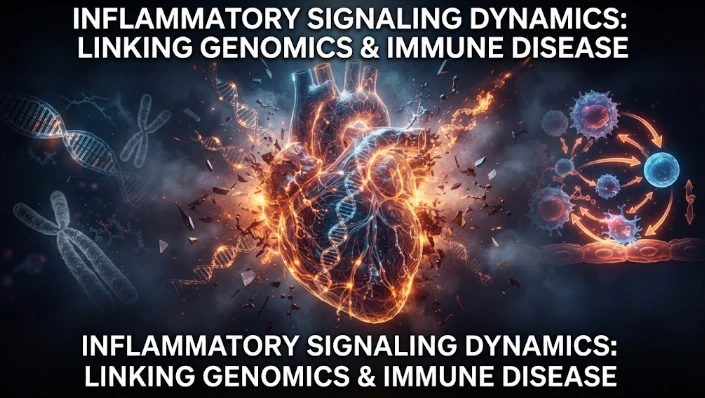
The article examines how cardiovascular genetic risk becomes biologically active through cell-specific inflammatory signaling. Because many vascular-risk variants lie in regulatory DNA rather than coding regions, their effects may appear only in particular endothelial, macrophage, smooth-muscle, or lymphocyte states. Single-cell studies of human atherosclerotic lesions and multiomic endothelial experiments are used to illustrate this context dependence. The article also discusses IL6-related sig
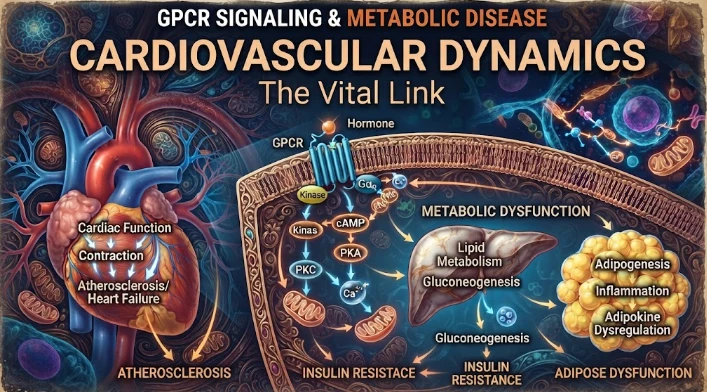
The article examines cardiovascular GPCR signaling as a dynamic response system whose abnormalities can remain hidden in resting measurements. Mechanical stretch, hormones, nutrients, sympathetic activity, and fluid balance can change the amplitude, duration, localization, and recovery of receptor signaling. Examples include mechanically activated angiotensin-receptor signaling, endosomal signaling, beta-arrestin-dependent trafficking, and biased glucagon-like peptide-one receptor responses. The