The article explains Alzheimer’s disease as a complex trait produced by interacting common variants, rare variants, vascular factors, aging, immunity, metabolism, and environmental exposures. APOE is presented as an important but incomplete contributor, while loci such as CR1, CLU, PICALM, and ABCA7 reveal converging pathways involving lipids, endocytosis, complement, and microglial biology. Population ancestry, founder effects, and rare variants are emphasized because genetic architecture differs across groups. The article also incorporates cognitive resilience, gene–environment interaction, exposome influences, and stage-specific biomarker progression. Multiomic approaches can connect associated loci to cell types and regulatory mechanisms, while CRISPR-edited neural models test functional direction. Mendelian-randomization and causal-graph approaches are discussed cautiously as tools for evaluating intermediate pathways. The article concludes that complex-trait progression becomes interpretable when diverse population genetics, longitudinal biomarkers, mechanistic experiments, and explicit causal models are integrated rather than treated as separate evidence streams.
Alzheimer's disease is a complex trait because not all late onset cases of the disease are due to a single pathway. The contribution of common variants, rare variants, vascular factors, immune activity, aging, metabolism, and environmental exposures are overlapping. Human genetics provides a systematic way to disentangle these influences since inherited variation comes before disease. The hard part is linking genetic architecture with the transition from silent pathology to neurodegeneration and cognitive deficit.
The most common signal is strong yet restrictive, APOE. Even though it's a high-risk gene, there are many carriers who aren't affected by dementia and many affected people who do not have the gene. Such incomplete penetrance implies that otherwise, background genetics and non genetic factors alter the course. Rather, APOE is considered as one element among several components within a complex system of multiple components rather than a molecular explanation for all disease.
A lot of other loci with smaller effect sizes were found in genome wide association studies. Including CR1, CLU, PICALM, ABCA7 and many subsequent discoveries, there are multiple pathways suggested by these genes. Mechanistic confidence is bolstered by converging independent loci toward a biological process. Pathway enrichment is especially informative when repeated in large datasets when conducting complex trait analysis.
Rare variation has a different effect. A rare coding variant may have a greater effect than a common regulatory allele, but these variants can only be detected with families with genetic information, or with large collections of sequenced samples. Demographic history can cause a founder population to increase the frequency of selected alleles. Population structure has been applied to the study of Amish communities to identify genetic factors associated with the risk or resilience to develop Alzheimer's disease.
The discovery and interpretation of ancestry. Allele frequencies and linkage relationships differ between populations which changes the variants that tag a causal region. The findings of ABCA7 associations in African American cohorts were a good example of results that benefited from multiple sampling strategies. Not accounting for ancestry diversity can obscure essential biology, and can result in prediction tools that don't transfer well from population to population.
There are also interactions between pathways in the case of complex traits. Amyloid processing, vascular health and inflammatory state can be modified by lipid metabolism. The microglial genes can influence the clearance of debris as well as alter response to amyloid or tau. The endosomal trafficking affects receptor recycling and protein processing. It is better to represent these intersections in a network model, rather than putting each locus in a separate mechanism.
There is a temporal dimension with disease progression. A variant associated with diagnosis might affect early amyloid deposition, later tau spread, neuronal vulnerability, vascular injury, or cognitive reserve. Changes can be determined using a longitudinal biomarker study. This distinction is important as it means a therapeutic target that acts before the accumulation of amyloid will have a different clinical window than one that acts on neuroinflammation during the symptomatic disease.
A decline in cognitive functions needs to be considered in conjunction with cognitive resilience. In some elderly patients, there is significant pathology and moderate cognitive dysfunction. Analysing preservation and exceptional ageing can help determine pathways that keep the synapses working or repair them if they are damaged. Protective mechanisms may be more direct than risk pathways, in the sense that therapy might seek to recreate a state of resilience.
But, environment and comorbidity are still included in the model. Factors that affect cognitive aging include blood pressure, diabetes, smoking, sleep, physical activity, education, hearing and social conditions. These factors may confound or modify genetic associations when the exposures among cohorts are highly skewed. The analysis of Gene*Environment interaction is complex due to the need for large sample sizes and careful preregistration, to avoid false positive interactions.
The integration of multiple omics can be a useful tool to narrow down the causal genes in related regions. Variants can be associated to expression quantitative trait loci and chromatin can be mapped to identify cell-type specific regulatory elements. Downstream consequences can be determined by proteomics, and single cell data can identify the location of effects to microglia, astroctyes, neurons, or vascular cells. Stronger the more layers that are colocalized, the more robust the mechanistic hypothesis.
Directionality is then tested by functional validation. The introduction or correction of candidate variants can be achieved in induced pluripotent stem cell models through CRISPR editing. Cultures of both neurons and glia can demonstrate the effects of cell interactions that are not detected by cultures of a single cell type. Developmental and tissue level features can be modeled with organoids, and cognition and pathology can be studied in animal systems. To capture the full range of late onset Alzheimer's disease, no single model can do it; multiple models is more convincing than a single model.
This must be tempered with statistical prediction. Many variants are used in the construction of a polygenetic risk score, and the accuracy is dependent on which ancestry and which phenotype the score is built on. A score can categorize the relative risk but does not give absolute probability. Calibration, independent validation, and evidence of changes in a decision or prevention strategy is necessary for clinical use. It's not appropriate to squeeze the whole complex picture of a gene into a false sense of assuredness.
The best informative research designs, then, involve a wide range of population genetics and heavy phenotyping. Large cohorts identify loci, diverse samples test transportability, longitudinal biomarkers locate effects in time and functional models test causality. This type of integration also enables comparison of disease initiation related genetic pathways to progression related genetic pathways. This yields an architecture that is more clinically useful than just a list of associated variants.
MR can also be used to assess if an intermediate trait is on a causal pathway to disease. Genetic instruments of lipids, inflammation, or vascular traits can be applied to investigate directionality, but with the caveats of needing to make strong assumptions about pleiotropy and instrument specificity. Results should not be a substitute for experimental biology, particularly when variants have multiple pathways effects.
Consider sex-specific effects as these are different in Alzheimer risk, longevity, hormone exposure and vascular disease. If competing risks and/or exposure history is unequal, a variant may have similar biological activity with a similar observed disease impact. The interaction test must have sufficient power and mechanistic follow up will clarify whether sex affects gene expression, cell response or only penetrance at the population level.
The exposome provides another layer in complex trait progression. Pathways that are also influenced by genes can be shaped by air pollution, diet, history of infections, medications, education and socioeconomic factors. Longitudinal cohorts that link genetic information to repeated exposures can evaluate the effects of environmental stress on a genetically vulnerable pathway. This is challenging work, but can lead to uncovering factors that can be modified to alter the expression of inherited risk.
Causal graphs can be helpful in maintaining conceptually organized these relationships. Genetic variants, intermediate biomarkers, comorbidities, exposures, and cognition can be measured prior to them being analyzed to determine which are confounders, mediators or consequences. This minimizes unnecessary change which can nullify real channels. Explicit and explicit causal assumptions are useful for complex disease analysis because statistical control is not enough to establish the direction of cause and effect.
Pleiotropy can uncover common biology among diseases. Some sites linked to Alzheimer (AA) may be relevant to lipids, immune traits or vascular phenotypes, indicating pathways that span diagnostic areas. Such broad effects can be mapped with phenome wide association studies, but care needs to be taken to interpret them separately from the unwanted effect of targeting the same pathway. One genetic association can influence multiple physiological systems of the body during therapeutic intervention.
Replication of the signal in different ancestry groups can be used to distinguish a causal signal from a population-specific tagging variant. If multiple linkage patterns are pointing to the same gene or regulatory element, the common signal can help to focus causal inference. Another benefit of genetic diversity is that it enhances scientific resolution, not simply sample representation.
This further enhances the causal interpretation.
In Alzheimer's disease, disease trait progression is the result of numerous small and large biological influences throughout a long time period. Those influences can be identified in human genetics through inheritance, which offers stable markers for causal pathways, but requires ancestry diversity, temporal phenotyping and functional validation. Understanding of the processes of neurodegeneration becomes more accessible with a translation of the genetic risk to pathway activity and disease stage. That model transforms complexity into a set of interacting mechanisms.
CITE THIS ARTICLE
Tasmeem, S. (2026). Complex Disease Traits Progression through Human Genetics and Alzheimer’s Disease in Neurodegeneration. https://www.sadiaresearchhub.com/article/4d31ddae-ed7f-5e5d-a4ee-bd57ccfde0a0
S. Tasmeem, “Complex Disease Traits Progression through Human Genetics and Alzheimer’s Disease in Neurodegeneration,” 2026. [Online]. Available: https://www.sadiaresearchhub.com/article/4d31ddae-ed7f-5e5d-a4ee-bd57ccfde0a0
Tasmeem, S. (2026) ‘Complex Disease Traits Progression through Human Genetics and Alzheimer’s Disease in Neurodegeneration’. Available at: https://www.sadiaresearchhub.com/article/4d31ddae-ed7f-5e5d-a4ee-bd57ccfde0a0
Tasmeem, Sadia. “Complex Disease Traits Progression through Human Genetics and Alzheimer’s Disease in Neurodegeneration.” 2026, https://www.sadiaresearchhub.com/article/4d31ddae-ed7f-5e5d-a4ee-bd57ccfde0a0.
Sadia Tasmeem. “Complex Disease Traits Progression through Human Genetics and Alzheimer’s Disease in Neurodegeneration.” (2026). https://www.sadiaresearchhub.com/article/4d31ddae-ed7f-5e5d-a4ee-bd57ccfde0a0.
Tasmeem S. Complex Disease Traits Progression through Human Genetics and Alzheimer’s Disease in Neurodegeneration. 2026. https://www.sadiaresearchhub.com/article/4d31ddae-ed7f-5e5d-a4ee-bd57ccfde0a0
@misc{article_4d31ddaeed7f5e5da4eebd57ccfde0a0,
  title = {Complex Disease Traits Progression through Human Genetics and Alzheimer’s Disease in Neurodegeneration},
  author = {Sadia Tasmeem},
  year = {2026},
  url = {https://www.sadiaresearchhub.com/article/4d31ddae-ed7f-5e5d-a4ee-bd57ccfde0a0},
}
TY  - GEN
AU  - Sadia Tasmeem
TI  - Complex Disease Traits Progression through Human Genetics and Alzheimer’s Disease in Neurodegeneration
PY  - 2026-04-19
UR  - https://www.sadiaresearchhub.com/article/4d31ddae-ed7f-5e5d-a4ee-bd57ccfde0a0
ER  -
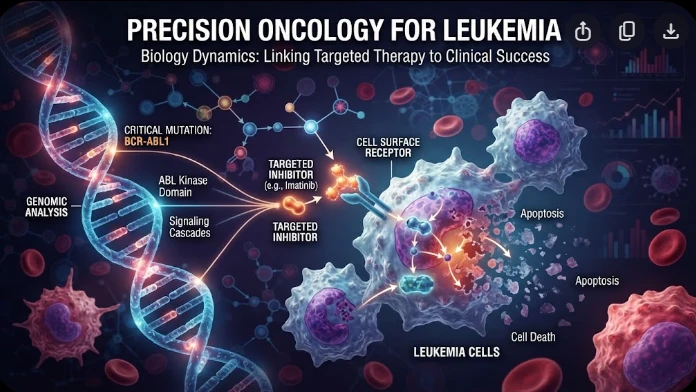
The article examines leukemia as an evolving population under targeted therapy, using chronic myeloid leukemia as the main example. BCR–ABL1 inhibition can produce deep responses, but every treatment changes the competitive environment among malignant clones. Quantitative transcript monitoring provides a continuous measure of disease burden, while deep sequencing can identify emerging resistance mechanisms before hematologic progression. A detected mutation is clinically meaningful only when its
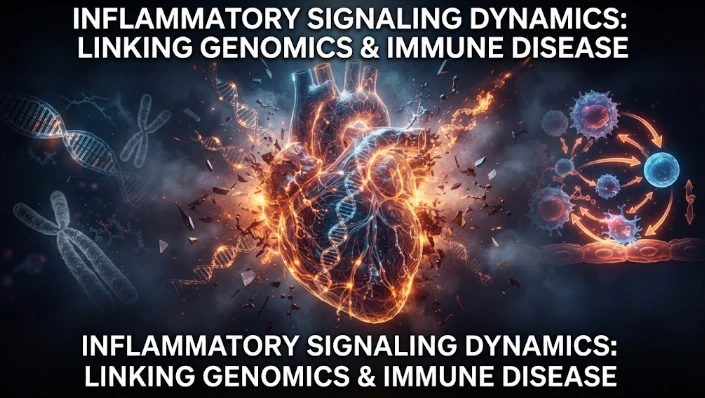
The article examines how cardiovascular genetic risk becomes biologically active through cell-specific inflammatory signaling. Because many vascular-risk variants lie in regulatory DNA rather than coding regions, their effects may appear only in particular endothelial, macrophage, smooth-muscle, or lymphocyte states. Single-cell studies of human atherosclerotic lesions and multiomic endothelial experiments are used to illustrate this context dependence. The article also discusses IL6-related sig
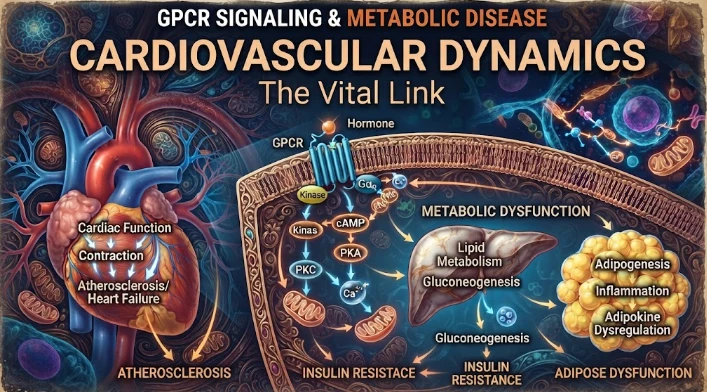
The article examines cardiovascular GPCR signaling as a dynamic response system whose abnormalities can remain hidden in resting measurements. Mechanical stretch, hormones, nutrients, sympathetic activity, and fluid balance can change the amplitude, duration, localization, and recovery of receptor signaling. Examples include mechanically activated angiotensin-receptor signaling, endosomal signaling, beta-arrestin-dependent trafficking, and biased glucagon-like peptide-one receptor responses. The