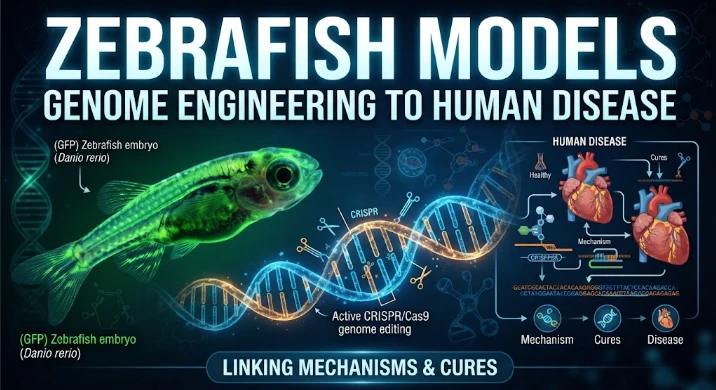
The article focuses on how precise genome engineering determines the credibility of zebrafish models for human disease. It distinguishes simple gene knockout from patient-specific variants that may alter protein function, splicing, or regulatory activity only partially. Improvements in CRISPR reagents, homology-directed repair, engineered Cas proteins, and donor design are discussed alongside persistent challenges such as mosaicism and off-target effects. Deep and long-read sequencing can verify the actual edit, while transcriptomics, proteomics, single-cell profiling, and imaging establish molecular and cell-type consequences. Stable germline lines, prespecified phenotypes, independent guides, and rescue experiments strengthen genotype–phenotype causality. The article also stresses cross-species differences, gene duplication, developmental timing, and the need to reconnect animal findings with human population and cellular evidence. Zebrafish provide speed and throughput, but a useful disease model requires an accurate genotype, coherent molecular mechanism, measurable functional phenotype, and reproducible rescue.
A useful disease model does not just generate a physical disease. It should provide a human genetic modification in the appropriate genomic context, and should have a clear measurable molecular consequence, and be amenable to experiments that would provide a way to distinguish mechanism from coincidence. The rapid development of zebrafish genome engineering is largely due to its three main advantages: a targeted genome editing, the ability to knock in patient variants, and the production of numerous embryos for functional testing. The final hurdle is precision (editing efficiency, mosaicism, cell type specificity & molecular validation) that decide if a model is a true representation of human disease.
A knockout approach is relatively simple when complete absence of disease is caused by the complete loss of function of a gene. Patient variants may have less dramatic consequences. Partial activity may be maintained with a missense, splice alteration, a small insertion, or a regulatory variant. Precise knock in is therefore important since it tests the true human allele, not a generic null. The function of homology directed repair in zebrafish has been less efficient than simple disruption, which has spurred improvements in donor design and editing chemistry.
The use of CRISPR ribonucleoprotein complexes and single stranded DNA donors has been shown to be efficient knock in strategies for inherited disorder modelling. The ability to manipulate DNA repair, including using methods that target Ku70, has improved editing efficiency at targeted sites. In such studies, the outcome of the genome engineering has been found to depend not only on the guide sequence, but also on the cellular repair pathway that is activated following the cut.
The range of targeting has been expanded even more by engineering the Cas9. Engineered Cas9 proteins that have relaxed PAM sequences can target regions that are beyond the reach of native enzymes. Zebrafish experiments with SpRY and nuclear localization modifications have reported increased knockout and homology directed repair efficiency. Wider targeting can allow for patient variants as well as more relaxed recognition which can enhance the need for careful off target evaluation.
Mosaicism is still a significant problem in founders. Animals can have distinct cells that have distinct edits, and therefore distinct phenotypes. Stable germline transmission is advantageous for genotype-phenotype relationships while mosaic founders are good for quick screening. Edit distribution can be quantified across tissues by deep sequencing and unexpected alleles can be detected. A molecular genotyping is necessary for a precision model without a visible phenotype.
Validation can be enhanced by long read sequencing. Standard short read assays are not able to detect complex insertions, deletions, rearrangements, or allele combinations near the edit. Long reads can cover the whole targeted area and mutations in the different phases and can show if the wanted variant is the one on the wanted allele. This is particularly useful following homology directed repair or if multiple repair outcomes are present in the founders.
The next layer is offered by transcriptomics. An engineered coding variant can affect the expression of a gene indirectly by feedback, and a splice or regulatory variant can affect the structure of the transcript directly. Long read RNA sequencing can be used to determine isoforms and single cell RNA sequencing can indicate which cell types are responding the strongest. A disease mechanism that is only present in a small population in the nervous system, heart, immune system, or even developmental system could be diluted by bulk RNA.
The biological relevance of transcript change to protein function can be assessed using proteomics. There are variants that destabilize protein but don't strongly affect the RNA. Some modify interaction partners or post translational modification. Those mechanisms can be uncovered using quantitative proteomics and targeted biochemical assays. DNA, RNA, protein, and phenotype should be coherent in a causal sequence to be more informative about a model.
In developmental disease, cell type specificity is of great importance. One gene may be expressed throughout the organism, but the disease may start from one lineage in a very restricted period of development. Single cell profiling at each stage can reveal the first point of genotype change. Imaging can then determine if the affected cells migrate, differentiate or connect abnormally. Mechanistic information may be lost through the developmental timing.
Zebrafish are attractive for functional genomics, in part because of high throughput workflows. Automated imaging, behavior, electrophysiology, and drug screening of many embryos can be done in parallel with CRISPR editing. Rapid screens can prioritise variants or candidate treatments. Independent guides and stable genotypes should then be employed for confirmatory work. The value of throughput hinges on the follow up maintaining causal confidence.
Off target analysis should be in direct proportion to the claim. High risk sites can be sequenced for models to be used for detailed mechanistic or translational work, while whole genome approaches can be used for predicted high risk sites. Multiple independent lines that carry the same planned mutation offer a tangible benefit in that off target mutations will not be the same on each line. More background editing events can be reduced using outcrossing.
Functional rescue is still one of the most important tests. The introduction of a normal human transcript, correcting the engineered allele or activating a downstream pathway can determine whether the phenotype is a function of the targeted mechanism. Rescue It too aids in understanding partial function. A hypomorphic patient allele may result in a partial correction, in between a wild type sequence and a hypomorphic patient allele, which helps in quantitative variant classification.
Ensure that there is an explicit evaluation of cross species differences. There may be differences in gene duplication, developmental timing, organ anatomy, and immune physiology between zebrafish and humans. A negative phenotype does not necessarily mean no human relevance, it may be a sign of compensation by a paralog. The comparative sequence and expression analysis should be done before constructing a model and human cellular systems may be used to determine if the same molecular mechanisms are present in human tissue.
Adding a layer of human population to the independent disease cohort validation experiments. If a model predicts a class of variants that disrupts one pathway, further patients with similar variants can be studied for similar phenotypes or molecular signatures. This type of validation prevents the development of a wide variety of disease claims from a single family or engineered line. Evidence for a rare disease builds over variants and model systems.
A stable model should be used if the gene transfer is expected to occur by germ line. In the founder animals multiple alleles may be present in various tissues, and in offspring produced from a known germ cell, one of the alleles is a defined one. Sequencing the parents and children can confirm that the child inherited the parent's DNA and can uncover unanticipated linked changes. Stable lines also enable blinded phenotyping between siblings, minimizing the risk of influence on the interpretation by visual genotype information.
Phenotyping should be defined prior to comparing experimental groups. There are many possible outcomes from automated imaging, cardiac measurements, locomotor assays, morphology and molecular endpoints. After inspection, choosing only the best difference will accentuate false discoveries. Prespecified primary phenotypes and independent replication provide a stronger linkage of genotype to disease mechanism, especially when there is likely to be subtle developmental effects.
Data volume should not be the focus for multiomic integration; rather, causal sequence should be the focus. The edit is confirmed by DNA, the consequences of the edit by RNA, the execution by protein assays, and the effects on the organism by phenotype. Each layer should address a different question and statistical integration can be used to nominate pathways. Not all omic technologies are necessary to make a convincing model. Must include orthogonal evidence to demonstrate that the desired allele leads to the desired molecular change and functional consequence.
Model fidelity is essential for therapeutic experiments to be meaningful. Screening for the causal mechanism may lead to identification of drugs that modify general development or behavior and not disease biology itself. Targeted compounds have the potential to test rescue at specific developmental windows once the pathway is confirmed. Molecular readouts should accompany phenotypic improvement because a treatment that improves the phenotype should correct the mechanism involved, instead of simply suppressing an observable phenotype.
The percentage of embryos exhibiting a phenotype is not the best measure of editing efficiency. Functional effects of different insertion and deletion products may be different. The quantification of allele spectra can be accomplished by deep amplicon sequencing and the isolation of one defined edit can be achieved by stable lines for mechanistic work. This discards mixed founder genotypes from being considered a single molecular model.
Stephen C. Ekker's research, particularly in genome engineering and zebrafish models, underscores the need for the advancement of editing technologies and the study of disease biology. The key requirements of precision models are accurate genotype, controlled repair, deep molecular validation, profiling of cells, and functional rescue. Speed and developmental access are offered by zebrafish but credibility is gained by demonstrating that the engineered human variant yields the expected molecular mechanism and that the same mechanism is corroborated in independent human evidence.
CITE THIS ARTICLE
Tasmeem, S. (2025). Zebrafish Models Mechanisms Linking Genome Engineering to Human Disease. https://www.sadiaresearchhub.com/article/8ccf41e5-988a-5d16-8c20-34781247d76a
S. Tasmeem, “Zebrafish Models Mechanisms Linking Genome Engineering to Human Disease,” 2025. [Online]. Available: https://www.sadiaresearchhub.com/article/8ccf41e5-988a-5d16-8c20-34781247d76a
Tasmeem, S. (2025) ‘Zebrafish Models Mechanisms Linking Genome Engineering to Human Disease’. Available at: https://www.sadiaresearchhub.com/article/8ccf41e5-988a-5d16-8c20-34781247d76a
Tasmeem, Sadia. “Zebrafish Models Mechanisms Linking Genome Engineering to Human Disease.” 2025, https://www.sadiaresearchhub.com/article/8ccf41e5-988a-5d16-8c20-34781247d76a.
Sadia Tasmeem. “Zebrafish Models Mechanisms Linking Genome Engineering to Human Disease.” (2025). https://www.sadiaresearchhub.com/article/8ccf41e5-988a-5d16-8c20-34781247d76a.
Tasmeem S. Zebrafish Models Mechanisms Linking Genome Engineering to Human Disease. 2025. https://www.sadiaresearchhub.com/article/8ccf41e5-988a-5d16-8c20-34781247d76a
@misc{article_8ccf41e5988a5d168c2034781247d76a,
  title = {Zebrafish Models Mechanisms Linking Genome Engineering to Human Disease},
  author = {Sadia Tasmeem},
  year = {2025},
  url = {https://www.sadiaresearchhub.com/article/8ccf41e5-988a-5d16-8c20-34781247d76a},
}
TY  - GEN
AU  - Sadia Tasmeem
TI  - Zebrafish Models Mechanisms Linking Genome Engineering to Human Disease
PY  - 2025-09-07
UR  - https://www.sadiaresearchhub.com/article/8ccf41e5-988a-5d16-8c20-34781247d76a
ER  -
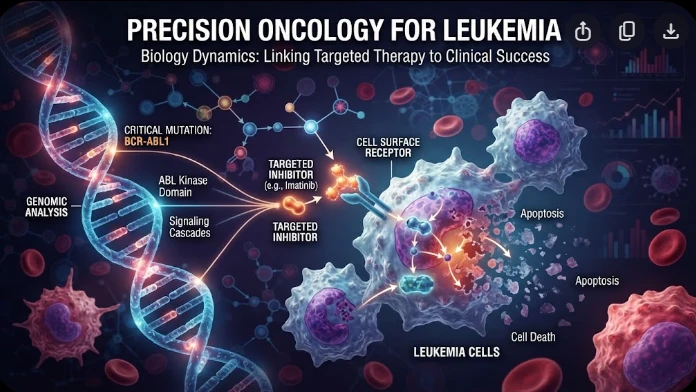
The article examines leukemia as an evolving population under targeted therapy, using chronic myeloid leukemia as the main example. BCR–ABL1 inhibition can produce deep responses, but every treatment changes the competitive environment among malignant clones. Quantitative transcript monitoring provides a continuous measure of disease burden, while deep sequencing can identify emerging resistance mechanisms before hematologic progression. A detected mutation is clinically meaningful only when its
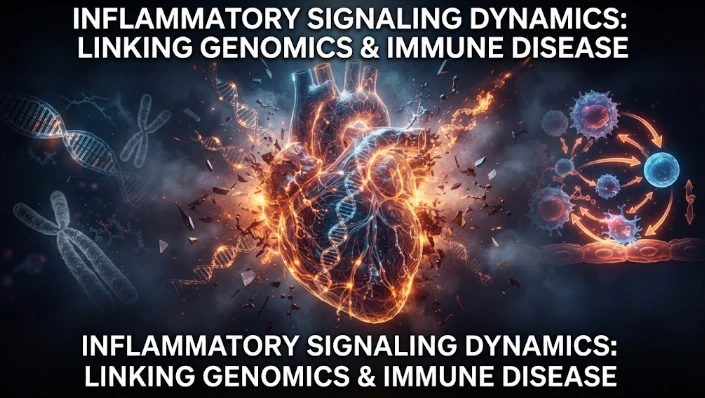
The article examines how cardiovascular genetic risk becomes biologically active through cell-specific inflammatory signaling. Because many vascular-risk variants lie in regulatory DNA rather than coding regions, their effects may appear only in particular endothelial, macrophage, smooth-muscle, or lymphocyte states. Single-cell studies of human atherosclerotic lesions and multiomic endothelial experiments are used to illustrate this context dependence. The article also discusses IL6-related sig
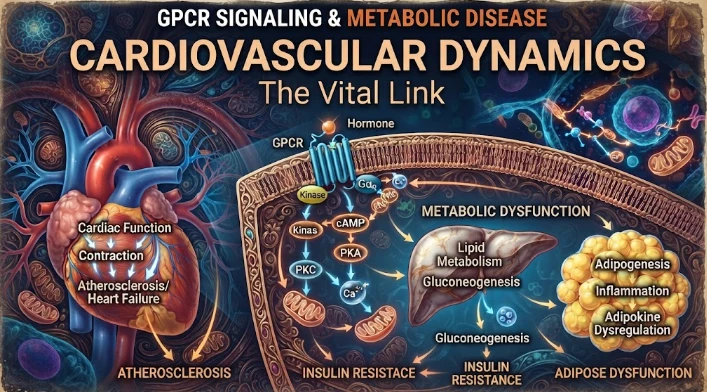
The article examines cardiovascular GPCR signaling as a dynamic response system whose abnormalities can remain hidden in resting measurements. Mechanical stretch, hormones, nutrients, sympathetic activity, and fluid balance can change the amplitude, duration, localization, and recovery of receptor signaling. Examples include mechanically activated angiotensin-receptor signaling, endosomal signaling, beta-arrestin-dependent trafficking, and biased glucagon-like peptide-one receptor responses. The